






















Emerald Fennell’s Wuthering Heights 2026 Divides Audiences with Radical Ending Cut

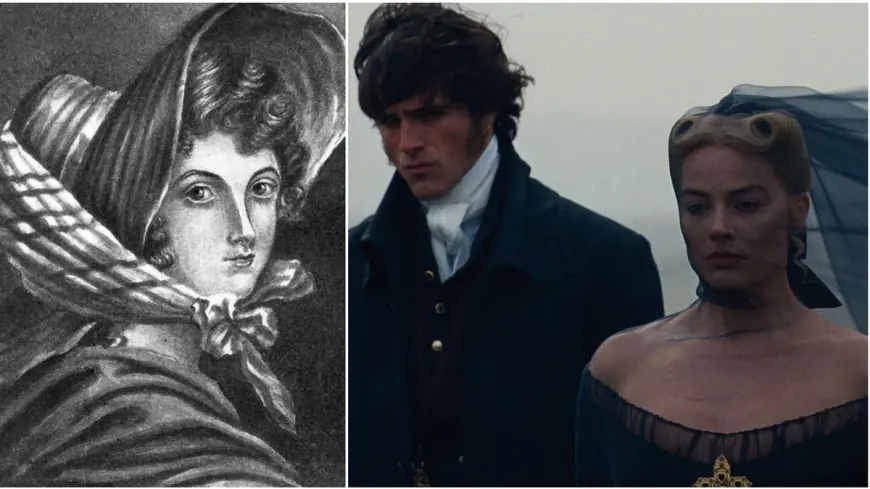
Emerald Fennell’s new film adaptation of Wuthering Heights opened the weekend of Feb. 13–15, 2026 (ET), and has immediately become a cultural flashpoint. Praised by some for its stylistic boldness and blasted by others for what many see as a decisive excision of the novel’s second half, the movie is forcing fresh arguments about fidelity, interpretation and what makes Emily Brontë’s story endure.
A bold, bite-sized take
Fennell chose a deliberately compact approach, compressing the sprawling 400-page novel into a roughly two-hour film that stops with Catherine’s death. The director opted to excise the next-generation storyline that carries much of the book’s eventual redemption: the complex relationships among Cathy, Hareton and Linton. In interviews, Fennell has framed the choice as an artistic necessity—an effort to remain true to the elemental Catherine–Heathcliff passion rather than to cram an epic into a feature runtime.
How the ending was altered
Where the novel extends into an intergenerational reckoning, the film ends in immediate tragedy. Catherine suffers sepsis and what appears to be a miscarriage; she dies while Heathcliff arrives too late to say goodbye. The closing montage centers on the couple’s intense, often brutal romance rather than the slow arc of healing that follows in the book. By erasing the infant Cathy and the later marriages that soften Heathcliff, the film refuses the novel’s eventual promise of repair.
Critical split: not strange enough vs. a daring simplification
Reaction has been polarized. Some critics argue the adaptation strips away the novel’s strange, gothic complexity and its hard-won notion that love can both destroy and, across generations, redeem. Those voices contend the film is less strange and less romantic than the book—closer to a condensed melodrama than to Brontë’s uncanny epic. Other commentators praise Fennell’s singular vision: a tighter, more erotically charged study of obsession that uses stylized production design and a saturated visual palette to amplify emotional extremes rather than to trace a familial saga.
What this means for Brontë’s themes
The decision to stop at Catherine’s death reframes the story’s central questions. In the novel, the later chapters complicate the idea that love is purely destructive; they allow grief and inherited cruelty to be confronted and, slowly, undone. The film’s one-focus reading insists that the original relationship itself is the primary subject—an uncontrolled, corrosive force without the balm of future reconciliation. That interpretive narrowing is the core of the debate: is Brontë’s work best experienced as an uncompromising portrait of obsession, or as a generational drama that finds a kind of redemption amid ruin?
Box office, audience response and the sequel question
Early box-office returns and social-media reaction show high engagement: viewers are either defending the film’s choices or calling them betrayals. Fennell has said she sees the movie as a one-off and has not committed to exploring later material in a sequel. The practical reality is that many previous screen versions of the novel have also concentrated on the first half, and expansive TV serials remain the format most likely to capture the book’s full scope. For now, the conversation centers less on franchise potential and more on what modern audiences expect from a classic adaptation—faithful completeness or a decisive reinterpretation.
Whatever position one takes, the 2026 film has reignited interest in the novel’s inherent strangeness: the way love in Brontë’s hands is at once erotic and destructive, intimate and mythic. Fennell’s choices have not settled that debate so much as amplify it, prompting new viewers to reconsider whether Wuthering Heights must be all things at once or whether an intense, pared-back portrait of the central pair can stand on its own.