



















Robert Kaplow on Blue Moon: How a Jersey Teacher’s Script Became an Oscar Nominee

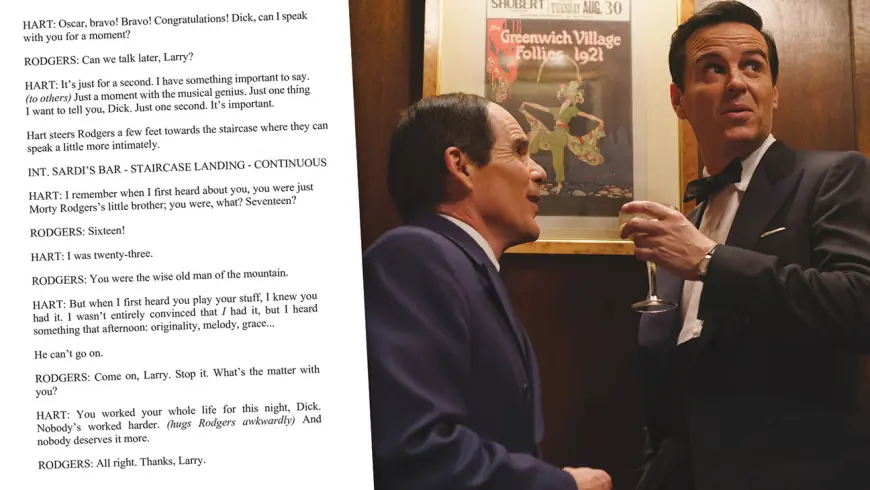
Robert Kaplow’s debut screenplay for Blue Moon has vaulted the former New Jersey high school teacher into awards-season conversation. The film — a compressed, near-magical imagining of lyricist Lorenz Hart on the night of Oklahoma!’s premiere — grew from an estate-sale discovery into a 14-year labor of craft, collaboration and careful reinvention that earned Kaplow an original screenplay nomination.
A long-gestating labor of love
Kaplow spent more than a decade and a half shaping the story. What began as fragments and curiosity became an extended process of invention and refinement. He has described the script as his first, and one that matured slowly as he, the director and the lead actor tested its limits in readings and rewrites. The patient approach allowed the piece to evolve from a slim scenario into a tightly focused character study that plays out over roughly 90 minutes.
From estate-sale discovery to cinematic invention
The narrative spur came from unexpected ephemera: letters found at an estate sale that hinted at private corners of Hart’s life. Kaplow used those discoveries as a portal, not a provenance map. He imagined Hart attending the opening-night party for Oklahoma! and turned the idea into a concentrated evening in which the lyricist confronts pride, longing and creative displacement. Kaplow has said the choice to stage the film at that particular moment felt like an act of bravery — an opportunity to show a man insisting he still belongs to the theater world.
Writing Hart: voice, vulnerability and the staircase scene
At the film’s center is a voice — Hart’s particular cadences, wit and melancholy — and Kaplow leaned hard into capturing that language. One sequence he singled out as especially difficult and crucial compresses a 25-year creative partnership into a minute or two on screen: a staircase scene intended to spell out the emotional history between Hart and his erstwhile collaborator. The challenge was to make decades of exasperation, affection and rivalry feel lived-in and immediate, and the scene became a hinge for both the screenplay and the film’s emotional logic.
Table reads, rehearsal and a director’s exacting eye
The script was honed in repeated table reads and rehearsals. Those sessions were described as instruments of discovery, moments when actors and writer worked to find the emotional truth of the piece. Ethan Hawke, who embodies Hart, used the readings to strip away himself and become the character; Kaplow has said he spent many of the readings playing the female role in rehearsal, a practical necessity that also revealed fresh perspectives on tone and rhythm.
Direction pushed the work further. The filmmaker’s method is painstaking and often blunt in its critique. Hawke has recounted occasions of sharp, economy-driven feedback — a rehearsal-room vocabulary that demanded actors shave affectation and find honest moments. The director’s bluntness, paired with long-standing collaboration among the creative team, kept the performances tethered to the screenplay’s intimacy.
Performance, praise and what an Oscar nod signals
The finished film centers on a performance that courts talk of craft and transformation. Kaplow credits the lead actor’s instinct for language — a sensibility that made Hart’s lyricism feel embodied rather than quoted. Together, writer and performer shaped lines that read as natural speech yet carry the heightened music of a lyricist’s mind. Kaplow has said certain moments in the script still move him, and those scenes function as quiet love scenes — not romantic in the usual sense, but elegies for creative partnership and parting.
The screenplay’s recognition in awards contention highlights the long arc from curiosity to craft. For Kaplow, the nomination validates a persistent faith in an idea and in the slow work of discovery. For the film, it underscores how concentrated, character-driven storytelling can turn a single evening into the stage for a life’s contradictions.
What’s next
Kaplow’s path from classroom to awards stage is a reminder that screenwriting can be a marathon as much as a sprint. The collaborative process that led to Blue Moon — from estate-sale finds to repeated readings and a director’s rigorous shaping — offers a template for writers and filmmakers who prize patience and precision. For Kaplow, the moment is both culmination and beginning: a first screenplay that arrived after a long apprenticeship and now opens doors to future work built on the same careful attention to voice and emotion.