

























2026 Winter Olympics Men Figure Skating: Malinin's Collapse and Shaidorov's Surprise Gold

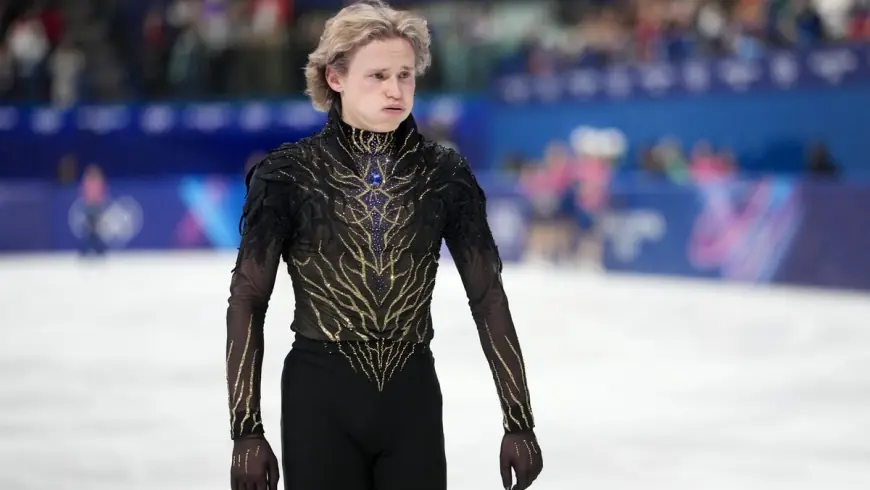
In one of the most unexpected finales of these Games, Ilia Malinin — the dominant favorite — crumbled under Olympic pressure in the men’s free skate on Feb. 13 (ET), plummeting from first after the short program to eighth overall. Mikhail Shaidorov emerged from fifth to take a shock gold, while Japan’s Yuma Kagiyama and Shun Sato claimed silver and bronze.
Favored Malinin falters under Olympic pressure
Malinin, 21, entered the long program widely viewed as the man to beat, carrying expectations shaped by his world title and reputation for pushing quad jumps to new boundaries. What began with a confident landing quickly unraveled. He fell twice, under-rotated or downgraded several planned quads, and completed only three of his seven intended quadruple jumps. The sharp contrast between pre-event hype and the performance in the Olympic arena was stark: what felt inevitable became inconceivable in minutes.
Shaidorov rises from fifth to claim gold
Mikhail Shaidorov posted a composed long program and amassed a winning total of 291. 58 points, moving up from fifth after the short to take the top spot. The victory marks a historic moment for his nation — its first Olympic title in men’s figure skating and only its second Winter Games gold since 1994. Shaidorov covered himself in disbelief as the results settled, a reflection of how open the event became after early errors from the favorite.
Podium finishers and final scores
The final standings were a dramatic reshuffling. Shaidorov finished with 291. 58 points. Yuma Kagiyama earned silver with 280. 06, repeating a high-level Olympic result despite a shaky long program of his own. Shun Sato rounded out the podium with 274. 90 points. Malinin’s total of 264. 49 left him well short of his personal best competition mark of 333. 81 and off the pace the skating world had expected.
What went wrong in the free skate
Malinin began the free skate with promise, landing a quad flip and securing a strong grade of execution for that element. But the turning point came on an attempted quad axel — an unprecedented jump with a forward takeoff that requires four-and-a-half revolutions. The attempt was popped into a single axel, costing huge technical value. Subsequent elements were inconsistent: a downgraded quad loop, a fall on a second quad lutz and other execution problems compounded the damage. The sequence of mistakes suggested not a lack of preparation but an overwhelming moment of nerves and disorientation.
Aftermath and broader takeaways
Malinin’s immediate reaction captured the raw confusion and disappointment of the situation: "The pressure is unreal. It's almost like I wasn't aware of where I was in the program, " he said. "I blew it, " he added after the performance. Those remarks underscore how Olympic stakes can affect even the most technically gifted athletes. Observers pointed to the intensity of the arena, the singularity of the moment and the human side of elite sport — that the mental burden can tip the balance, sometimes catastrophically.
Beyond medals and scores, the event served as a reminder that skating outcomes are fragile. For Shaidorov, the day will be remembered as a rise to the moment and a national milestone. For Malinin, it will be a formative Olympic experience: a painful setback but not the end of a career already defined by high-level innovation and accomplishments, including earlier team gold at these Games. Coaches, athletes and supporters will parse the technical choices and the mental preparation in the weeks and months ahead as the sport absorbs one of its most surprising Olympic chapters.