














At Pebble Beach, Rory McIlroy Confronts a New Career Question

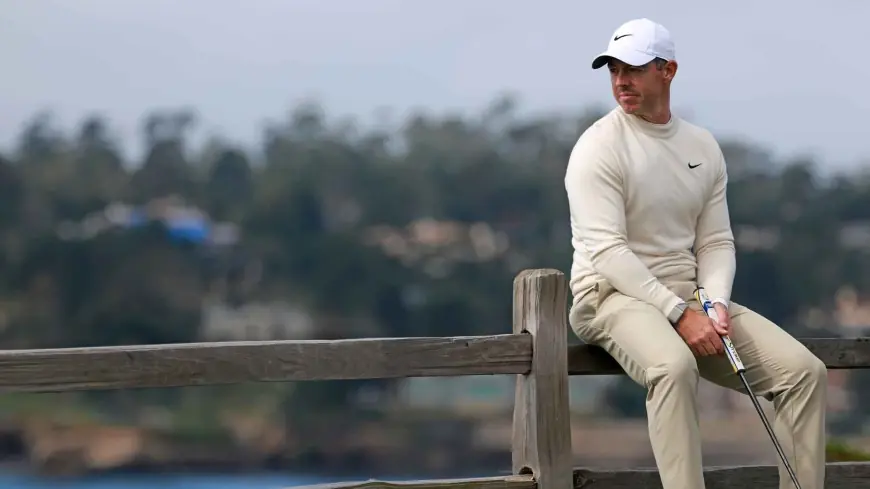
Rory McIlroy arrived at Pebble Beach this week both as a defending champion and a man recalibrating ambitions. Strong ball-striking and flashes of brilliance have him in contention, but a string of avoidable mistakes and a new career horizon — having already won the sport’s biggest prizes — are forcing fresh choices about what comes next.
Solid start, familiar frustrations
McIlroy opened play with a 68 at Spyglass Hill and followed with a 67 at Pebble Beach to sit 9 under through two rounds on Friday (ET). Those scores left him within striking range of the lead, but he was visibly disappointed at what he called a “little bit wasteful” start. He surged early in round two with an eagle at the par-5 second and birdies at Nos. 4 and 7, yet dropped shots at 10 and 14 and squandered birdie chances late.
Putting into focus: uncharacteristic slips
Two three-putts on Thursday that resulted in double bogeys stood out. McIlroy has lost more than two strokes on the greens through two rounds, a surprising number for a player of his caliber. He acknowledged middling putting and missed short putts inside four feet, a flaw he tied to shaking off offseason rust after playing early-season events overseas. Still, he said the overall game feels better than it did a few weeks earlier, and the promise is there if he can tidy up the short game.
Pebble’s meaning after a historic run
Last February’s victory at Pebble Beach carried extra weight for McIlroy; he called Pebble one of golf’s “cathedrals” alongside Augusta and St. Andrews. That win preceded a Players Championship triumph and the career-defining Masters victory that completed a modern Grand Slam for him. In retrospect, McIlroy has described Pebble as the tournament that broke the lock on something much bigger.
New question: which cathedrals remain?
With the sport’s major trophies checked off, McIlroy said Friday he’s been forced to reset his goals. That reset has yielded a new career question: which historic venues and signature tournaments does he still want to conquer? He singled out St. Andrews, Riviera and Muirfield Village as places he’d love to add to his resume. He also reflected on personal milestones tied to architecture and history, noting the importance of winning events that carry deep associations with icons of the game.
Looking ahead: St. Andrews and timing
McIlroy will likely have another crack at the Old Course while still in the prime of his career, with the 155th Open scheduled for 2027 shortly after his 38th birthday. That timeline gives him a realistic shot at adding St. Andrews to a list that already includes Augusta and others, but the challenge is more than chronological. It’s about motivation and choosing targets that now hold symbolic weight rather than mere career milestones.
Balance of ambition and execution
Pebble Beach this week has offered a snapshot of that transition: a player with renewed strategic aims, still sharpening the execution needed to get there. McIlroy’s play has the hallmarks of contention — aggressive iron play, creative short-game solutions, clutch birdies — yet remains vulnerable to small errors that compound on a tight leaderboard. If he can clean up putting and avoid self-inflicted mistakes, the ambition to add more “cathedrals” seems entirely within reach.
For now, McIlroy’s week at Pebble is as much about fine-tuning as it is about winning. The broader story is different: a champion who has cleared the sport’s highest hurdle and is now choosing where to plant his flag next.