Forrest Unveils Battery-Powered Trains Ahead of Green Deadline

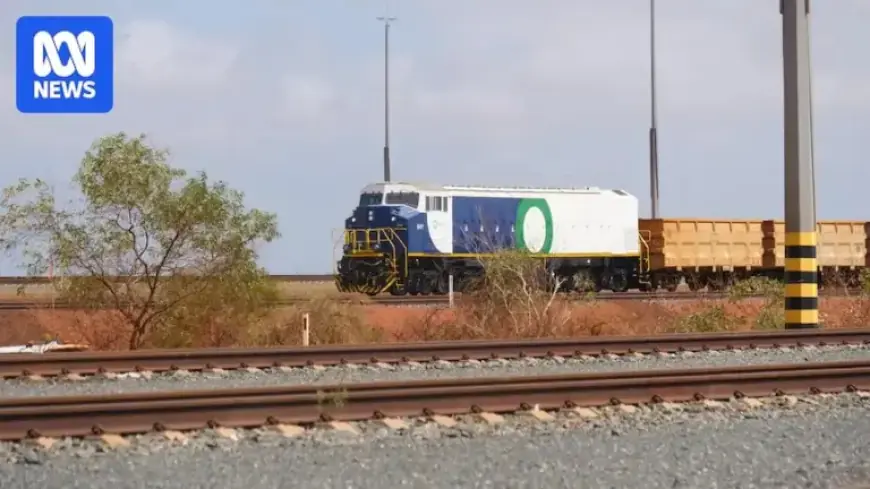
Western Australia’s Pilbara region is witnessing a significant shift towards sustainable rail transport as Fortescue has introduced battery-electric locomotives. This marks the transition from diesel-powered trains to environmentally friendly alternatives.
Fortescue Unveils Battery-Powered Trains
This week, Fortescue launched two advanced battery-electric locomotives at Port Hedland, showcasing its commitment to reduce carbon emissions in its operations. With this addition, the fleet now has a total of 70 diesel-powered trains transporting iron ore from mines to ports.
Performance and Technology
Fortescue’s battery-electric locomotives, designed by Caterpillar’s Progress Rail, feature what is claimed to be the largest land-mobile battery globally. The locomotives possess a capacity of 14.5 megawatt-hours, equivalent to the energy used by 200 to 300 electric vehicles.
- Each locomotive can power a refrigerator for 30 years.
- The two new locomotives are expected to save 1 million liters of diesel annually.
Despite this progress, Fortescue’s total diesel consumption is approximately 80 million liters per year, indicating that significant work remains ahead.
Charging and Sustainability Initiatives
These locomotives will be charged in two primary ways: through Fortescue’s expanding renewable energy initiatives and via regenerative braking systems. The company is currently installing over 3,000 solar panels daily to support this infrastructure.
Fortescue aims to fully electrify its transport operations within a few years. The transition aligns with the company’s “real-zero” carbon emissions goal set for 2030.
Industry Competitors and Decarbonization Efforts
Fortescue is not alone in exploring battery-electric trains. BHP initiated its own trials of such technology last November. Meanwhile, Rio Tinto had previous plans for battery-electric locomotives but recently decided to halt its partnership with Wabtec, citing current battery technology as unsuitable for their operations.
Comments from Industry Experts
Experiencing mixed feedback, Fortescue has been criticized for not pursuing simpler solutions while abandoning several high-profile projects. Notably, plans for an electric rail model developed with Downer Group were scrapped last September, resulting in significant job losses.
Experts, such as Curtin University’s Professor Peter Newman, have urged companies to accelerate their decarbonization strategies, warning that falling behind could have negative consequences.
The Path Forward
As the Pilbara region accounts for 40% of Western Australia’s carbon emissions, shifting towards battery-electric trains represents a crucial step in combating climate change. Fortescue is resolute in its mission to achieve a zero-carbon future, emphasizing its ongoing commitment to renewable energy and innovation within the mining industry.