

















Hughes brothers shine as Jack embraces fourth‑line role for Team USA in Milan

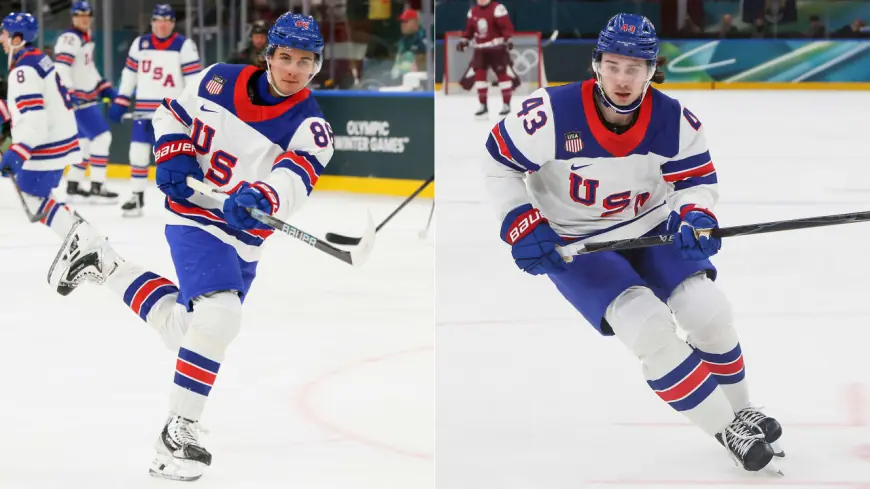
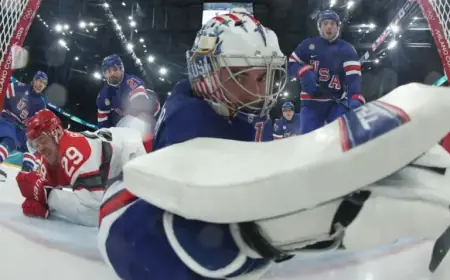
MILAN — Faced with questions about his NHL commitment, Jack Hughes put any doubts to rest with a selfless, high‑impact performance in Team USA’s 5-1 Olympic opening win over Latvia. Playing an unfamiliar fourth‑line left wing role, the New Jersey star set up both of Brock Nelson’s goals in limited shifts while older brother Quinn paced the team from the blue line with two assists of his own.
Buy‑in over ego: Jack accepts whatever role is needed
In a short tournament where roles can change from game to game, Jack Hughes embraced the assignment most would call unconventional for a player of his profile. He skated 11: 14 and took just 16 shifts, yet the result was tangible: two primary assists on Nelson’s markers, including the eventual game‑winner. “I think the thing that we’ve been talking about is just buying in, and whatever it takes, ” Hughes said. “I’m just so pumped to be here and to be at the Olympics and playing for the U. S. If it’s fourth line, whatever it may be, I’m ready to play that role. And when you tap my shoulder, I’m gonna be ready to go. ”
Coaching staff faces lineup choices after an encouraging debut
General manager Bill Guerin set a clear expectation before the tournament: be selfless and accept your role 100 percent. That mandate was visible on the ice, and Jack’s willingness to adapt will complicate coaching decisions moving forward. U. S. coach Mike Sullivan now must weigh whether to keep the effective fourth‑line chemistry intact or move Hughes into a higher usage spot as other lines continue to search for balance. For now, the so‑called fourth line’s performance against Latvia makes a strong case for continuity.
Fourth‑line chemistry and tactical payoff
The fourth‑line combination rotated minutes with Brock Nelson, J. T. Miller and Vincent Trocheck, and the unit produced at even strength against Latvia. Teammates praised Hughes’s team‑first mindset; Matthew Tkachuk noted the fluid play that led to the tic‑tac‑toe sequence on Nelson’s second goal. The success of that line highlights a broader tournament reality: depth and buy‑in can be as decisive as star power in a compact Olympic schedule.
Quinn Hughes anchors the blue line with heavy minutes
While Jack leaned into a limited role, Quinn Hughes was one of the team’s primary drivers from the back end. Quinn skated 21: 29, leading U. S. skaters in ice time in the opener and contributing two assists. Coach Sullivan praised Quinn’s mobility, defensive awareness and ability to jump into the play. The younger‑brother storyline gained extra weight because their mother is also on site in a player development capacity, making the Olympic debut a family affair.
Denmark looms: tactical tweaks and momentum check (3: 10 p. m. ET)
The Americans return to action Saturday at 3: 10 p. m. ET against Denmark, where Sullivan will have to decide whether to tinker with his lines or ride the balance that worked against Latvia. Some combinations — notably the Jack Eichel line — look settled, but others, including a line featuring Auston Matthews, still need refinement. For Jack Hughes, the key will be sustaining the same competitive intensity if his role changes. His Milan performance offered a reminder: willingness to sacrifice minutes can amplify impact when it matters most.
Implications beyond the Olympics
Jack Hughes’s Milan moment does more than help Team USA in the short term. Embracing a lesser role while producing results answers questions that have followed him this season and signals a maturity that teams covet in international competition. Whether he returns to a top‑line deployment later in the tournament or remains in a depth spot, the Hughes brothers have already provided the United States with a blueprint for blending star talent and selfless play on hockey’s biggest short‑form stage.