






















Marco Rubio Aims to Mend Transatlantic Ties, Dismisses Europe Rift Fears

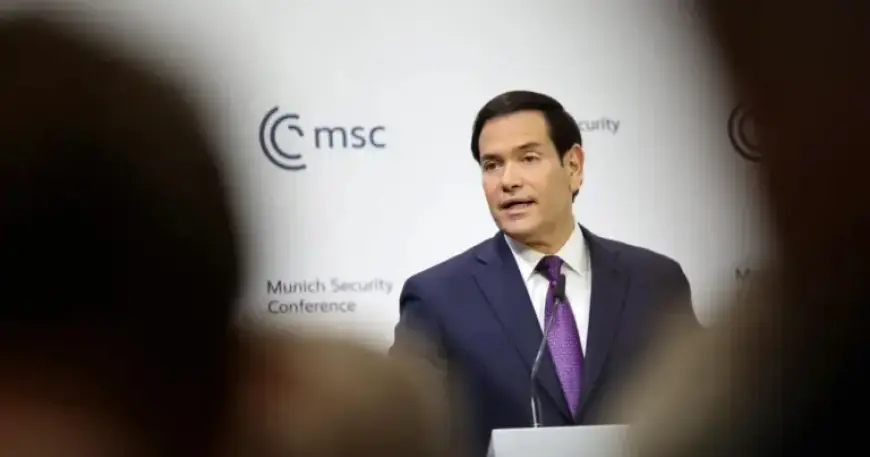
At the Munich Security Conference, U.S. Secretary of State Marco Rubio addressed the need to strengthen transatlantic ties. His remarks stood in stark contrast to the previous U.S. administration’s stance, which had been more critical of Europe.
Strengthening Transatlantic Ties
Rubio’s speech aimed to reassure European leaders and diplomats amid growing concerns about U.S.-Europe relations. He emphasized the importance of collaboration, stating, “Our home may be in the Western Hemisphere, but we will always be a child of Europe.” This message was well received, garnering a standing ovation from the audience.
In a notable shift from President Donald Trump’s recent comments at Davos, where he criticized NATO and Europe, Rubio’s address focused on restoration. He expressed a commitment to renewing ties with Europe, stating, “The United States will once again take on the task of renewal and restoration.” His preference, he noted, is to undertake this challenge alongside European allies.
Diplomatic Reception
The conference’s chairman, Wolfgang Ischinger, a former German ambassador to the U.S., commended Rubio’s diplomatic tone. He interpreted Rubio’s speech as a message of reassurance about U.S.-European partnership. European leaders welcomed Rubio’s attendance, as previous events were typically led by vice presidents.
Despite the warm reception, some were skeptical whether Rubio’s speech signified a genuine shift in U.S. policy. A contingent of Democratic senators and foreign diplomats raised concerns about the administration’s commitment to European cooperation.
Criticism of European Policies
During his speech, Rubio did not shy away from critiquing European migration and climate policies. He warned that unprecedented levels of migration could undermine societal cohesion and cultural continuity in Europe. Additionally, he expressed discontent with the United Nations, claiming it had played a negligible role in major conflicts.
Rubio defended U.S. engagements in Venezuela and Iran, stating, “It took American special forces to bring this fugitive to justice.” He argued that U.N. inaction had allowed significant threats to flourish.
Meeting with Ukraine’s President
Rubio also met with Ukrainian President Volodymyr Zelenskyy during the conference. Zelenskyy remarked on Russia’s military losses and expressed hope for a resolution to ongoing conflicts. However, he noted difficulties in communication between negotiating parties.
Rubio echoed these sentiments, admitting uncertainty regarding Russia’s seriousness about peace efforts. He remarked, “The issues that need to be confronted to end this war have been narrowed,” while also highlighting the complexity of these issues.
This diplomatic engagement reflects a critical moment in U.S.-European relations, as both sides seek to navigate a path forward amid various challenges.