






















Nicole Curtis, Rehab Addict, and “What Did Nicole Curtis Say?”: Fallout After a Leaked On-Set Video and Her New Explanation of the Word Used

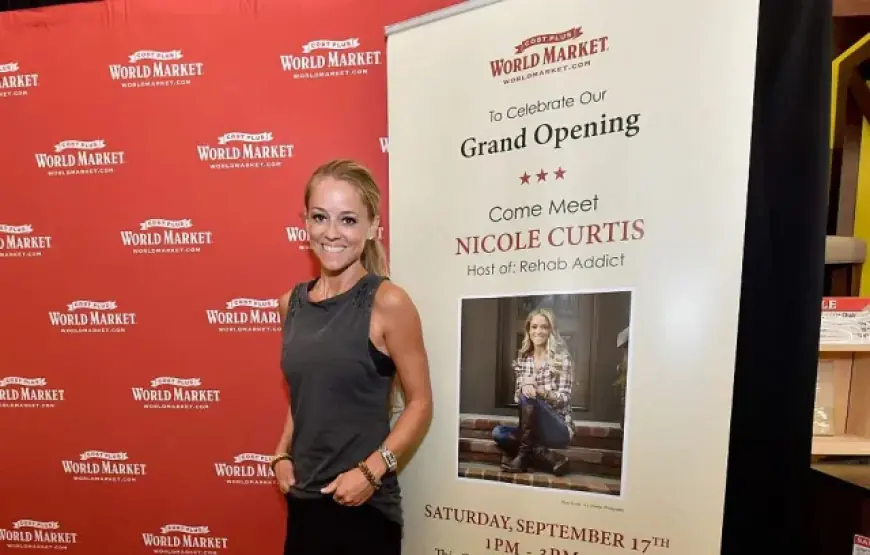
A fresh controversy around Nicole Curtis and Rehab Addict is reshaping the immediate future of the long-running home-restoration franchise after a leaked clip circulated this week showing Curtis using a racial slur during filming. In the days that followed, the network behind the series moved quickly to halt the show’s return, while Curtis issued a public apology and then a longer explanation about how the video surfaced and what she says was happening in the moment.
The result is a fast-moving story with reputational, business, and industry implications: a signature personality-led renovation brand is suddenly in limbo, and the central question audiences are asking is blunt and specific: what did Nicole Curtis say, and what does her response suggest comes next?
What happened with Nicole Curtis and Rehab Addict this week
The controversy centers on an on-set moment captured on video in which Curtis used a racial slur while frustrated during production. The clip spread widely on February 11, 2026 (ET), setting off immediate backlash and triggering a swift corporate response.
By February 12, 2026 (ET), the network behind Rehab Addict had effectively pulled the planned continuation of the season and began removing the series from its distribution footprint. The move signaled a break-glass decision: protect the broader brand by separating from the show, even if it means discarding an established franchise.
What did Nicole Curtis say, and how did she explain the word
Curtis’s first public response was an apology that framed the slur as a serious mistake and emphasized it was not part of her normal vocabulary. She also described the circumstances as physically demanding and exhausting, suggesting fatigue and stress contributed to the moment.
In her follow-up statement, Curtis went further on context. She asserted the video was not newly recorded, describing it as older footage, and claimed it was taken without her consent, altered, and released to inflame controversy right as the show was preparing to come back. She stressed regret and acknowledged the harm caused by the word, while also signaling that the release of the clip itself is now part of what she wants audiences to focus on.
That two-part posture matters: contrition for what was said, paired with a forceful claim about how and why the clip emerged when it did.
Behind the headline: incentives, leverage, and why the timing matters
For the network, the incentive is straightforward: advertisers, partners, and viewers often demand fast accountability, and hesitation can look like endorsement. Pulling a show is a high-cost move, but in reputational terms it can be cheaper than enduring weeks of headlines, internal staff fallout, and partner pressure.
For Curtis, the incentives cut in multiple directions. She has to show accountability to audiences offended by the slur while also preserving the possibility of future work. Her argument that the clip was “stolen” and “edited” functions as both a personal defense and a business strategy: if she can shift part of the narrative to misconduct around the leak, she may regain a sliver of agency over a story that otherwise ends in a clean break.
The stakeholders are broad:
-
Viewers and communities harmed by the language, who may see any explanation as minimizing impact
-
Production crews and contractors, whose workplace culture and safety are now under a microscope
-
The network’s brand and its talent pipeline, which depends on trust and predictable risk
-
Sponsors and distribution partners, who typically avoid prolonged controversy
What we still don’t know
Several key pieces remain unconfirmed or unclear in public view:
-
The exact origin chain of the leaked video and whether it was edited in a meaningful way
-
Whether there were prior internal complaints, warnings, or disciplinary steps connected to behavior on set
-
What contractual clauses were triggered to justify pulling the season, and whether any disputes follow
-
Whether any third-party investigation is underway into the leak itself
Those details will shape whether this ends as a clean cancellation, a prolonged legal fight, or an attempted rehabilitation of the franchise under different terms.
Second-order effects for renovation TV and personality-led brands
Even beyond Rehab Addict, the episode reinforces how fragile personality-driven programming can be. A single clip can erase a launch plan, strand a season’s worth of production costs, and force companies to choose between standing by a star and protecting the larger portfolio.
It also raises practical production questions: on-set recording norms, who controls footage, how crews handle high-stress moments, and whether “always rolling” environments increase both accountability and risk.
What happens next: realistic scenarios and triggers
Here are the most plausible next steps, with clear triggers:
-
Full severance and quiet wind-down if the network holds its line and partners stay risk-averse through the next news cycle.
-
A legal dispute over contracts and footage if Curtis pursues claims tied to theft, unauthorized use, or reputational harm, or if the network seeks damages.
-
A rebrand attempt without the original platform if Curtis tries to repackage her work independently, banking on a loyal audience segment.
-
A mediated settlement and mutual non-disparagement if both sides prioritize ending uncertainty over winning in public.
-
A broader industry crackdown on set conduct and footage controls if other productions treat this as a warning and tighten policies quickly.
Why it matters now is simple: the story is no longer only about a word said in a heated moment. It’s about how modern entertainment brands manage trust, how quickly platforms move when risk spikes, and whether a public apology plus an explanation about a leak can meaningfully change outcomes once distribution is pulled.