
























USA vs Latvia hockey at the Olympics: Team USA opens with a 5-1 win as Brock Nelson shines and Latvia rebounds to stay in the Group C race

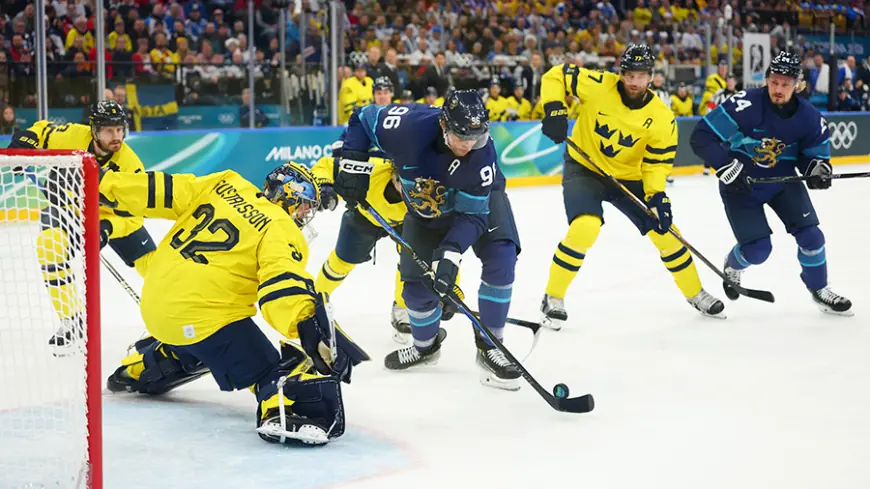
Team USA men’s hockey has already delivered a statement moment at the 2026 Winter Olympics, beating Latvia 5-1 in the teams’ opening Group C matchup on Friday, February 13, 2026 ET. The result answered the early question hanging over the tournament: can the United States translate a star-heavy roster into disciplined, tournament-style hockey right away? In the opener, the answer was yes.
Latvia, meanwhile, didn’t let the loss define its start. On Saturday, February 14, 2026 ET, Latvia responded by beating Germany 4-3, putting itself right back into the group’s traffic jam and keeping the Olympic hockey standings tight heading into the next round of games.
What happened in USA vs Latvia: Brock Nelson leads as the U.S. pulls away
The United States controlled the game after an early settling-in period and turned it into a comfortable win by the third period. Brock Nelson scored twice, providing exactly the kind of efficient finishing that wins short tournaments where “pretty good” chances need to become goals.
The offensive story wasn’t just about one player, though. The U.S. attack moved through multiple lines, and several of the team’s top forwards and puck-moving defenders were able to create chances without the group looking overly freewheeling. Jack Eichel and Tage Thompson were among the names driving play and helping stack possessions in the offensive zone, a key sign that the U.S. can win games without relying on a single hot hand.
On the Latvia side, the loss was decisive but not chaotic: a reminder of the gap in top-end scoring depth, not a collapse of structure. That distinction matters in Olympic play, because the teams that survive group stages often do it by staying organized, limiting damage, and stealing one swing game.
Why this matters: Olympic hockey rewards early separation, not highlight reels
The short format makes every point heavy. A 5-1 win is more than a result; it’s a tiebreaker weapon if the group compresses later. The United States banking a strong goal differential early can change how it manages future games, especially if it can rotate lines and protect legs without sacrificing results.
For Latvia, the opener highlighted a familiar challenge: when the opponent has multiple finishers, defending for 60 minutes becomes a math problem. You can survive one elite line; it’s much harder to survive three.
Behind the headline: incentives, stakeholders, and what each team is really chasing
For Team USA, the incentive is clarity. A roster full of recognizable talent is not enough; the program needs proof it can play cohesive, low-mistake hockey under tournament pressure. That’s why a player like Brock Nelson popping for two goals is significant. Depth scoring signals that the team’s “identity” can be more than a power-play highlight.
For Latvia, the incentive is survival plus belief. Latvia doesn’t need to win the group to have a successful Olympics; it needs to get into the knockout rounds with confidence that its structure holds. When Latvia plays with pace and turns games into tight margins, it can drag opponents into uncomfortable hockey.
Stakeholders extend beyond the benches:
-
Coaches and federations are judged on tournament management, not just roster names.
-
Players are fighting for role definition inside stacked lineups.
-
Fans, especially in smaller hockey countries, are watching for proof that Olympic hockey still has room for underdog momentum.
Latvia stays alive: the Germany win changes the standings pressure
Latvia’s 4-3 win over Germany on Saturday, February 14, 2026 ET, kept the group from splitting into haves and have-nots. It also underscored Latvia’s strength: resilience. Key contributions came from a mix of established leaders and emerging scorers, and strong goaltending kept the game within reach long enough for Latvia to swing it.
With results tightening, the group’s final round becomes less about “who is good” and more about “who handles the moment.”
What we still don’t know: the missing pieces that decide Olympic runs
A few questions remain open even after the early scores:
-
Can Team USA sustain defensive detail when games get tighter and nerves rise?
-
Will the U.S. power play stay efficient once opponents adjust to tendencies?
-
For Latvia, can scoring show up consistently, or will it depend on one-line bursts and goaltending heroics?
-
How will special teams and discipline shape the group once fatigue builds?
What happens next: realistic scenarios and triggers to watch
-
Team USA separates from the pack if depth scoring continues. Trigger: different lines keep producing in consecutive games.
-
The group turns into a three-way points scramble. Trigger: one upset result in the final round reshuffles placement.
-
Latvia advances by winning a tight final game. Trigger: strong goaltending plus one timely power play goal.
-
Latvia slips if it can’t generate enough chances at even strength. Trigger: shot volume stays low against structured opponents.
-
The U.S. becomes a medal favorite if it wins a close, low-scoring game. Trigger: a 2-1 type win that proves patience and defensive buy-in.
If you want, tell me what you’re trying to track today, live score, next matchup time in ET, or the Latvia Olympic hockey roster, and I’ll break it down in the same quick, game-focused format.