























Love Story Reopens the JFK Jr. and Carolyn Bessette Kennedy Myth, Prompting Fresh Backlash and a New Debate Over Who Owns the Narrative

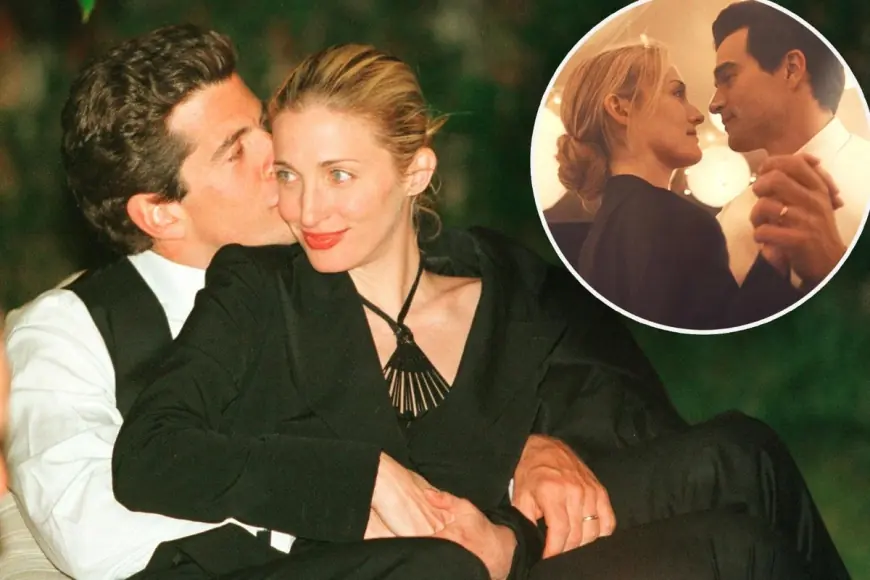
A new limited series titled Love Story has reignited fascination with John F. Kennedy Jr. and Carolyn Bessette Kennedy, landing in the middle of a familiar cultural storm: a public romance turned private tragedy, revisited through dramatization while the people closest to it weigh the cost of reopening old wounds.
The series premiered Thursday, February 12, 2026 ET, launching with multiple episodes and continuing weekly on Thursdays. It stars Paul Anthony Kelly as John F. Kennedy Jr. and Sarah Pidgeon as Carolyn Bessette Kennedy, with Naomi Watts as Jacqueline Kennedy Onassis and Grace Gummer as Caroline Kennedy. Almost immediately, the show’s debut sparked two conversations at once: whether it captures the couple’s real-life pressures with care, and whether it is ethically defensible to dramatize a still-sensitive legacy without family participation.
What happened in Love Story so far
The early episodes frame the couple’s relationship as a collision between celebrity and a fierce desire for privacy. John is depicted as a man who cannot step outside without his image being traded like currency, while Carolyn is portrayed as someone whose instincts run toward discretion and control in a world built on access.
The series leans into the public obsession that surrounded them, including nods to John’s tabloid-era status as a cultural heartthrob and the sense that every move they made became a headline before they had time to live it. One episode pivots hard into family history, focusing on Jacqueline Kennedy Onassis’ final period of life and the emotional weight her illness placed on her children, widening the story beyond romance into inheritance, grief, and the Kennedy family’s complicated relationship with fame.
What’s behind the headline: incentives, stakeholders, and why this story keeps returning
There is a reason the JFK Jr. and Carolyn Bessette Kennedy story is endlessly recycled. It sits at the crossroads of glamour, class, power, and tragedy, with a built-in ending that retroactively casts every earlier scene in melancholy.
The incentives are straightforward:
-
The creators gain a ready-made global audience and a narrative that carries emotional momentum without needing invention.
-
The cast gains career-defining visibility because these are instantly recognizable figures with iconic imagery.
-
Viewers get a nostalgic, high-stakes drama that feels like both history and celebrity culture at once.
But the stakeholders are equally clear:
-
The Kennedy family and the Bessette family carry reputational and emotional exposure when private moments are reimagined as entertainment.
-
The public inherits a version of the story that can harden into “truth” regardless of how carefully it was constructed.
-
Anyone who lived near the real events risks being pulled back into public scrutiny, even if they never asked for it.
That’s why backlash tends to be less about acting skill and more about consent and timing: who gets to tell this story, and what responsibility comes with turning real grief into scripted scenes.
What we still don’t know about the production choices
Several key questions remain unresolved, and they matter because they determine whether the series is a respectful dramatization or a glossy appropriation:
-
How much direct consultation occurred with people who knew the couple personally
-
Whether sensitive events are reconstructed from documented public record or filled in through dramatic inference
-
How the series handles the boundary between known facts and invented private dialogue
-
Whether later episodes deepen Carolyn’s inner life beyond the familiar archetype of the aloof style icon
The actors have described intensive research but have also indicated they did not seek direct participation from family members. That gap is a major fuel source for criticism, especially from people who view the Kennedys and Bessettes not as characters but as relatives.
The second-order effects: how a TV romance can reshape public memory
Dramatizations don’t just reflect public memory; they actively reorganize it. A strong performance can overwrite older impressions. A single repeated image can become the new default in people’s minds. And once a dramatized version becomes the most recent and most vivid, it often becomes the most believed.
There is also a modern amplification problem: scenes are clipped, circulated, and debated out of context. That changes the incentive structure of storytelling. Subtlety loses to moments that travel well in short form. A quiet character beat may be artistically honest, but a sharp confrontation is more shareable.
For a story already plagued by intrusive attention, that dynamic risks recreating the very pressure the series claims to critique.
What happens next: realistic scenarios and the triggers that would shape them
-
The backlash fades as the story deepens
Trigger: later episodes provide a more layered, human portrait that feels less like legend-making and more like consequence. -
The criticism intensifies if the show appears to invent intimate details
Trigger: scenes that imply private motivations without clear grounding, especially around family relationships and the couple’s final months. -
The series becomes a cultural reset for younger viewers
Trigger: viral moments and performances that turn the couple into symbols for a new generation, detached from historical nuance. -
Public debate shifts from ethics to craft
Trigger: standout acting or episode structure that persuades skeptics the work has artistic purpose beyond spectacle. -
Family objections become the dominant storyline
Trigger: stronger, more direct statements from relatives that keep the focus on consent and exploitation rather than the show itself.
Why it matters now
This is not only a love story. It is a live test of how modern entertainment treats real people who became public property without choosing it. The series arrives at a moment when audiences are more sensitive to power dynamics, privacy, and the costs of fame, and when families of famous figures are increasingly unwilling to watch their histories turned into content without a say.
Whether Love Story ultimately lands as empathetic or opportunistic will depend less on wardrobe or casting discourse and more on the choices it makes when no one can fact-check the room: the private conversations, the implied motives, the emotional conclusions. That is where reputation is made, and where legacy is most easily misrepresented.