























Mikhail Shaidorov’s Olympic costume earns high-fashion spotlight

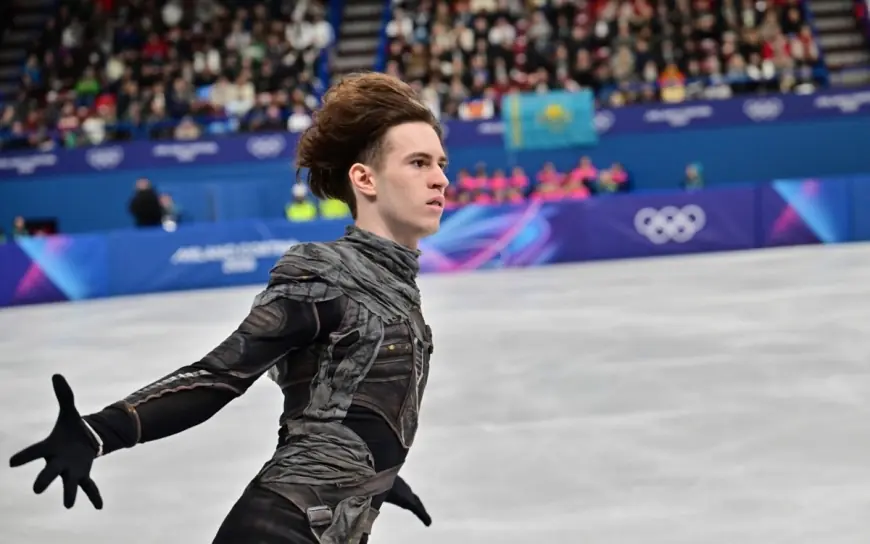
Kazakh figure skater Mikhail Shaidorov has been singled out by a major Italian fashion publication in a curated roundup of the most striking athlete looks at this year’s Winter Games, with editors praising his short program costume’s futuristic flair and sculptural draping.
A standout look in a style-forward Winter Games
The feature frames the ongoing edition of the Winter Olympics as among the most fashion-forward in memory, highlighting how athletes and designers are leaning into unconventional cuts, bold color palettes, and statement accessories. Within that context, Shaidorov’s ensemble was flagged as a breakout, emblematic of a tournament where wardrobe choices have become part of each performance’s storytelling—on and off the rink.
The editors’ selection emphasizes that this Games is not just about technical excellence but also about visual identity. From fabric textures to gradient effects and ornamentation, the visual language of competition has expanded, turning costumes into narrative devices that amplify choreography and music.
A futuristic edge on the ice
Shaidorov’s short program costume drew attention for its draped, gradient fabric panels set against a contrasting base, creating clean lines that shift under arena lighting. The look channels the stark, sand-brushed futurism popularized by Denis Villeneuve’s Dune films—an echo reinforced by comparisons to Timothée Chalamet’s desertworld silhouette. The aesthetic sits at the intersection of apocalyptic and visionary, aligning with contemporary sci-fi minimalism while remaining functional for elite skating.
Beyond the references, the garment’s construction appears calibrated for performance: feather-light layering to preserve jump rotation, strategic seaming for flexibility, and visual contours that track body lines during spins and step sequences. It’s fashion serving form, with theatricality that doesn’t compromise the mechanics of the sport.
Peers hailed for bold design choices
Shaidorov’s recognition came alongside a slate of high-profile names, reflecting a field-wide embrace of fashion-forward presentation. The list spans disciplines and national teams, with men’s singles, ice dance, and women’s events all represented. Among the featured athletes are Ilia Malinin, Petr Gumennik, Madison Chock and Evan Bates, Stephen Gogolev, Lara Naki Gutmann, and the duo of Laurence Fournier Beaudry and Guillaume Cizeron—each singled out for distinctive styling aligned to their program narratives.
Common threads across the highlighted looks include daring color contrasts, gradient dyes, thoughtful asymmetry, and accessories that underline character or theme without tipping into distraction. The cumulative effect: a Games where costuming reads as intentional and contemporary, with couture-adjacent polish filtering into technical sportswear.
Why this matters for Team Kazakhstan
For Kazakhstan, Shaidorov’s fashion nod underscores the nation’s growing visibility in figure skating on the world stage. Spotlight moments like this can broaden audience engagement beyond score sheets, inviting fans who follow culture and style into the conversation. That crossover appeal can translate to stronger sponsorship interest, wider media coverage, and a deeper connection between athlete persona and performance.
It also reflects the collaborative craft behind the scenes—skaters, choreographers, designers, and costume technicians aligning to create a unified on-ice identity. Recognition from fashion arbiters signals that this creative ecosystem is resonating beyond the rink.
The broader shift: when style sharpens performance
The attention on Shaidorov and his peers speaks to a broader shift at the Olympics, where presentation is increasingly understood as a competitive edge. Costumes help delineate character, clarify musical phrasing, and guide the audience’s eye through the geometry of a program. When the visual story clicks, technical content can register more cleanly with spectators and, at times, with judges assessing overall composition and performance quality.
As the Games progress, expect more athletes to experiment—refining silhouettes, embracing gradient and ombré techniques, and integrating subtle accessories that reinforce theme without impeding movement. The trendline is clear: performance wear is becoming a canvas, and Mikhail Shaidorov’s short program look is one of this season’s defining brushstrokes.