

























Yuto Totsuka claims Olympic gold as men’s halfpipe reaches a new peak

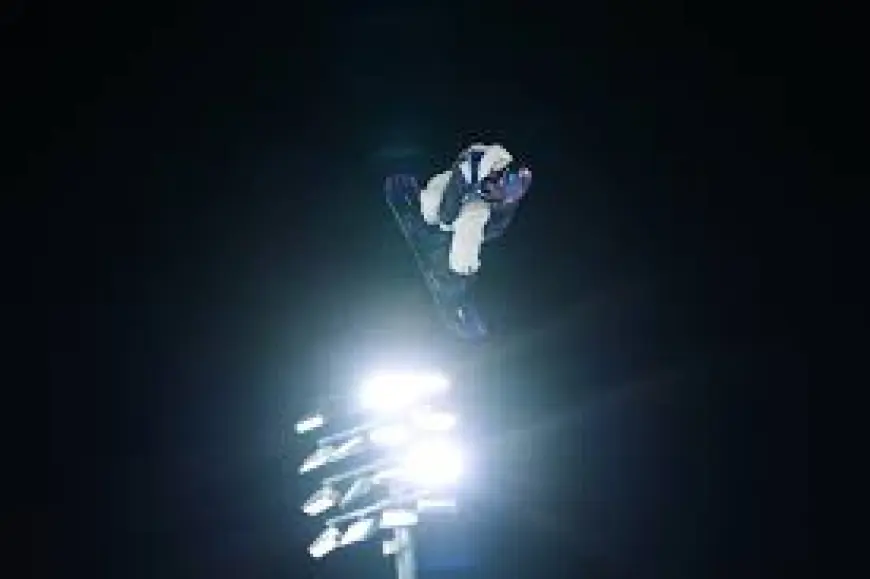
Yuto Totsuka delivered the run of his career Friday (ET) to win Olympic gold in the men’s snowboard halfpipe in Livigno, Italy, anchoring a powerhouse performance from Japan that set a new competitive bar. Totsuka’s second run scored 95. 00 and held through a tense final rotation as Australia’s Scotty James, trailing by just 1. 5 points, fell on his last hit and settled for silver for a second straight Games.
Gold at last for Totsuka
Long one of the most technically gifted riders in the world, Totsuka arrived in Italy with a deep résumé but without an Olympic medal. He erased that gap emphatically. His gold-sealing second run was all control and composure—high amplitude, clean grabs, and seamless transitions—leaving no doubt with the judges. With the field already pushing into the 90s, he found separation through execution, variety, and a finish that never blinked under pressure.
James’ silver streak continues
James, the technical standard-bearer who has routinely raised the event’s ceiling, once again found himself in a razor-thin duel for the top step. His second run came in 1. 5 points shy of Totsuka’s mark, a score that left him visibly surprised. That set up a dramatic final attempt with the gold in play, but a fall on the last trick halted his charge. The result echoes his 2022 finish, another silver in a career defined by podiums and progression.
Japan’s depth dominates the day
Beyond the champion, Japan’s collective performance defined the contest. Ryusei Yamada claimed bronze, Ruka Hirano finished fourth, and Ayumu Hirano—who famously pushed the sport forward at the last Games—took seventh. Four Japanese riders inside the top seven underscored a talent pipeline that has grown both wider and stronger, capable of landing difficult runs at immense amplitude with remarkable consistency.
In the 90s or nowhere
Even by Olympic standards, the scoring tier turned unforgiving. The top four riders broke 90, a threshold that once signaled perfection but now serves as a baseline to contend. With judges rewarding amplitude, execution, and variety across spins and stances, small errors had outsized consequences. Totsuka’s 95. 00 was the day’s lone truly flawless statement, and it forced the rest of the field to reach—or risk being left behind.
North American medal hopes fade
Riders from the American continent never truly entered the medal equation on final runs. Jake Pates placed eighth, Alessandro Barbieri—who qualified fourth—finished 10th after landing just one of his three runs, and Chase Josey came in 11th of 12. In a final that demanded perfection, inconsistency proved unforgiving, and podium probabilities evaporated as the Japanese contingent and James kept the throttle open.
A sport in overdrive
This final will be remembered less for any single trick than for the collective level—cleaner, bigger, and more relentlessly technical than past cycles. The gap between the very best and the rest continues to shrink, leaving little room for conservative strategy. Totsuka’s long-awaited gold, James’ stubborn pursuit, and Japan’s sweeping depth signal an era in which the opening run must be elite, and the closing run must be transcendent. The halfpipe has entered a new normal, and it’s breathtaking.