























Maxim Naumov’s emotive surge, paired with Ilia Malinin’s firepower, reshapes men’s figure skating

Men’s figure skating is being powered on two complementary currents: the stirring, story-first skating of Maxim Naumov and the boundary-pressing brilliance of Ilia Malinin. Together, they are pulling the discipline toward a place where emotional depth and technical audacity are no longer competing ideals but co-authors of what wins.
Naumov’s season of feeling
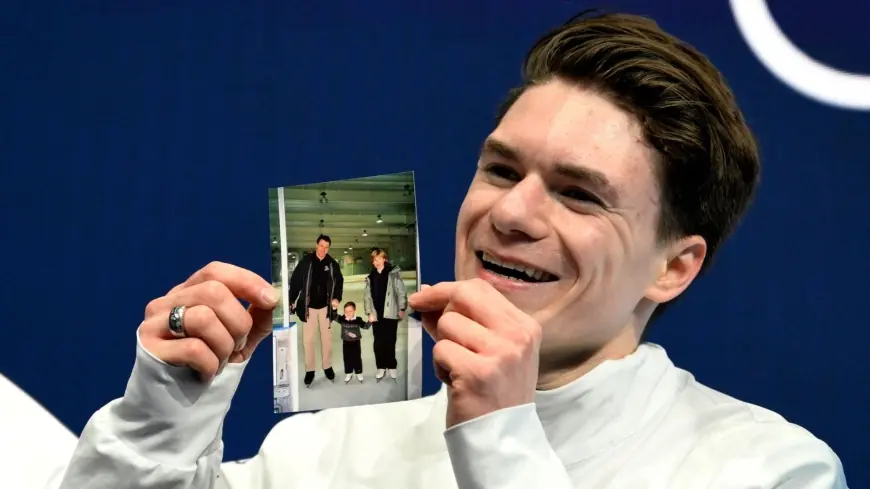
Maxim Naumov has increasingly centered his performances on connection and purpose, using the ice as a canvas for deeply personal themes. He has framed his skating as a tribute to his parents, saying, “I feel them” when he performs—a line that echoes through his programs and the way he holds an edge, shapes a phrase, and lands a jump. The result is a body of work that asks audiences to lean in, not just look on.
That emotional clarity has become Naumov’s signature. Rather than chasing shock-value difficulty at every turn, he has emphasized command of pace, musical phrasing, and control in transitions. When the big jumps arrive, they punctuate what is already a conversation with the music rather than a detour from it. Judges and fans have taken notice of the coherence: the spin levels, step sequences, and carriage are serving a story, not sitting alongside it.
Programs that connect
The architecture of Naumov’s skating points to thoughtful construction. His programs are built to breathe—quiet footwork passages that let the blade sing, then crescendos where the choreography and the jump layout meet cleanly. That balance can be the difference between a program that reads as a checklist and one that resonates as a complete performance. It also insulates him when the jump math gets fierce; strong component marks, spins with personality, and seamless entries give his skating layers of value beyond the base scores.
There is also a visible maturity to his movement quality. From stretch through the back to the finish of a landing, the detail work is calibrated. Small choices—how long he holds a spiral edge, the timing of a turn out of a step—invite the audience in and signal a skater comfortable trusting stillness as much as speed.
The Malinin effect: raising the ceiling
At the other end of men’s skating’s current spectrum sits Ilia Malinin, who has redrawn expectations for what is technically possible. His approach has elevated the ceiling, pressuring the field to consider how to keep pace with ever more ambitious jump content and the confidence to deliver it under bright lights. The ripple effect is unmistakable: programs are now often engineered around maximizing base value without sacrificing the second-mark credibility needed to seal the deal.
That dynamic has not pushed everyone into the same lane. Instead, it has sharpened identities. For skaters like Naumov, the response has been to double down on performance integrity—clean edges, fully realized spins, and choreography that earns trust with every step—then place the technical milestones where they amplify, not overshadow.
Two lanes, one destination
Far from a clash, the coexistence of Naumov’s lyricism and Malinin’s magnitude is expanding what success can look like. A men’s event now feels like a broader canvas: some programs ignite with explosive difficulty; others bloom through narrative weight and clarity. The audience wins either way, and the judging conversation becomes richer when execution, composition, and risk live in closer dialogue.
That has practical stakes. When the technical spread tightens, components and quality can tilt the podium; when the jump race opens a gap, clean, expressive skating can keep pressure on. Naumov’s pathway underscores that balance. Deliver the story. Land the jumps that matter. Make the rest unmistakably musical and precise.
What’s next for the U. S. men
The momentum behind this two-pronged surge bodes well for the broader American contingent. Training environments are adapting, emphasizing both jump mechanics and choreographic identity. Younger skaters are seeing models that aren’t mutually exclusive: chase ambition in the air, but be unmistakable on the ice. In that ecosystem, a performer like Naumov can thrive by turning feeling into scoring power, while a technician like Malinin can gain durability through program construction that lets the difficulty breathe.
The takeaway is clear: the sport is healthier when multiple blueprints can win. In that landscape, Naumov’s heartfelt performances do more than move a crowd—they raise the competitive bar by proving that resonance and risk can share the same spotlight. And as technical limits keep stretching, the value of a program that lingers after the music stops only grows.
A season defined by resonance
If this season continues on its current arc, men’s figure skating will be remembered not just for what was landed, but for what was felt. Maxim Naumov’s skating invites audiences to care—and in a sport that measures everything, caring still matters. Paired with the energy radiating from Ilia Malinin’s technical frontier, the discipline is finding a thrilling equilibrium. It is both emotional and magnificent, and it is moving fast.