




















‘Love Story’ Puts Jacqueline Kennedy Onassis’s Final Days Back in Focus

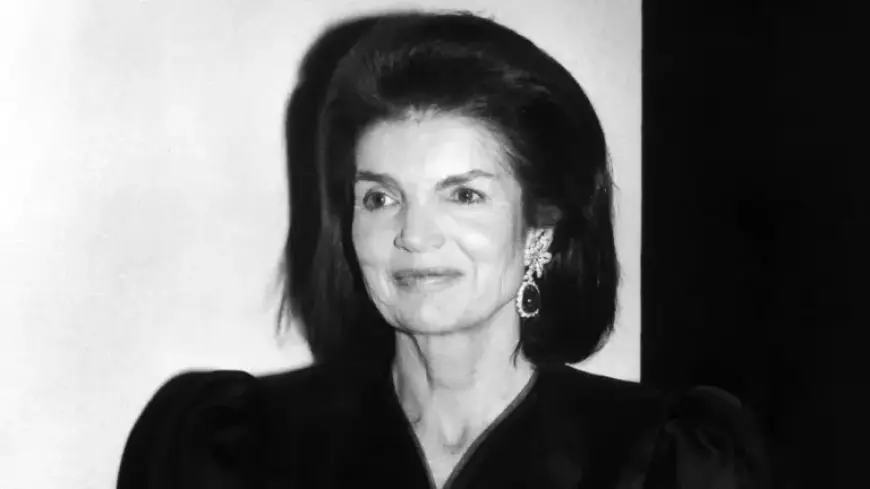
The premiere of the limited series Love Story: John F. Kennedy Jr. & Carolyn Bessette on Thursday, Feb. 12 at 9 p.m. ET has renewed attention on Jacqueline Kennedy Onassis—her final months, her son’s turbulent romances, and what the show gets right versus what it compresses for drama. New coverage and fact-checks are surfacing details of the 1993 riding accident that preceded her cancer diagnosis and the real tenor of her view on high-profile partners in her son’s orbit.
A dramatized fall and a confirmed diagnosis
Early episodes recreate a pivotal late-1993 turning point: a fall while fox hunting in Virginia. In that incident, a horse attempted to clear a crumbling wall, causing injuries to both horse and rider. As a friend recounted years later, “He basically landed on his nose, and she catapulted right over his head.” In the months that followed, Jacqueline Kennedy Onassis received a diagnosis of non-Hodgkin lymphoma. She died on May 19, 1994, at age 64.
The series frames this stretch as both a medical ordeal and a family reckoning, using the fall as a narrative hinge to bring John home, place the family under one roof, and invite new scrutiny of the personal relationships surrounding him.
Home as refuge, and a son at her side
On screen, John rushes to his mother’s side after the accident, only to find a figure determined to recover on her own terms. The drama lingers on the push-pull between Jackie’s preference for privacy and her children’s protectiveness, culminating in a tense sequence in which she collapses in her apartment. While the show heightens the immediacy of these moments, the historical record is clear on the sequence: a November 1993 fall, the subsequent cancer diagnosis, and her death the following spring.
That framework grounds the emotional stakes of the series, positioning Jackie not only as a cultural icon in decline but as the center of gravity for family decisions—especially those involving John’s love life.
Daryl Hannah, the Monroe shadow, and Jackie’s real stance
One dinner scene brings Daryl Hannah to Jackie’s apartment alongside Caroline Kennedy and Edwin Schlossberg. When a staff member explains that Jackie will dine in her room, Hannah bolts, reading the move as disapproval. Outside, she challenges John: “Have you ever asked yourself why your mother doesn’t like me? Or why she might have a tainted perception towards famous blonde actresses? It doesn’t take Freud to connect the dots.”
Offscreen recollections suggest a more measured view. A friend of Jackie’s put it this way: she “was not a fan of that relationship,” but “it wasn’t like she hated Daryl at all; she just didn’t want her son marrying an actress.” That line—less personal animus, more maternal caution—tracks with the discreet, image-conscious approach Jackie favored across her public and private life.
Tabloids, triangles, and a romance built for television
The show opens with a tabloid jolt: Carolyn Bessette discovers that even after a dream date, John has been seen holding hands with his famous ex. Flowers are refused, tensions rise, and the series briskly moves the pair back into each other’s orbit.
Behind the scenes, the creative team has acknowledged that the real relationship was more stop-and-start than a nine-part narrative can comfortably hold. As one executive producer put it, the on-off rhythm was streamlined for the sake of momentum: “In reality, they were on again, off again, a little bit more than we had time to do in the show,” and audiences weren’t likely to want every stall and restart laid out beat by beat.
What to watch as new chapters arrive
The premiere delivered three episodes, sketching the triangle of John, Carolyn, and Daryl against the backdrop of Jackie’s declining health. Future installments are set to roll out weekly on Thursdays at 9 p.m. ET. Expect further scrutiny of how the series balances romance with responsibility, and how it weaves documented milestones—like the 1993 accident and 1994 death—into scenes of domestic friction, celebrity glare, and the enduring influence of Jacqueline Kennedy Onassis.
For viewers drawn to the history, the most resonant throughline may be the show’s portrait of Jackie as both symbol and mother. The real events—an abrupt fall, a hard diagnosis, and a family closing ranks—remain the lodestar. The rest is the push and pull of memory and myth, now recalibrated for a new generation.