

























Luge Sets New Milestones at Winter Olympics

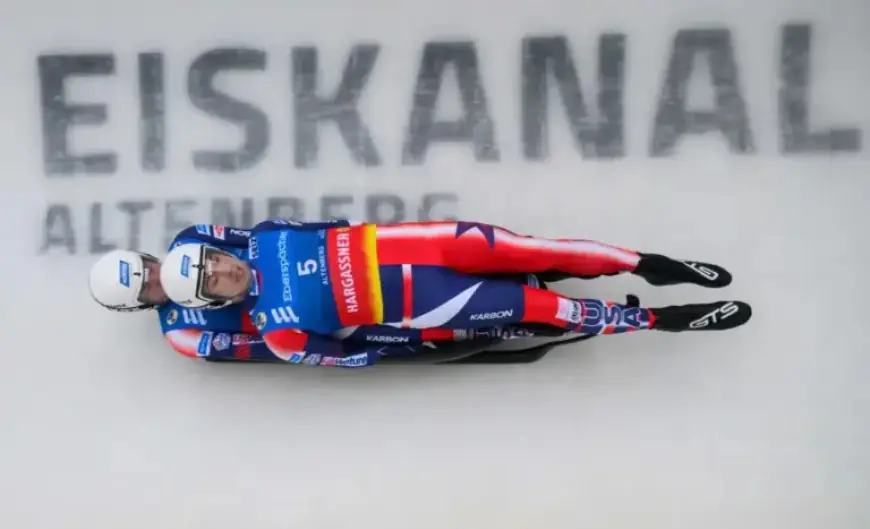
Luge, derived from the French word for sled, is a thrilling Olympic sport where athletes race down an icy track at speeds approaching 100 mph. Competitors can participate in singles or doubles events. Notably, the upcoming 2026 Milano Cortina Winter Olympics will feature women in the doubles luge event for the first time, promoting gender equality in the sport. The U.S. luge team will include athletes Chevonne Forgan and Sophia Kirkby in this historic competition.
Luge History and Evolution
The sport of luge dates back to its origins in Switzerland. The first international luge contest took place in February 1883, organized by hotels in Davos. Sledding has a much older legacy, with early sleds utilized for transporting goods and people across snow-covered terrain.
Luge made its Olympic debut at the 1964 Winter Games in Innsbruck, Austria. Historically, Germany has dominated this sport, featuring extensive training programs for budding athletes. According to Ron Rossi, who competed in men’s doubles luge in 1984, competition intensified between East and West Germany prior to the reunification.
Notable Athletes in Luge
Several athletes have left an indelible mark on luge history:
- Natalie Geisenberger (Germany): Known as the most decorated Olympic luge athlete, she has seven medals, including six golds, before retiring in 2023.
- Georg Hackl (Germany): Achieved the rare feat of winning three consecutive gold medals in singles luge at the 1998 Nagano Olympics.
- Armin Zöggeler (Italy): Made history as the first athlete to secure six medals across six consecutive Winter Olympics from 1994 to 2014.
- Mark Grimmette and Brian Martin (USA): Considered the most decorated American luge athletes, they have multiple international medals, including Olympic medals from the Salt Lake City and Nagano Games.
The Skill and Technique of Luge
The goal in luge is straightforward: reach the finish line in the shortest time possible. However, mastering the techniques of steering and speed creates a demanding athletic challenge. In singles events, athletes steer with their shoulders and feet. In doubles, the rear athlete handles the shoulder steering while the front athlete manages foot steering.
Contrary to common belief, luge athletes are not merely passive participants. They engage in rigorous training to build strength and agility. As Zack DiGregorio, a recent Olympian, notes, the fastest athletes often appear to be doing the least yet are executing complex maneuvers. Training includes shoulder strength workouts, agility exercises, and quick start drills.
Training and Competition
Competitors practice navigating the track along an optimal route within a narrow margin. This process requires significant control and relaxation, particularly at speeds over 90 mph. Athletes must avoid creating aerodynamic drag by keeping their heads low, focusing on precision and speed simultaneously.
Gordy Sheer, a three-time Olympian, likens the experience of luge to “a roller coaster that you can control.” The sport’s innate simplicity makes it accessible, as many people have experienced the joy of sledding from a young age. This factor may contribute to luge’s growing popularity as a winter sport.