

























Nickel-Iron Battery Charges Instantly, Lasts Over 12,000 Cycles

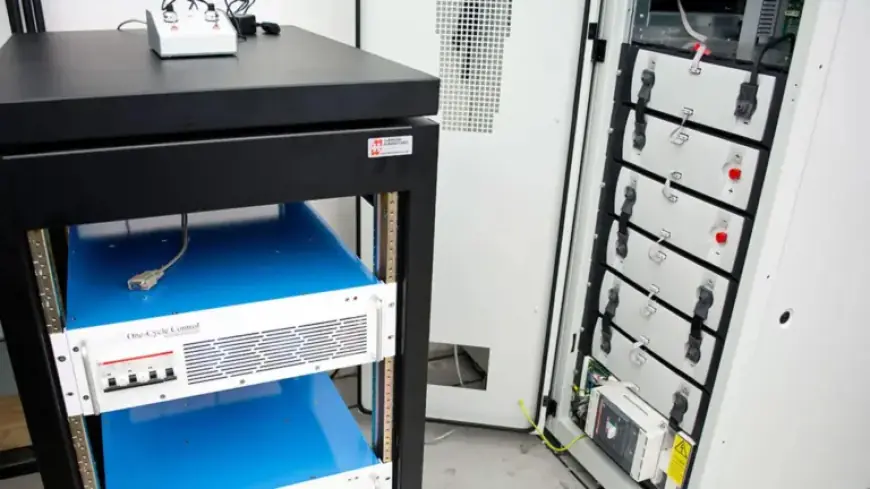
An international collaboration led by researchers from UCLA has unveiled a groundbreaking prototype of a nickel-iron battery. This innovative battery charges in mere seconds and boasts an impressive lifecycle, enduring over 12,000 cycles—equivalent to more than 30 years of daily recharges.
Fast Charging and Robust Endurance
The researchers believe that this technology is well-suited for storing excess electricity generated from solar farms during daylight hours. This stored energy can then be utilized to power the grid at night. Additionally, it holds promise for providing backup power to data centers, thanks to its quick charging capability and high output.
Advancements in Battery Design
Despite its advantages, the nickel-iron battery has not yet achieved the energy density levels seen in lithium-ion batteries. The prototype features nickel and iron clusters that are less than 5 nanometers in size. Remarkably, this allows for 10,000 to 20,000 clusters to fit within the width of a human hair.
- Increased electrode surface area enhances efficiency.
- Achieves full charge in seconds, compared to seven hours for previous models.
Innovation Through Biological Templates
This new development builds on a century-old concept where electric vehicles once outnumbered gas cars but struggled with a limited range. Thomas Edison previously experimented with nickel-iron chemistry to improve battery performance, aiming for a 100-mile range, but was eventually overshadowed by internal combustion engines.
The latest UCLA prototype incorporates 2D graphene and proteins, overcoming conductivity challenges that have historically hindered this type of battery. By using proteins from beef production as templates for growing metal clusters, the research team created a novel battery structure.
Manufacturing Process
The metal clusters were developed through a process that involved mixing proteins with graphene oxide, a one-atom-thick material. The mixture was superheated in water and subsequently baked at elevated temperatures, transforming the proteins into carbon and embedding the nickel and iron clusters into a lightweight aerogel, which is composed of 99% air by volume.
Performance and Scalability
The battery’s impressive performance stems from its high surface area and porous structure, allowing for ample space for chemical reactions. As metal particles transform into nanoclusters, the surface area-to-volume ratio increases, leading to faster charging and discharging capabilities.
The research team is currently exploring the potential of using different metals with this nanocluster fabrication technique. They are also investigating natural polymers as a more sustainable alternative to bovine proteins for manufacturing purposes.
Future Implications
Co-author Maher El-Kady emphasized the long-lasting benefits of this technology. He noted that it could potentially provide energy storage solutions for decades, making it ideal for renewable energy systems or for immediate power restoration in case of outages. The battery’s durability and rapid response feature could significantly enhance the stability of power grids and help manage the fluctuating output of renewable energy sources.