

























Trump Directs Pentagon to Purchase Coal-Generated Electricity

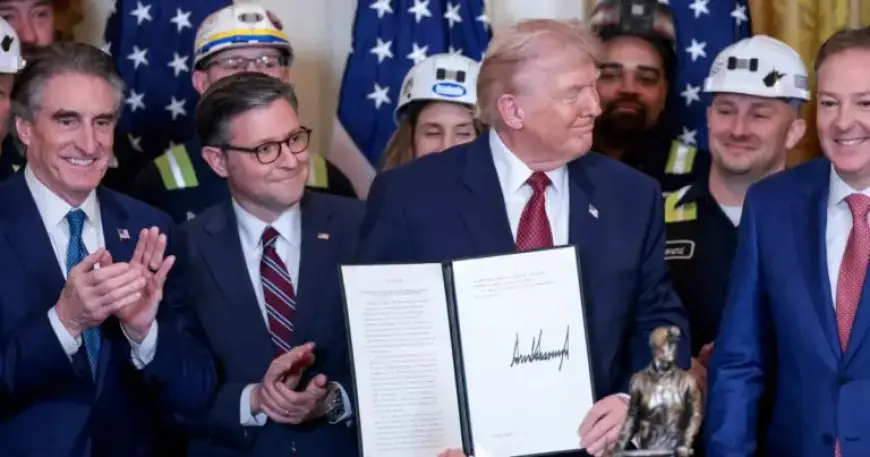
In a significant move to support the coal industry, President Donald Trump has recently instructed the Pentagon to purchase electricity generated from coal. This directive aims to stimulate demand for fossil fuels at a time when their market position is increasingly challenged by renewable energy and natural gas.
Order Details and Strategic Intent
Trump’s executive order, signed on a Wednesday, requires the US Department of Defense to establish long-term purchasing agreements with coal-fired power plants. The President emphasized the importance of preserving and strategically utilizing coal-based energy resources as part of this initiative.
Financial Aspects and Investments
While the order did not disclose specific energy quantities or financial terms, Trump announced a substantial investment by the US Department of Energy. The agency will allocate $175 million for upgrades to six coal facilities located in North Carolina, Ohio, West Virginia, Kentucky, and Virginia.
Public Support and Energy Workforce
During a White House event, Trump praised coal industry workers for their contributions to the U.S. economy. He highlighted their role in heating homes and powering factories, stating, “The most important people here today are those who get their hands a little bit dirty to keep America running at full speed.”
Coal Production Trends
- U.S. coal production has declined significantly over the past decades.
- From 2008 to 2023, production fell by over 50%, reaching 578 million tonnes.
- Coal accounted for approximately 16% of U.S. energy production in 2023.
Competition from Renewables
Despite Trump’s efforts to revive the coal industry, a recent analysis by Energy Innovation revealed that 99% of coal-powered facilities are more costly to operate compared to their renewable energy counterparts. In 2023, coal production’s share lagged behind natural gas and renewable energy sources, which constitute 43% and 21% of U.S. energy production, respectively.
The Broader Energy Policy Context
Trump’s approach to the coal industry reflects a broader agenda aimed at enhancing domestic manufacturing and maintaining U.S. leadership in emerging technologies, such as artificial intelligence. He has frequently referred to coal as “beautiful, clean coal” while dismissing concerns regarding its environmental impact.
Regulatory Actions and Future Outlook
The Trump administration has actively sought to prolong the operations of aging coal plants. The US Energy Department has intervened in cases where plants were set to close, effectively extending their operational lifespan. Furthermore, the Tennessee Valley Authority has voted to extend the life of two coal plants initially slated for closure by 2035.
As the debate over energy policy continues, Trump’s directive to purchase coal-generated electricity underscores a commitment to bolstering the coal sector amidst the shifting landscape of energy production in the United States.