























SAVE America Act faces pivotal House vote amid clash over proof-of-citizenship rules

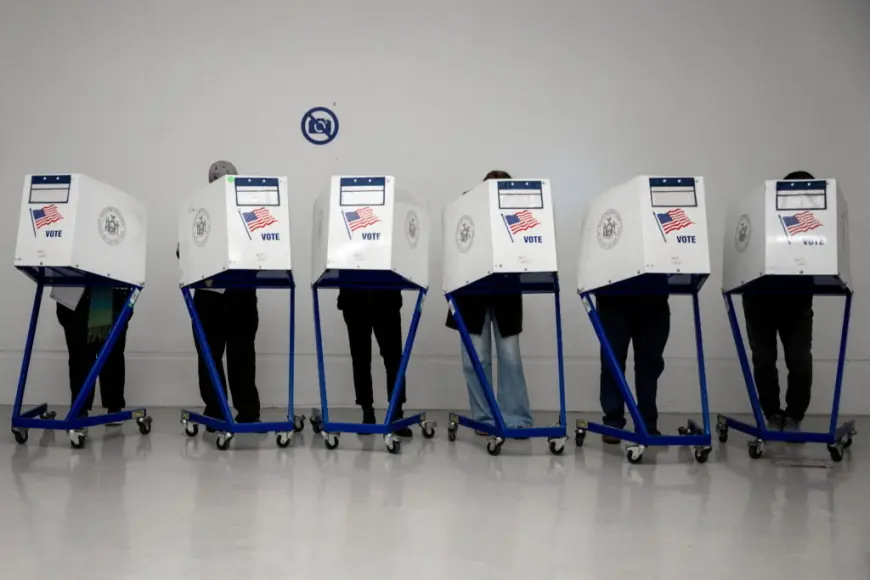
A renewed push to require documentary proof of U.S. citizenship for voter registration in federal elections has returned to the spotlight, with the SAVE America Act moving toward a key House vote and a contentious debate over election integrity and access intensifying.
What the bill would do
The Safeguard American Voter Eligibility Act, known as the SAVE America Act, would add a federal requirement that anyone registering to vote in federal elections present documentary proof of U.S. citizenship. While state and local processes vary, the measure would create a uniform federal standard layered atop existing systems.
Commonly cited examples of qualifying documentation include a U.S. passport or birth certificate. The bill also references other documents, but election-law specialists note that some forms of identification that Americans routinely carry do not indicate citizenship and may not meet the threshold set by the proposal.
Why backers say it’s needed
Supporters frame the legislation as a straightforward safeguard to ensure that only citizens participate in federal elections. They argue that the federal voter-registration framework should include a direct proof standard, emphasizing that election confidence depends on bright-line rules and consistent verification.
Allies of the measure say the proposal is a commonsense step that would bring clarity and uniformity to voter registration nationwide. Prominent figures within the party backing the bill have amplified calls for tightening election rules this year, with the issue elevated as a priority in the run-up to the next major voting cycle.
Why opponents warn of disenfranchisement
Voting-rights advocates counter that the SAVE America Act would make registration more burdensome for millions of eligible Americans, especially those who do not have a passport, cannot readily produce a certified birth certificate, or face administrative and cost barriers in obtaining replacement documentation. They argue that new document hurdles would fall hardest on naturalized citizens, seniors, rural residents, low-income voters, and people born outside hospitals where paperwork might be less accessible.
Critics also stress that noncitizen voting in federal elections is already illegal and subject to criminal penalties, and that documented instances are exceedingly rare. In their view, expanding paperwork requirements to solve a marginal problem could produce widespread, unintended consequences for lawful voters.
How it intersects with existing law
Federal law has long barred noncitizens from voting in federal contests, with violations carrying fines, potential imprisonment, and possible deportation. States manage voter registration and maintain voter lists, and many already employ verification processes that check information against existing databases.
The SAVE America Act would overlay those state-administered systems with a federal documentary proof mandate. That approach could create operational differences from state to state depending on how records are stored, how residents obtain documents, and how election offices process new registrations.
What documentation would qualify—and why that matters
The text of the proposal points to categories of acceptable proof, but election-law experts highlight potential pitfalls. For example, identification cards issued under the REAL ID Act may be held by both citizens and noncitizens and typically do not display citizenship status. Likewise, most state driver’s licenses do not indicate citizenship. As a result, large numbers of Americans could find that the IDs they use for daily life do not satisfy the bill’s new requirement, pushing them to secure other documents that can take time and money to obtain.
In practice, the burden of gathering records, requesting certified copies, and paying associated fees could become a meaningful barrier for many otherwise-eligible voters. Local election administrators could also face new logistical pressures in reviewing, storing, and auditing document submissions at scale.
The path in Congress—and the broader stakes
The House has previously advanced versions of the SAVE America Act, but the measure stalled in the Senate. The current push sets up another test of whether the legislation can clear both chambers. A separate Senate discussion on noncitizen voting underscores the issue’s prominence but also the uncertainty around final language and prospects.
Beyond the bill text, the wider political debate has intensified. Supporters insist the change is essential for confidence in elections. Opponents warn the proposal would suppress eligible voters and invite administrative backlogs without addressing a proven, large-scale problem. The clash taps into a broader dispute over federal versus state roles in election administration; calls to centralize more control at the federal level have drawn strong pushback, with constitutional arguments that states hold primary responsibility for running elections.
As the House moves toward a decision, election officials, advocacy groups, and legal analysts are watching closely for any amendments, implementation timelines, and compliance guidance that could shape how a new proof-of-citizenship standard would work in practice—and how many voters it might affect.