























USA Women’s Hockey at the 2026 Winter Olympics: Team USA Blanks Canada 5–0 as Stars and Young Scorers Power a Title Push

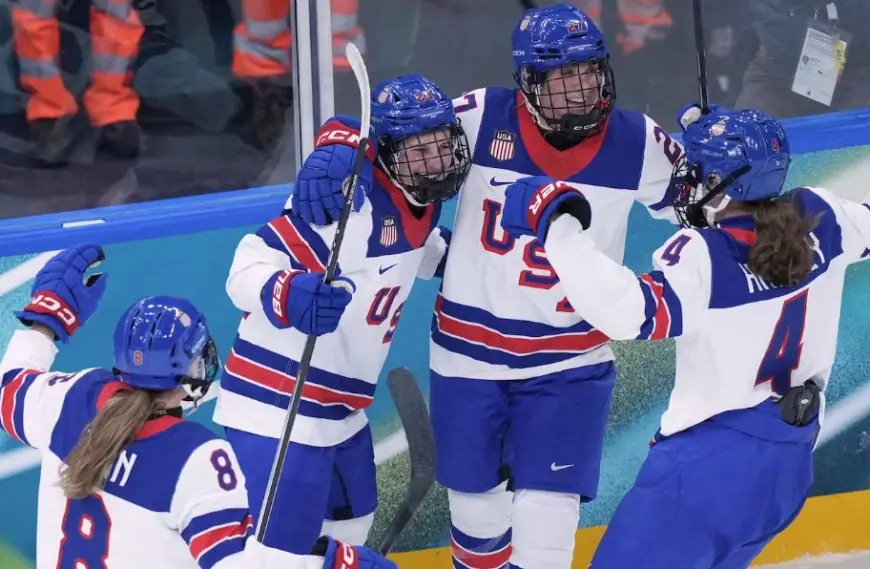
Team USA women’s hockey sent the loudest message of the Milano Cortina 2026 tournament on Tuesday, February 10, delivering a 5–0 shutout of Canada in Milan and tightening its grip on the top seed heading into the knockout rounds. The win, built on early pressure, fast puck movement, and ruthless finishing, also reframed the rivalry’s usual script: Canada rarely gets shut out on this stage, and the Americans rarely win by this kind of margin.
With the women’s gold medal game set for Thursday, February 19 at 1:10 p.m. ET, the question is no longer whether the United States can beat Canada. It’s whether anyone can disrupt a U.S. group-stage run that has combined depth scoring with near-flawless defensive structure.
USA vs Canada hockey: what happened in the 5–0 game
The United States struck first and never let the game breathe. Defenseman Caroline Harvey opened the scoring early, setting the tone for a night where the Americans repeatedly won races to loose pucks and turned clean breakouts into high-quality looks.
Forward Hannah Bilka scored twice, with additional goals coming from Kirsten Simms and Laila Edwards. Abbey Murphy was a constant driver, contributing three assists and forcing Canada’s defense to defend in motion rather than set its gaps. In net, the U.S. goalie made the saves required to turn territorial dominance into a statement shutout.
Canada entered the matchup shorthanded without a key leader due to injury, and the absence showed in chemistry and finishing. But the larger issue was the U.S. pace: the Americans layered forechecks, held the middle of the ice, and prevented Canada from turning possession into sustained pressure.
Women’s hockey Olympics standings: why seeding matters now
After four group-stage games, the United States sits atop Group A at 4–0 with 12 points and a gaudy goal differential. Canada, at 2–1, remains positioned to make a run, but the loss creates a more complicated bracket path and increases the likelihood that Canada must win harder games earlier to reach the final.
That matters because Olympic women’s hockey is not a long series grind. The knockout stage is a short runway where one off night ends everything, and seeding decides who has to face a heavyweight before the medal rounds.
Key knockout dates in ET:
-
Quarterfinals: Friday, February 13 and Saturday, February 14
-
Semifinals: Monday, February 16
-
Bronze medal game: Thursday, February 19 at 8:40 a.m. ET
-
Gold medal game: Thursday, February 19 at 1:10 p.m. ET
Behind the headline: why Team USA looks different in 2026
The U.S. advantage right now isn’t only talent. It’s how the roster fits together.
This team is blending a veteran spine with a wave of scorers who don’t wait for permission to shoot. Captain Hilary Knight and alternate captain Alex Carpenter provide the stabilizing presence and big-moment credibility, but the finishing has come from multiple lines and from the back end as well. Harvey’s goal against Canada wasn’t a fluke; it reflected how the U.S. is activating defenders into the play without losing coverage.
The incentives are clear. Coaches want a tournament identity that travels: disciplined defending, quick transitions, and enough scoring depth that opponents cannot key on one line. Players want to prove they can deliver under the rivalry spotlight, because that’s the pressure you’ll see again in a semifinal or final.
Key players fans are searching: Caroline Harvey, Hannah Bilka, Alex Carpenter
Caroline Harvey has become the kind of defense-first-and-more weapon that shifts games. She closes quickly, moves pucks cleanly, and still has the confidence to jump into the attack when the read is there.
Hannah Bilka’s two-goal night against Canada signaled a broader trend: the U.S. is getting finishing from the next tier of names, not only from the established stars. That’s often the difference between silver and gold.
Alex Carpenter remains a central connector in the lineup, blending playmaking and threat. In tight games, her ability to create in the slot and on the power play becomes a pressure valve when legs get heavy late in the tournament.
What we still don’t know
Even with a dominant group stage, the most important questions are still open:
-
Can the U.S. sustain its pace when the games turn into low-event, one-goal knockout battles?
-
Does Canada get healthy and sharpen its attack in time to force a rematch on equal footing?
-
Which goaltender rises into the tournament’s defining storyline once the margin for error disappears?
-
Will special teams decide the medal round, especially if refereeing tightens and power plays become scarce?
What happens next: realistic scenarios and triggers
-
USA reaches the final with a defense-led run
Trigger: continued suppression of slot chances and clean exits under forecheck pressure. -
Canada rebounds and engineers the rematch
Trigger: improved finishing and cleaner puck management against aggressive U.S. pressure. -
A bracket upset changes everything
Trigger: one quarterfinal where a favorite can’t solve a hot goalie or gets burned by penalties. -
The rivalry turns into a special-teams battle
Trigger: a semifinal or final decided by one power-play goal and one kill under late pressure. -
A new star claims the tournament
Trigger: another young scorer replicates Bilka’s impact in the medal rounds, forcing opponents to spread defensive attention.
Team USA has earned the right to be the benchmark so far. The next test is the one that always defines Olympic hockey: doing it again when the scoreboard pressure is heavier, the legs are tired, and one mistake can end the chase for gold.