






















Wuthering Heights Movie 2026: Emerald Fennell’s Bold New Adaptation Lands in Theaters as Reviews Split and Fans Debate the “Primal” Approach

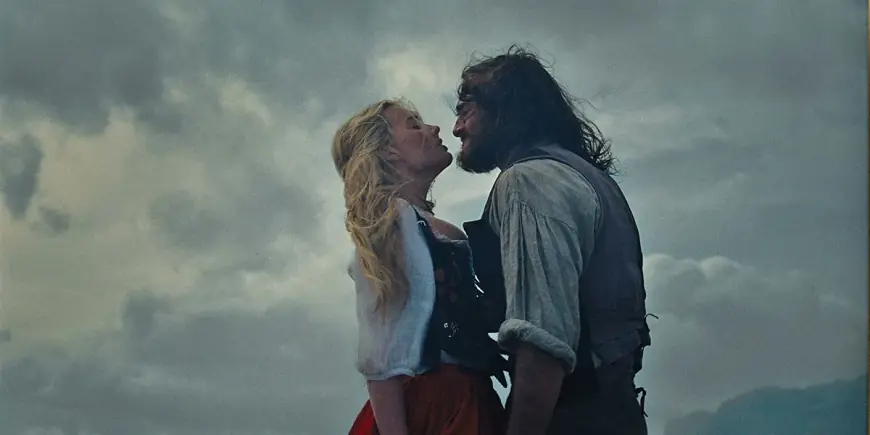
The Wuthering Heights movie arriving in 2026 is already doing what Emily Brontë’s novel has done for generations: dividing audiences, provoking arguments about love and cruelty, and daring viewers to sit with characters who are difficult to admire but impossible to ignore. The new adaptation, written and directed by Emerald Fennell, opens in theaters on February 13, 2026 ET, after a late-January premiere that kicked off a fast-moving wave of early reactions.
With Margot Robbie as Catherine Earnshaw and Jacob Elordi as Heathcliff, this Wuthering Heights is being framed less as a polite period romance and more as a feverish psychological tragedy, one that leans into obsession, class resentment, and the story’s deliberately punishing emotional rhythm.
Wuthering Heights 2026 release details and what’s different this time
The timing is part of the strategy. A mid-February release positions the film to catch date-night attention while still selling itself as the anti-romance romance: a story about desire turning into damage, and damage turning into legacy.
Fennell’s creative signature matters here. After prior films built around sharp social observation and discomfort, her Wuthering Heights appears designed to feel physical and immediate rather than museum-like. Early interviews around the film’s promotional run repeatedly emphasized extremes, with the production leaning into the idea that this is a story of bodies and impulses as much as dialogue and manners.
The result is an adaptation that seems intentionally uninterested in being universally liked. That is both the gamble and the hook.
Wuthering Heights: cast, characters, and the emotional core
The headline pairing is built to pull in viewers who might not normally chase a Brontë adaptation:
-
Margot Robbie as Catherine Earnshaw
-
Jacob Elordi as Heathcliff
-
Hong Chau as Nelly Dean
-
Shazad Latif as Edgar Linton
-
Alison Oliver as Isabella Linton
-
Martin Clunes as Mr. Earnshaw
-
Ewan Mitchell as Joseph
In story terms, the casting signals a focus on intensity and volatility. Catherine and Heathcliff are not written to be aspirational lovers. They are a warning label. Any modern Wuthering Heights adaptation has to decide whether to soften that truth for accessibility, or sharpen it for impact. Everything about the marketing and early commentary suggests this version is sharpening.
Behind the headline: why a harsher Wuthering Heights plays now
The incentives surrounding this release are straightforward. For the filmmakers, the upside is making a classic feel newly dangerous, turning assigned-reading familiarity into must-see curiosity. For theaters, the promise is an adult-skewing event title that can compete in a crowded winter marketplace. For the cast, it’s the kind of prestige project that can generate awards conversation while also driving pop-culture chatter.
The stakeholders are equally clear:
-
Fans of the novel who want emotional fidelity, even when it is ugly
-
Viewers who want a romantic story and may recoil at the cruelty
-
Educators and readers who care about what gets emphasized: class, race, abuse, desire, or all of it at once
-
The wider movie audience, increasingly primed for buzzy, divisive films that are marketed as experiences rather than simple entertainment
Second-order effects are already visible. When a film leans hard into sexuality and obsession, it tends to dominate discussion in two ways: craft debates about adaptation choices and moral debates about what the story is “saying.” That discourse can fuel ticket sales, but it can also narrow the audience if word-of-mouth hardens into a warning rather than an invitation.
What we still don’t know
Even with release week approaching, several practical questions remain unanswered for many moviegoers:
-
Whether general audiences will embrace the film’s intensity or reject it as too abrasive
-
How well the movie balances momentum with the novel’s looping, memory-haunted structure
-
Which scenes become the cultural flashpoints, and whether that helps or hurts the film long-term
-
Whether the adaptation settles the enduring argument about Wuthering Heights: tragedy, horror story, love story, or all three
What happens next: likely outcomes and triggers
-
A strong opening powered by curiosity
Trigger: audiences treat it as an event film and show up for the cast and the buzz. -
A front-loaded box office followed by polarizing word-of-mouth
Trigger: viewers split sharply on whether the “primal” approach feels earned or excessive. -
Awards-season traction for performances or craftsmanship
Trigger: critics and guild voters rally around the film’s ambition, even if they dislike parts of it. -
A long-tail audience that grows through debate
Trigger: the discourse becomes the marketing, pushing reluctant viewers to decide for themselves. -
A renewed wave of interest in the novel and older adaptations
Trigger: viewers leave wanting a comparison point, turning the release into a broader Brontë moment.
Why it matters
Every era gets the Wuthering Heights it can handle. A new film version is not just a retelling, it is a choice about what to amplify in a story that refuses to be comforting. The 2026 Wuthering Heights movie is positioning itself as a test of appetite: for messy love, for moral discomfort, and for period drama that feels less like nostalgia and more like confrontation.
If that sounds exhausting, it may be exactly what the filmmakers are counting on.