






















Kurt Cobain Homicide News Resurfaces in 2026 After New Forensic Report Challenges the Official Suicide Ruling

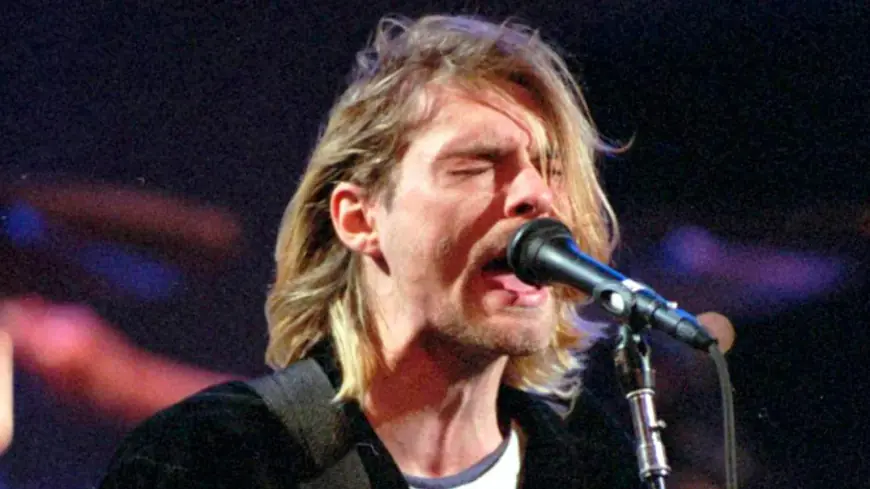
A new independent forensic report is reigniting long-running debate over Kurt Cobain’s death, with its authors asserting the 1994 case should be viewed as a potential homicide rather than a suicide. The latest attention is being driven less by newly uncovered police evidence and more by a fresh analysis of old materials, paired with rapid online amplification and renewed questions about what investigators did and did not fully test three decades ago.
As of Wednesday, February 11, 2026, the official ruling remains unchanged: Cobain’s death is classified as a suicide. Authorities have indicated they are not reopening the case based solely on the new private report, while leaving open the general possibility of reviewing credible, verifiable new evidence if it emerges.
What the new homicide claim says about Kurt Cobain’s death
The independent report’s core argument centers on toxicology and physical feasibility. The team contends that the amount of heroin cited in prior public discussion would likely have incapacitated Cobain to a degree that makes a self-inflicted shotgun death less plausible. They also point to claimed anomalies at the scene, such as the placement of drug paraphernalia and how certain physical details were documented.
It is important to separate two things that often get blurred in viral retellings: a private report can raise questions, but it does not carry the same evidentiary weight as a law-enforcement reinvestigation with subpoena power, chain-of-custody documentation, and courtroom-tested standards. Right now, the new report is best understood as a challenge to conclusions, not a confirmed reversal of them.
What investigators have said, and what has not changed
The King County medical examiner’s determination and the Seattle Police Department’s classification of the death as suicide have stood for decades. In prior years, police reviewed certain materials again and reaffirmed the original conclusion. In the current moment, officials are signaling that the threshold for reopening would be high, especially given the time elapsed, the limitations on re-testing, and the risk of public confusion around victimization and culpability.
That stance is not unusual for decades-old cases without a clear new evidentiary trigger, such as previously unknown DNA, a verified confession, or newly surfaced original materials with intact provenance.
Courtney Love and the recurring cycle of suspicion
Courtney Love’s name predictably re-enters the conversation whenever homicide claims trend. For years, internet speculation has framed her as responsible or complicit, despite no criminal charges tied to those allegations. The renewed chatter does not change that legal reality.
The bigger story is how public narratives can harden into “common knowledge” without courtroom proof. In high-profile deaths, suspicion can become self-sustaining: every new documentary, report, or social-media thread creates the impression of progress even when the underlying evidence remains the same set of contested facts.
Behind the headline: why this story keeps coming back
Context: Cobain’s death sits at the intersection of celebrity, addiction, cultural mythology, and mistrust of institutions. The 1990s were an era of intense tabloid attention, and the decades since have added a digital ecosystem where theories can spread faster than corrections.
Incentives: Independent investigators and content creators benefit from attention, and attention rewards certainty, not nuance. On the other side, law enforcement has incentives to defend the integrity of a concluded investigation unless presented with a clear, testable reason to re-open it.
Stakeholders:
-
Cobain’s family and friends, who face renewed waves of scrutiny and speculation.
-
Love, who remains a lightning rod for unproven claims and reputational harm.
-
Fans and the broader public, who often want definitive answers that may be impossible to provide after so much time.
-
Investigators and medical authorities, whose credibility becomes part of the story whenever old conclusions are challenged.
Second-order effects: This renewed push can crowd out more current public-safety priorities, while also fueling misinformation and harassment. It can also encourage copycat “forensic” takes that cherry-pick details without professional standards.
What we still don’t know
Several gaps keep the debate alive, and they matter because they define what would be required for meaningful re-evaluation:
-
Which specific documents, photos, and original materials the private team reviewed, and whether they had complete, authenticated records.
-
Whether any claimed inconsistencies are truly discrepancies or reflect limitations in the public’s partial view of the full investigative file.
-
Whether any physical evidence still exists in a condition that would allow modern testing with reliable chain-of-custody.
What happens next: realistic scenarios and triggers
-
No official movement, continued online debate
If no verifiable new evidence appears, the story likely stays in the cycle of periodic resurges tied to anniversaries and viral clips. -
A narrow official review without reopening
Authorities could acknowledge receipt of the report and conduct a limited administrative assessment of whether it contains anything genuinely new. -
Release of additional authenticated materials
If legally and ethically feasible, more archival material could be made available in a structured way that reduces rumor-driven interpretation. -
New testimony with corroboration
A credible witness account would need supporting documentation and consistency with physical evidence to change the trajectory. -
Broader public conversation shifts to media literacy
As conspiracy cycles intensify, there may be more emphasis on distinguishing speculation from proof, especially when reputations and real people are affected.
For now, the most accurate update is straightforward: a new private report is disputing the official finding, but the case remains classified as a suicide, and homicide claims circulating today are not confirmed by an official reinvestigation.