

























Olympic Medal Count 2026: Norway Leads Gold Race as Italy Stays Close on Total Medals and the US Builds a Broad Podium Push

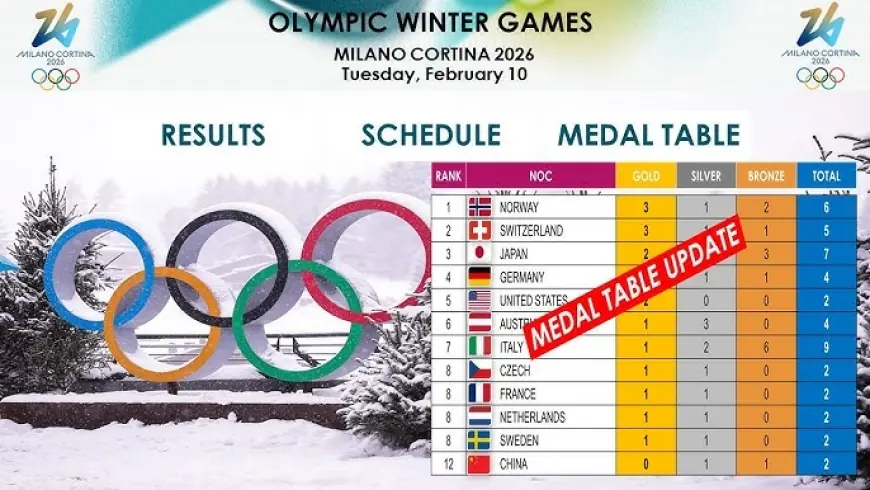
The Winter Olympics medal count in 2026 is starting to show two different battles at once: the race for gold medals and the race for overall depth. As of late morning February 11, 2026 (ET), Norway sits on top of the gold medal table, while host Italy is piling up total medals quickly, and the United States is stacking podiums across multiple sports rather than dominating a single one.
Winter Olympics medal count 2026 snapshot (February 11, 2026 ET)
Here is where the Olympics medal count stands among the leading nations right now:
| Rank | Country | Gold | Silver | Bronze | Total |
|---|---|---|---|---|---|
| 1 | Norway | 6 | 2 | 4 | 12 |
| 2 | Germany | 3 | 2 | 1 | 6 |
| 2 | Sweden | 3 | 2 | 1 | 6 |
| 4 | Switzerland | 3 | 1 | 1 | 5 |
| 5 | United States | 2 | 3 | 2 | 7 |
| 6 | Austria | 2 | 3 | 0 | 5 |
| 7 | Italy | 2 | 2 | 7 | 11 |
| 8 | Japan | 2 | 2 | 4 | 8 |
This is why people arguing about “who’s winning” can sound like they’re talking past each other: Norway is winning the gold medal count, but Italy is right there on total medals, and the US medal count is competitive even without leading either category.
What’s driving the medal table: gold concentration vs. total-medal depth
Early in a Winter Games, medal tables can be misleading because a handful of events can swing gold totals quickly. The countries that surge early often have a tight pipeline in a few medal-rich disciplines, while others build slowly through repeated top-three finishes across many sports.
Norway’s position at the top fits its long-running model: convert a high percentage of prime opportunities into gold, then use depth to keep the total high. That combination is hard to chase because it pressures rivals to be perfect in their best events while also needing breadth elsewhere.
Italy’s pattern is different and very “host Games” in feel: frequent podium appearances, especially bronzes, that keep the home team in the daily storyline and create momentum. A total-medal surge matters politically and financially because it boosts public enthusiasm, ticket demand, sponsor satisfaction, and the perceived success of the host program, even if golds lag.
The United States is in a middle lane right now: not the top gold producer, but very much in the conversation on overall medals. That’s usually a sign of versatility across sports, and it can become dangerous later if a few near-misses start flipping into gold as marquee finals arrive.
Behind the headline: incentives, stakeholders, and why the table matters now
Medal count tracking is not just fan trivia. It’s an incentive machine.
National Olympic committees use the medal table to defend funding choices, justify coaching changes, and shape which sports get the next four-year investment. Sponsors care less about the exact rank and more about visibility: consistent podium presence means steady airtime, more athlete stories, and more sponsor mentions. Host organizers care about “total medals” because it sustains domestic engagement day after day, even on days without gold.
Athletes feel it too. A country chasing gold can increase pressure on its headline stars, while a country chasing total medals often celebrates every podium as proof the overall system is working. That can change team psychology, especially in sports where multiple events remain and confidence can snowball.
What we still don’t know about the medal count olympics picture
Even with a clear early leaderboard, several missing pieces will decide whether this turns into a runaway or a tight finish:
-
Event clustering: Some nations’ strongest sports may be weighted toward the middle or late schedule, so the current ranking can be a timing illusion.
-
Conversion rates: A team with many silvers and bronzes can jump fast if it starts converting finals into gold.
-
Health and equipment variables: Winter sports are unusually sensitive to small disruptions, and one key athlete issue can erase multiple medal chances.
-
Home advantage sustainability: Italy’s total medals are strong early; the question is whether that holds once the schedule shifts into disciplines where other nations traditionally dominate.
What happens next: realistic scenarios with triggers
-
Norway extends the gap in gold
Trigger: continued dominance in its strongest medal-producing disciplines and clean execution in high-pressure finals. -
Italy climbs into the top tier on gold, not just total medals
Trigger: converting a few close finishes into gold, especially in events where home familiarity and crowd energy can help. -
The US medal count spikes late with a gold run
Trigger: a sequence of wins in high-profile finals after a foundation of early silvers and bronzes. -
A Germany-Sweden battle becomes the tightest race on the board
Trigger: both are currently tied on gold and total, so a single day of head-to-head swings the narrative. -
Switzerland and Japan surge via specialist events
Trigger: a small set of targeted sports where they can realistically take multiple medals in a short window.
Why it matters beyond the podium
The medal count shapes everything that follows the Games: athlete endorsements, coaching jobs, funding priorities, and the public story each country tells about its sports system. Right now, Norway’s gold lead signals efficiency and dominance. Italy’s total-medal strength signals breadth and momentum at home. The US position signals a wide base that could translate into a late push if key finals break its way.
The next several days will reveal whether this is a clean gold-medal march at the top, or a deeper, messier contest where the total medal count and the gold medal count tell two different truths at the same time.