

























AI Pinpoints the Moon’s First Soft Landing

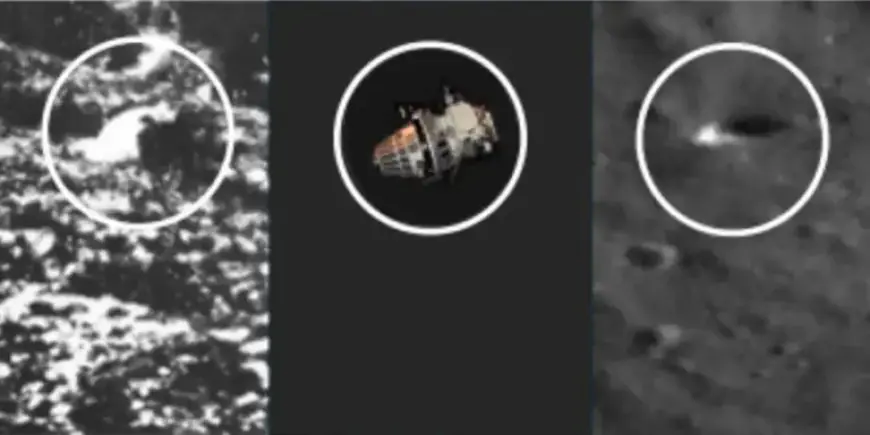
Luna 9 made history as the first spacecraft to achieve a soft landing on the Moon. This monumental event occurred on February 3, 1966, marking a significant milestone in lunar exploration. Recently, researchers believe they have pinpointed its exact landing site through innovative AI techniques.
New Discoveries Using AI
A study led by Lewis Pinault, an affiliate scientist at the SETI Institute, has shed light on Luna 9’s potential landing location. This research, published in the journal npj Space Exploration, employed AI and machine learning to analyze large datasets from the NASA Lunar Reconnaissance Orbiter.
How AI Helped Identify the Site
- The research team utilized the YOLO-ETA model (You Only Look Once – Extraterrestrial Artefact).
- They trained the model with images from various Apollo landing sites.
- It was designed to detect shapes and disturbances indicative of human-made objects.
After training, the AI was applied to examine a 5-by-5-kilometer area surrounding Luna 9’s suspected landing site. The algorithm successfully identified clusters of potential artifacts, demonstrating its resilience against varying lighting conditions.
Comparison with Historical Photos
Researchers compared the AI findings with original Luna 9 photographs. The terrain and horizons observed in the new analysis corresponded to the flat landscapes captured in 1966, lending support to the identification of this site as Luna 9’s landing area.
The Implications for Future Lunar Exploration
Pinault emphasized the increasing need for efficient cataloging of human-made artifacts on the Moon. He stated that the escalation of both robotic and human activities necessitates a systematic approach to documenting lunar debris and historical sites.
AI’s Role in Lunar Science
AI-powered technologies can significantly enhance lunar exploration. By providing tools for safe site selection and preservation of scientific areas, these systems advance our understanding of the Moon and its history. Furthermore, the ability to analyze even the smallest particles presents exciting opportunities for extraterrestrial research.
Next Steps
The ongoing work with the AI model may lead to further confirmation of Luna 9’s location. Future missions, such as Chandrayaan-2, could help validate these findings.
This study highlights how machine learning can revolutionize our approach to identifying and documenting space artifacts. As human endeavors on the Moon progress, the importance of such technological advancements in preserving space history becomes increasingly clear.