





















Savannah Guthrie video to latest FBI images: a clear timeline of key confirmed moments so far in the Nancy Guthrie disappearance

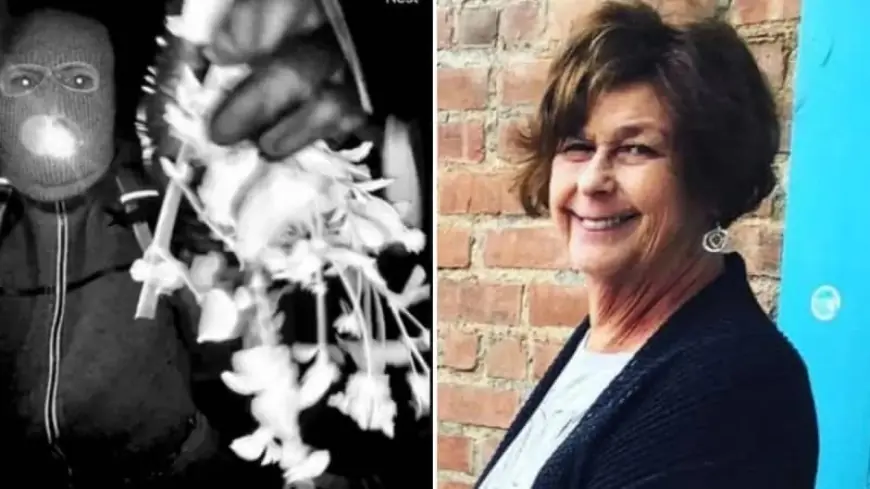
Newly released surveillance images of a masked figure on Nancy Guthrie’s porch have become the most concrete public lead in the search for the 84-year-old, as her family renews pleas for tips and authorities emphasize there is still no confirmed suspect or person of interest. Below is a clear, confirmed timeline of the case so far, focusing on what officials have publicly laid out and what has been shared by the family in verified statements and videos.
The last confirmed night and the early-morning window
Investigators have described a narrow window overnight when key devices stopped reporting and the home’s doorbell camera system went offline. Officials say Guthrie spent the evening with family and was dropped at home late on Jan. 31 (local Arizona time). In the early hours of Feb. 1, the door camera disconnected, and later her pacemaker app connection dropped—events authorities have highlighted because they help anchor the time window for potential movement away from the house.
While some timestamps are described as “about” or “around” in briefings, the consistent outline is that the camera disconnection happened first, followed by the pacemaker app disconnect within roughly an hour.
Confirmed timeline of key moments (ET)
| Date (ET) | Time (ET) | Confirmed moment |
|---|---|---|
| Jan. 31 | about 11:48 PM | Family says Nancy Guthrie was dropped off at home after dinner. |
| Feb. 1 | about 3:45–3:47 AM | Doorbell camera system disconnected in the early morning hours. |
| Feb. 1 | about 4:28 AM | Pacemaker app connection indicated it was disconnected from her phone. |
| Feb. 1 | early afternoon | Family reported her missing after she did not appear for a routine morning commitment. |
| Feb. 5 | afternoon | Officials said blood found on the porch was matched to Guthrie’s DNA; no verified proof-of-life was announced. |
| Feb. 10 | morning | New images and short video clips of a masked porch figure were released publicly with a request for identification. |
What officials said on Feb. 5: evidence at the home
The Feb. 5 briefing marked a major shift in the public posture of the case. Authorities confirmed that blood found on the exterior porch matched Nancy Guthrie through DNA testing. Officials also described the home as having “very concerning” conditions when first processed, reinforcing the view that this is more than a routine missing-person report.
At that same briefing, investigators discussed purported ransom communications that had circulated to media recipients. Authorities said the messages were being evaluated but emphasized the critical gap: no publicly confirmed proof-of-life had been established.
Family videos: shifting from hope to urgency
The family’s public messaging has moved in phases:
-
Early appeals asked whoever may have information to come forward and urged a safe return.
-
As days passed without confirmed contact, the family’s tone became more urgent and direct, stressing the need for credible tips and clear communication if someone was holding her.
-
In the 24 hours leading up to a widely discussed Feb. 9 deadline referenced in the ransom communications, Savannah Guthrie posted a solo plea that described the family as being in a moment of desperation and asked the public for help.
Officials have consistently asked the public to prioritize specific, checkable information over rumor, including time-stamped sightings and unedited video.
Feb. 10 FBI image release: the central public lead
On Feb. 10, federal investigators released still images and brief video clips showing a masked person on or near the porch during the disappearance window. The figure is seen wearing dark clothing and a backpack and appears to approach the camera, cover the lens, and use vegetation to obstruct the view. Authorities described the person as appearing armed, noting what looks like a holster at the front of the belt.
Crucially, the images do not show what happened to Nancy Guthrie, and officials have not publicly named the figure as a confirmed suspect or person of interest. The point of the release is identification: investigators want someone to recognize the person’s clothing, gear, build, or gait and to provide information that can be validated against other evidence.
What typically happens next
Now that a visual lead is public, investigations often move into a “funnel” phase—narrowing from broad outreach into a smaller number of high-priority leads:
-
Video canvassing expands along likely routes, looking for the same clothing or a linked vehicle.
-
Tips are triaged for details that can be checked quickly: exact time, exact location, and what the tipster recognizes.
-
Messaging often becomes more specific if patterns emerge (a route, a vehicle type, a tighter time band).
For the public, the most helpful contributions remain original and time-stamped: unedited exterior footage from the overnight window, precise sightings, or recognition of distinctive gear seen in the released images.
Sources consulted: Federal Bureau of Investigation; Pima County Sheriff’s Department; Associated Press; ABC News