























Overwatch patch notes: Jetpack Cat arrives as 2026 Spotlight launches new era

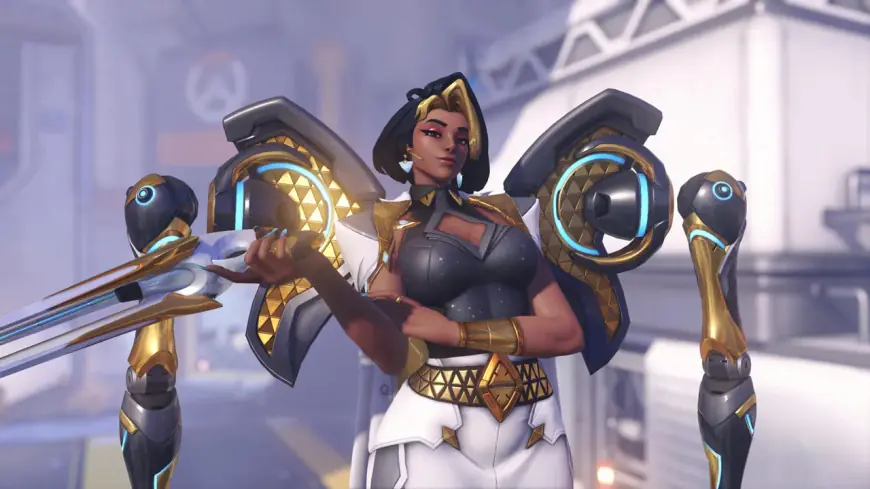
A major Overwatch update landed Tuesday, Feb. 10, 2026 (ET), bringing the game’s biggest roster expansion in years and a structural shake-up that changes how heroes earn value across a match. The headline is Jetpack Cat — a long-teased flying support — arriving alongside four other new heroes as the first chapter of a yearlong story arc begins.
The update also introduces a new faction event, fresh communication tools, and narrative-driven map changes, all aimed at making each season feel more connected — and more disruptive — than a standard balance pass.
Overwatch patch notes: what changed on Feb. 10
The Feb. 10 release is framed as the start of Season 1, with a broad “systems plus content” approach instead of a narrow tweak list. It adds five heroes immediately, then folds in role-wide changes that affect every match format, from casual queues to competitive play.
The patch also reinforces the new seasonal structure: Season 1 is treated as the opening act of a longer arc, with story elements and in-game shifts designed to evolve over multiple seasons across 2026.
Five new heroes now, with more planned
Season 1 launches with five new heroes added at once: Domina (Tank), Anran (Damage), Emre (Damage), Mizuki (Support), and Jetpack Cat (Support). The immediate effect is obvious — more comps, more counters, more first-week chaos — but the longer-term effect is that 2026 is positioned as a high-volume year for hero releases overall.
If that pace holds, the early weeks will likely be defined by rapid experimentation: teams trying to decide which of the new kits are “must-picks,” which are map-dependent, and which only shine with coordinated play.
Jetpack Cat: flight-first support with utility
Jetpack Cat enters the roster as a mobility-heavy support built around constant airborne positioning. The defining feature is permanent flight, which changes the usual rules for sightlines, cover, and escape routes. Her primary fire blends damage and healing in a single stream of projectiles, encouraging active “heal while pressuring” play rather than purely reactive support.
Her utility kit leans into repositioning and disruption: she can rapidly adjust altitude and angle to keep teammates topped up, and she has tools that can move allies or create brief windows to disengage. That combination makes her dangerous in organized groups — but her relatively low durability means she can be punished hard if she’s caught without space to maneuver.
Role and subrole passives reshape balance
Beyond new heroes, the patch’s most competitive-impacting change is the role-wide rework of passives and the addition of subrole tuning that pushes heroes toward clearer identities.
Tanks now gain more baseline staying power in role queue environments, while also generating less ultimate charge from certain incoming sources, which can slow the pace of ultimate-heavy snowballing. Damage-role rules are adjusted in a way that makes some previous role benefits feel less exclusive, with effects becoming more standardized across the cast.
The takeaway: even familiar heroes may feel different this week, not because their numbers changed dramatically, but because the match economy around them did.
Conquest event, comms upgrades, and map shifts
Season 1 also launches a limited-time Conquest event running for five weeks. Players choose a faction each week and complete faction-specific challenges to progress reward tracks, with a global tally determining weekly outcomes. It’s designed to keep the player base pointed at the same goals, week after week, while the broader story arc unfolds.
Communication is also updated with a new “Praise” function on the comms wheel and expanded contextual callouts. The goal is to make quick, non-voice coordination feel more natural — celebrating plays, flagging needs, and communicating timing more efficiently.
On the environment side, select maps receive narrative updates that visually and structurally reflect the new story direction, including layout tweaks intended to change how teams approach key chokes and rotations.
What to watch next for upcoming heroes
With five heroes arriving at once, the immediate meta question is whether teams settle into one dominant structure or cycle through multiple viable looks depending on map type and skill tier. Jetpack Cat’s learning curve — aiming, flight positioning, and survivability — will likely be a major driver of early perception: powerful in highlights, but only consistently strong when players master spacing and tempo.
The forward look is straightforward. If more heroes are scheduled to arrive later in 2026, the “best comp” may stay unsettled longer than usual, with balance updates and roster additions repeatedly resetting priorities.
Key takeaways
-
Five new heroes arrived Tuesday, Feb. 10, 2026 (ET), kicking off Season 1’s new arc.
-
Jetpack Cat is a permanent-flight support built around mobility, blended healing/damage, and utility.
-
Role-wide passive and subrole changes mean the meta shift isn’t just about new heroes — it’s about new rules.
Sources consulted: Overwatch official news and patch notes, PC Gamer, Polygon, Windows Central