























Why is Eileen Gu competing for China after the 2022 Winter Olympics

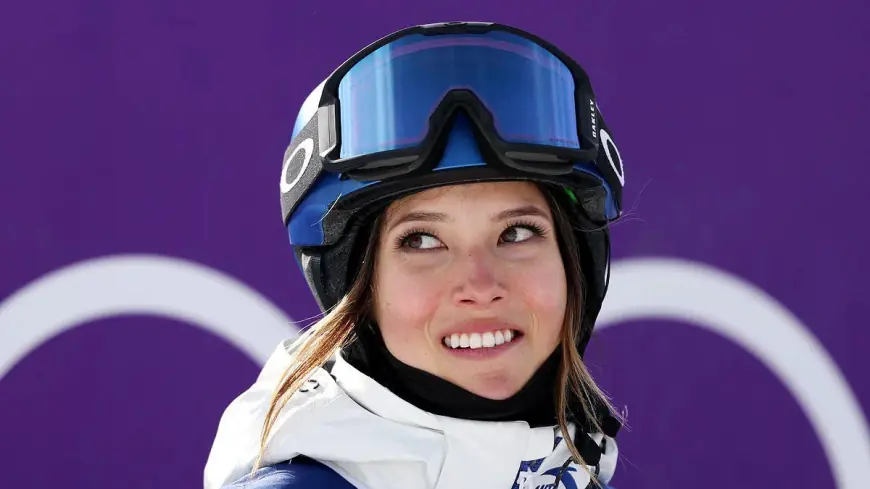
Eileen Gu’s decision to represent China has been one of the most discussed storylines in modern Olympic winter sport, and it keeps resurfacing whenever she shares a podium with top rivals like Switzerland’s Mathilde Gremaud. The questions intensified during the 2022 Winter Olympics in Beijing, where Gu and Gremaud repeatedly traded medals across freeski events.
Both athletes sit at the center of a new era in women’s freeskiing: high-difficulty trick progression, tight judging margins, and a global spotlight that extends well beyond the snow.
The Gu–Gremaud rivalry, explained
Gu and Gremaud overlap in two of the sport’s marquee disciplines: slopestyle and big air. In Beijing in 2022, that overlap produced defining moments.
Gu’s Beijing Games included gold medals in big air and halfpipe, plus a slopestyle silver. Gremaud won slopestyle gold and added a big air bronze, putting her directly in Gu’s lane on the most visible stages.
Their head-to-head narrative matters because it highlights what’s unique about freeski: athletes can chase multiple medals in a single Games, and the same handful of contenders often reappear across finals days later with entirely different course demands.
why is eileen gu competing for china
Gu was born and raised in the United States, and she has consistently framed her choice as a personal and values-driven decision tied to family and impact. Her mother is from China, and Gu has said she identifies strongly with both cultures.
The most commonly cited reason she has given is influence: she believed she could do more to grow women’s participation and winter sports interest in China than she could in an already-established U.S. pipeline. She has also spoken about the appeal of representing her heritage on the biggest stage and using that platform to inspire younger athletes.
The switch became official well before Beijing: she changed her sporting nationality in 2019, putting her on track to compete for China in 2022. Questions about citizenship have lingered publicly because China does not generally recognize dual citizenship, while Gu has not publicly provided a simple, definitive answer about her passport status. What is clear is that Olympic eligibility rests on the governing bodies accepting the paperwork for her change of sporting nationality, which they did.
What happened in Beijing 2022
The Beijing Olympics put Gu’s decision under a microscope because she wasn’t a role player—she was a headliner with realistic chances to win multiple medals. The outcome delivered exactly that, and it also solidified Gremaud as a primary rival.
A few high-level facts capture why the 2022 Winter Olympics remain the reference point for this question:
-
Gu became the first freestyle skier to win three medals in freestyle skiing events at a single Winter Olympics, spanning big air, halfpipe, and slopestyle.
-
Gremaud’s slopestyle title came in a final where execution and landing precision made the difference, not just raw difficulty.
-
Their big air results placed them on the same medal stage, underscoring how tightly the top tier was clustered.
Why the question keeps coming back
This topic reappears whenever Gu wins, loses, or simply shows up at a major event because national-team identity is part of her public story in a way it isn’t for most athletes. It also resurfaces because freeskiing has become a signature “youth sport” of the Winter Games—high social reach, highlight-reel moments, and rapid viral discourse.
There’s also a competitive reason: Gremaud is one of the few skiers who has repeatedly beaten Gu in a major Olympic discipline, which reignites attention around Gu’s entire Olympic arc each time they meet in a final.
What to watch in future Olympics
If Gu and Gremaud remain healthy and active through the next Olympic cycle, the sport’s storyline is likely to keep revolving around three measurable factors: difficulty progression, consistency under finals pressure, and the strategic choice of which events to prioritize.
For Gu, any future Olympic run will again put her national-team choice front and center, simply because it shapes endorsements, media framing, and fan expectations. For Gremaud, the focus is more straightforward: can she continue converting slopestyle precision into gold, and can she keep stacking podiums across multiple disciplines?
Sources consulted: International Olympic Committee; NBC News; Reuters; The Guardian