

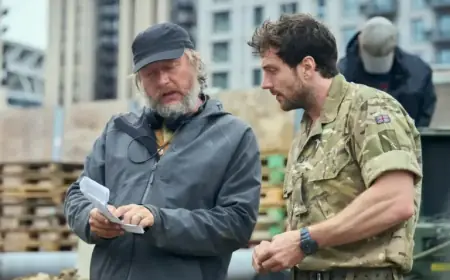























Savannah Guthrie’s brother-in-law Tommaso Cioni becomes focus in missing-mother case

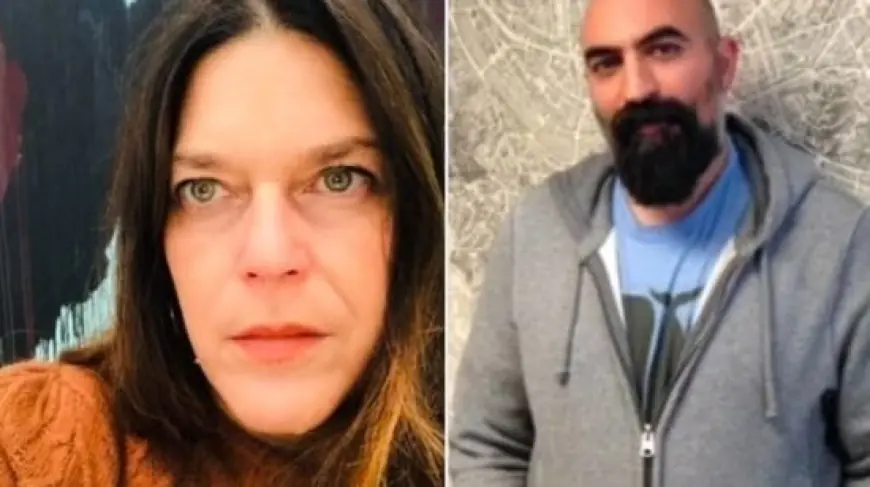
The investigation into the disappearance of Savannah Guthrie’s mother intensified in recent days as detectives widened their work around the last confirmed hours before she vanished. A key figure in that timeline is Savannah Guthrie’s brother-in-law, Tommaso Cioni, identified as the person who last saw the 84-year-old woman the evening before she was reported missing.
Authorities have emphasized that the case remains active and fluid, with no publicly named suspects and no confirmed vehicle tied to the disappearance as of the latest official updates.
What’s known about Tommaso Cioni
Tommaso Cioni is married to Savannah Guthrie’s sister, Annie. Investigators have placed Cioni at the center of the final verified movements on January 31, 2026, when he was involved in driving Nancy Guthrie back to her home after an evening with family. Law enforcement has described him as the last confirmed person to see her before she was later determined to be missing.
That “last known contact” status does not, by itself, establish wrongdoing. In missing-person investigations, the people closest to the timeline are routinely interviewed and scrutinized first because they can help clarify gaps, confirm routine behavior, and account for movements and communications.
Savannah Guthrie brother in law in the timeline
Investigators have reconstructed a timeline that begins with family time on January 31 and ends with concerns raised the next day when Nancy Guthrie could not be reached and circumstances at her home raised alarms. Officials have stated they do not believe she left voluntarily, pointing to factors such as her mobility limitations and the need for medication.
As the case developed, authorities confirmed that blood found at the home matched Nancy Guthrie’s DNA. That finding raised the stakes for investigators, shifting public understanding from a missing-person search to a case increasingly treated as a likely abduction.
Search activity at the sister’s home
On February 7, 2026, investigators searched the home shared by Annie Guthrie and Tommaso Cioni in the Tucson area. The search lasted several hours and drew heightened public attention because of its proximity to the last known timeline. Officials have characterized such investigative steps as consistent with the normal course of work in a case involving a possible abduction.
Searches like this can serve multiple purposes: checking for physical evidence, corroborating statements, confirming digital or paper records, or eliminating possibilities. The existence of a search does not necessarily signal an arrest is imminent, and there has been no public announcement of charges connected to the search.
Ransom claims and the risk of misinformation
The investigation has also been complicated by ransom-related claims circulating publicly. Officials have indicated that not all communications or notes associated with the case have been verified as authentic. Public attention can attract hoaxes and opportunists, which forces investigators to spend time validating tips and separating real leads from noise.
In cases with intense public visibility, families can face a second crisis: the strain of managing rumors while trying to support investigators. Law enforcement has warned that interference and false information can slow the search and divert resources.
Key takeaways right now
-
Tommaso Cioni is central to the known timeline because he is identified as the last confirmed person to see Nancy Guthrie on January 31, 2026.
-
Investigators searched the home he shares with Annie Guthrie on February 7, 2026, as part of broader follow-up activity.
-
Authorities have publicly stated they have not identified suspects or vehicles tied to the disappearance, and the investigation remains ongoing.
What happens next
The next phase typically involves continued follow-up at multiple locations, repeated interviews, and forensic work that can take days or weeks to process. Authorities have offered a reward of up to $50,000 for information leading to Nancy Guthrie’s recovery and/or the arrest and conviction of anyone involved.
Until investigators publicly identify a suspect or provide a confirmed sequence of events beyond the last known contact, much of the case will hinge on verifiable evidence: forensic results, credible tips, and corroborated digital trails such as phone location data, surveillance video, and financial activity. If significant developments occur, officials have indicated they would address them publicly.
Sources consulted: Reuters, Federal Bureau of Investigation, ABC News, Newsweek