























Logan Paul breaks with Jake Paul over Bad Bunny citizenship as immigration debate flares

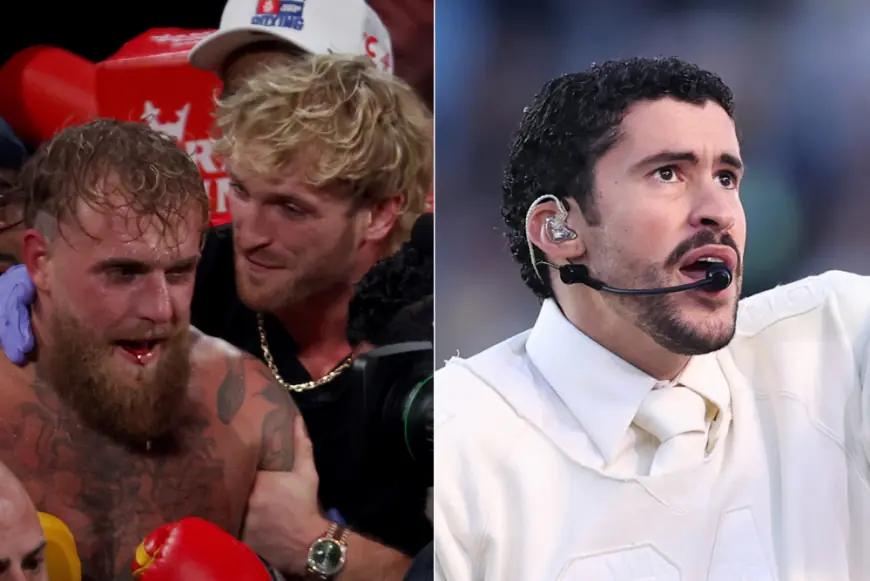
Logan Paul publicly distanced himself from brother Jake Paul after Jake urged viewers to skip Bad Bunny’s Super Bowl halftime performance and questioned the singer’s American identity. The dispute quickly expanded beyond celebrity commentary into a wider argument about Puerto Rico, U.S. citizenship, and immigration politics—topics already being debated in communities from the island to New York City.
As of Monday, Feb. 9, 2026 (ET), Logan Paul’s response has become the clearest sign that the brothers are not aligned on how to frame Bad Bunny’s place in American culture—or what “American” even means in a year when immigration enforcement is again a front-page issue.
Logan Paul’s response to Jake Paul
Logan Paul pushed back after Jake Paul referred to Bad Bunny as a “fake American citizen” while calling for a halftime boycott. Logan’s message was straightforward: Puerto Rican identity is American identity, and the country benefits when Puerto Rican talent is showcased on the biggest stages.
The exchange mattered because it wasn’t a vague “disagree to disagree.” Logan framed it as a factual correction about citizenship and a values statement about representation. That left Jake on defense, and it amplified the original claim rather than letting it fade into the usual Super Bowl social-media churn.
Is Bad Bunny an American citizen?
Yes. Bad Bunny was born in Puerto Rico, and people born in Puerto Rico are U.S. citizens under federal law.
Puerto Rico is a U.S. territory, and U.S. citizenship for people born there has been established through congressional statute dating back to 1917 and reinforced in later federal law. That legal reality is not dependent on whether someone lives on the island or on the U.S. mainland.
Jake Paul later tried to reframe his comment as an objection to Bad Bunny’s political views rather than his legal status, but the citizenship question itself is not unclear: Puerto Rican-born artists are U.S. citizens.
Where does Jake Paul live?
Jake Paul has said he lives in Dorado, Puerto Rico, where he trains and maintains a long-term home base. Recent attention to his residence spiked because critics pointed out the contradiction in questioning a Puerto Rican performer’s “Americanness” while living on the same island.
At the same time, Jake has also been highlighting a large property purchase in Georgia, describing it as a major ranch-style retreat and business project. In practical terms, that points to a split footprint: Puerto Rico as the day-to-day base, with Georgia as a high-profile secondary hub.
Why Ocasio-Cortez is part of the same conversation
Representative Alexandria Ocasio-Cortez has been drawing renewed local attention after a recent Queens-area town hall focused on immigration enforcement activity and what residents should know about their rights and available community resources.
That matters here because Jake Paul’s criticism of Bad Bunny centered in part on the singer’s past comments about immigration enforcement. The result is a collision of pop culture and policy: a halftime show becomes a flashpoint, and politicians and community leaders end up addressing the same underlying tension—who belongs, who gets protection, and what counts as “American” in everyday life.
What to watch next
The controversy is likely to keep circulating for three reasons:
-
The Paul brothers have separate brands, and public disagreement can be as influential as collaboration.
-
The citizenship basics around Puerto Rico are widely misunderstood, which makes correction cycles repeat.
-
Immigration enforcement remains an active political issue, and celebrity comments can pull it into mass entertainment spaces.
Whether this episode becomes a brief Super Bowl aftershock or a longer-running feud may depend on whether Jake Paul continues to lean into the theme—or pivots back to boxing promotion and business projects. For now, the clearest takeaway is that a single, inaccurate line about citizenship can trigger a broader debate that reaches far beyond sports and music.
Sources consulted: Reuters, Associated Press, Encyclopaedia Britannica, U.S. Department of State (Foreign Affairs Manual)