
























Jody Allen faces renewed scrutiny over Seahawks future as say-sell questions resurface

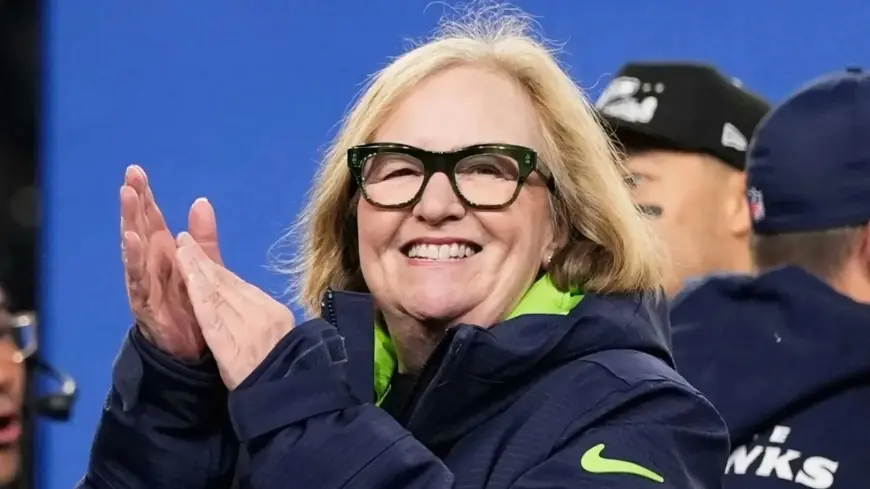
Jody Allen, the chair of the Paul G. Allen Trust and the public face of the estate that controls the Seattle Seahawks, is again at the center of a familiar question: when, and under what terms, will the franchise be sold. The speculation intensified in late January and early February as the Seahawks returned to the Super Bowl stage, putting the team’s ownership structure back into a national spotlight.
The estate has pushed back on claims of an imminent sale, while also acknowledging that a sale is expected at some point to align with Paul Allen’s long-term philanthropic intentions.
The Seahawks ownership structure, in plain terms
Jody Allen does not personally “own” the Seahawks in the traditional billionaire-owner sense. The franchise is held by the Paul G. Allen Trust, created after Paul Allen’s death in 2018. As trustee, Jody Allen oversees the estate’s assets and effectively serves as the team’s controlling decision-maker.
That arrangement has always carried an eventual endpoint. Paul Allen’s directives for the trust include selling major sports holdings and directing proceeds to charitable purposes, though the trust has not committed publicly to a specific timetable for the Seahawks.
Sale chatter rises, then gets a formal pushback
Over the past two weeks, the sale question has sharpened around a basic narrative: that the Seahawks could be put on the market after the Super Bowl, following progress toward the sale of the Portland Trail Blazers.
In response to the late-January wave of speculation, a spokesperson for the estate issued a statement emphasizing that the Seahawks were not being marketed for sale at that time. The same messaging also underscored the larger point that any eventual change in ownership would be tied to the trust’s obligations and the estate’s broader priorities—not to a single news cycle.
That posture leaves two realities coexisting at once: the trust acknowledges an eventual sale is part of the roadmap, but it disputes claims of a near-term, post–Super Bowl handoff.
The Portland Trail Blazers timeline matters
The Seahawks conversation is being pulled along by developments connected to the Trail Blazers, the other marquee sports asset held by the estate. Recent coverage has described an active process to transfer the NBA franchise, with deal timing and league approvals shaping the calendar.
Even without public confirmation of exact closing dates, the logic is straightforward: selling one major franchise first could simplify estate planning, reduce operational overlap, and create clearer sequencing for the next major move. That doesn’t prove the Seahawks are next or “immediately” next, but it explains why the two stories keep appearing together.
For Seahawks fans and prospective bidders, the key detail is not rumor volume; it’s whether the trust begins taking the practical steps that typically precede a sale—such as hiring a bank to run a formal process, seeking league guidance on succession plans, or signaling a target window.
What Jody Allen has emphasized publicly
Jody Allen has maintained a relatively low public profile compared with many franchise owners, but she has been visible at major team moments, including on-field ceremonies and high-attendance postseason events. Inside the organization, team leadership has credited her with steady involvement and a willingness to invest in competitiveness.
The estate’s public posture has also been consistent: avoid detailed commentary on swirling claims, keep the focus on team operations, and frame any future sale as part of Paul Allen’s long-term philanthropic design rather than a reaction to short-term market timing.
Philanthropy continues alongside sports oversight
While sports ownership dominates headlines, the Allen philanthropic portfolio has continued to announce major awards and initiatives. In mid-January 2026, Allen Family Philanthropies detailed new funding for science-driven conservation work, part of a broader giving strategy that spans environment, youth, and arts and culture.
That matters because it provides real-world context for why the trust’s eventual sales directive exists in the first place: the sports assets are not only trophies or investments, but also potential funding engines for long-term charitable goals.
Key takeaways
-
The Seahawks are controlled by the Paul G. Allen Trust, with Jody Allen as trustee and the franchise’s controlling authority.
-
The estate disputes claims that the Seahawks are currently being marketed for sale, while acknowledging a sale is expected at some point.
-
The Trail Blazers sale process is a major variable that could influence the sequencing and timing of future moves.
-
Philanthropic grantmaking continues in parallel, reinforcing the trust’s stated long-term purpose.
What to watch next
The next meaningful signals are likely to be procedural, not emotional: whether the trust formalizes a sale process, whether league-level steps become visible, and whether any transaction milestones emerge around the Trail Blazers that clarify the estate’s timeline.
Until those markers appear, the most defensible read is a narrow one: Jody Allen remains in control, the team’s governance is stable in the short term, and the long-term expectation of an eventual sale remains intact—without a publicly confirmed date.
Sources consulted: ESPN, Front Office Sports, Allen Family Philanthropies, Town & Country