























MrBeast’s Super Bowl commercial turns into a $1 million puzzle hunt

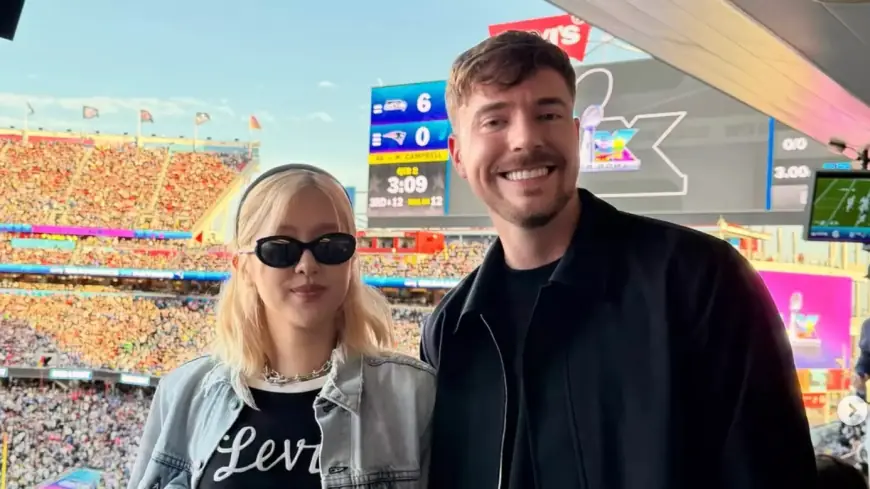
MrBeast used his Super Bowl LX commercial to launch a live, nationwide puzzle challenge with a $1 million cash prize—pushing viewers off the couch and into a multi-step hunt that’s still unsolved as of Monday, February 9, 2026. The spot, created with Salesforce and tied to Slack, aired during the fourth quarter and immediately sparked a scramble to decode clues embedded in the ad and beyond.
The hook was simple and very on-brand: solve the puzzle first, win big. The execution is anything but simple.
What the Super Bowl ad showed
The 30-second commercial, titled “The Vault,” is staged like a high-security heist in reverse. MrBeast walks through a fortified facility—complete with layers of security and dramatic set dressing—while explaining that a $1 million prize is locked away and can be claimed by the first person to finish the challenge.
The ad ends by directing viewers to start the hunt and implies the commercial itself contains signals that matter later. The message lands in the same way many of his challenge videos do: the rules sound straightforward, but the real difficulty is hidden in the details.
How the $1 million puzzle works
The contest is built as a chain of puzzles rather than a single riddle. Organizers describe it as a nonlinear, interconnected sequence designed to reward persistence, logic, and creative thinking, not just quick pattern-spotting. Participants move through steps that can branch, loop, or require information gathered earlier.
The key mechanic tying the promotion to Salesforce is Slack and an AI assistant experience connected to “Slackbot.” Players are instructed to work through the steps and ultimately submit a hidden code through Slack to claim the prize.
Where viewers are getting stuck
By Monday morning, MrBeast said publicly that no one had completed the full solution yet. That’s not surprising given the way the challenge is framed: the commercial is only the starting gun, not the finish line.
Early friction points appear to include:
-
Identifying which visuals in the commercial are actual clues versus thematic set dressing
-
Understanding the order of operations for steps that are “interconnected” rather than linear
-
Navigating access and verification steps required to proceed, which some participants say created bottlenecks
Some uncertainty remains because the full puzzle path is intentionally not spelled out in one place. That’s part of the design: the contest is meant to feel like a hunt, not a form to fill out.
Why Salesforce and Slack bet on MrBeast
For Salesforce, the ad is a deliberate shift from traditional Super Bowl storytelling toward participation-driven marketing. The commercial itself spends limited time explaining the company’s broader offerings, leaning instead on a single interactive promise: use Slack and its assistant features to coordinate and solve the challenge.
That approach reflects a wider trend in Super Bowl advertising: brands increasingly want the commercial to be the beginning of engagement, not the entire experience. A puzzle with a real cash prize is a clean way to extend attention well beyond the broadcast window, especially if it remains unsolved for days or weeks.
What to watch next
The next phase hinges on two things: whether more hints are released publicly, and how long it takes for someone to complete the full chain and submit the correct solution. If the puzzle stays unsolved, it keeps the campaign alive; if it’s solved quickly, the story shifts to who won and how they did it.
Key signals to watch over the next few days:
-
Any announced clarifications around eligibility, verification, or submission rules
-
New, official hints that narrow the search space without giving away the path
-
Evidence that the challenge is producing measurable engagement inside Slack communities
For now, the outcome is unresolved—but the strategy is already working in one clear way: a 30-second WM open–style burst of attention has turned into a longer-running event, with a real scoreboard and a real prize.
Sources consulted: ABC News, Adweek, Newsweek, USA TODAY