






















Super Bowl 2026: Bad Bunny headlines halftime as kickoff-to-show timing draws millions

Super Bowl 2026 delivered a familiar two-part spectacle on Sunday, Feb. 8, 2026: a prime-time kickoff window followed by a halftime concert designed for viewers who tune in as much for the performance as the football. This year’s centerpiece was a Spanish-language halftime set led by Bad Bunny, with surprise appearances from Lady Gaga and Ricky Martin, and a heavy emphasis on Puerto Rican culture.
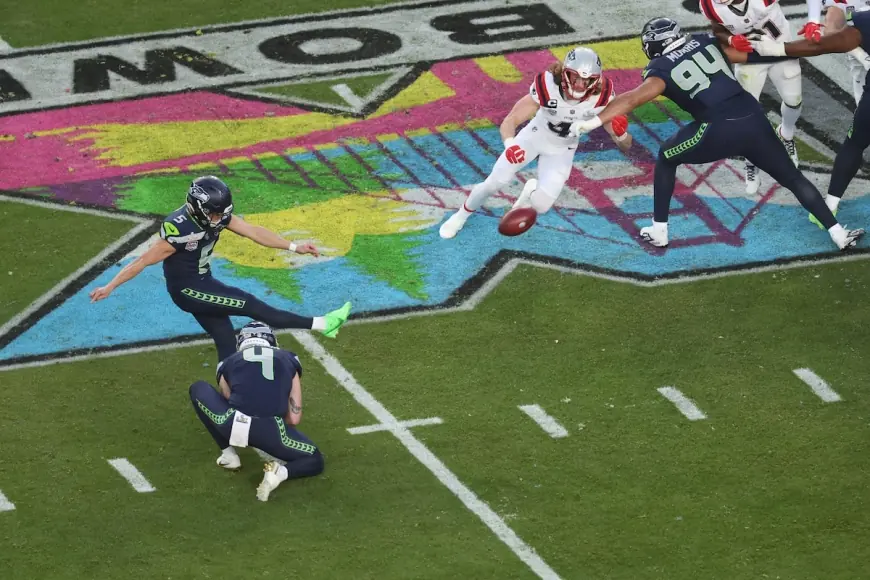
With the Seahawks beating the Patriots 29–13 at Levi’s Stadium in Santa Clara, the game itself moved briskly into the second quarter. That mattered for one practical reason: it helped shape when the halftime stage show actually began for viewers on the East Coast.
Super Bowl time vs. halftime time in 2026
The scheduled kickoff was 6:30 p.m. ET, but the halftime show does not have a fixed “clock time” the way kickoff does. Halftime arrives when the second quarter ends, and the timing shifts with scoring pace, replay reviews, penalties, and injury stoppages.
In this Super Bowl, halftime landed in the roughly 8:00–8:15 p.m. ET range for many viewers, with the performance itself running about 12–15 minutes inside a longer halftime break that is typically around 30 minutes.
Key timing guide (ET):
-
Kickoff (scheduled): 6:30 p.m.
-
Halftime window (typical): around 8:00–8:15 p.m.
-
Performance length (typical): about 12–15 minutes
-
Total halftime break (typical): about 30 minutes
Bad Bunny’s halftime: Spanish-language set and Puerto Rico tribute
Bad Bunny’s 2026 halftime performance leaned hard into a Puerto Rico-forward visual and musical identity, presenting a set staged like a moving street-party tableau rather than a standard arena concert. The show included multiple scene changes that referenced island life and cultural memory, pairing reggaeton energy with moments meant to read as an ode to roots rather than a generic greatest-hits medley.
The biggest talking point: the set ran entirely in Spanish, a choice that doubled as artistic statement and programming bet—one that reflected the league’s increasingly international audience and the U.S. mainstream’s comfort with Spanish-language global stars.
Surprise guests: Lady Gaga, Ricky Martin and celebrity cameos
The halftime show’s guest list quickly became its own headline.
Lady Gaga joined Bad Bunny for a cross-genre moment that leaned into dance rhythms rather than a rock-style cameo, while Ricky Martin’s appearance pushed the performance further into classic Latin-pop territory. In-stadium cameos and on-stage appearances also included Pedro Pascal, Cardi B, Karol G, and Jessica Alba—each used as a quick, high-recognition flash rather than a long feature.
The guest strategy was clear: keep the pacing relentless, widen the tent across generations and genres, and make the halftime show feel like an event you couldn’t fully summarize from a single clip.
Where is Bad Bunny from, and is he a U.S. citizen?
Bad Bunny is from Puerto Rico. He was born in Bayamón and grew up in Vega Baja.
That leads into two common questions that spiked around halftime:
-
Is Bad Bunny a U.S. citizen? Yes. People born in Puerto Rico are U.S. citizens under federal law.
-
Can Puerto Rico vote for U.S. president? Residents of Puerto Rico cannot vote in presidential elections unless they live in a U.S. state or Washington, D.C.
These points often get conflated during high-profile moments like the Super Bowl, especially when an artist emphasizes Spanish-language identity on a U.S. broadcast.
The quick facts viewers searched during the show
A lot of “halftime curiosity” isn’t about the performance at all—it’s about the artist.
Bad Bunny’s real name is Benito Antonio Martínez Ocasio, and he is 31 (born March 10, 1994). His net worth is widely estimated but not pinned to a single verified figure; common estimates range roughly from $50 million to $100 million, depending on how sources value touring revenue, partnerships, and long-term catalog income.
As for “did he wear a dress,” the answer depends on how viewers label the look: his outfit leaned into stylized stagewear and football-themed visuals rather than traditional uniform costuming, and it became part of the broader conversation about performance fashion and masculinity in pop.
What’s next: viewership and the “most-watched halftime show” debate
Immediate reactions can be loud, but the most durable numbers arrive later. Final audience totals for the game and the halftime show typically rely on official measurement releases that come after the event. Early comparisons to recent record-setting audiences are already circulating, but any definitive claim about “most watched ever” hinges on finalized reporting and consistent measurement methods.
In the near term, the bigger takeaway is simpler: Super Bowl 2026 kept the league’s “two-audience” tradition intact—one crowd there for the Lombardi Trophy, another showing up for the halftime show, and plenty of people who came for both.
Sources consulted: Associated Press, Reuters, NFL, Nielsen