






















Turning Point’s “All-American Halftime Show” draws millions as Super Bowl viewership awaits

Super Bowl LX’s halftime became a two-screen moment on Sunday night, Feb. 8, 2026 (ET): the NFL’s official performance inside Levi’s Stadium, and an alternative concert branded the “All-American Halftime Show,” produced by Turning Point USA. The competing broadcast leaned into patriotic messaging and country-rock acts, and it appears to have attracted a sizable live online audience—though the final, apples-to-apples comparison to Super Bowl television audiences is more complicated than the biggest numbers suggest.
What the Turning Point halftime show was
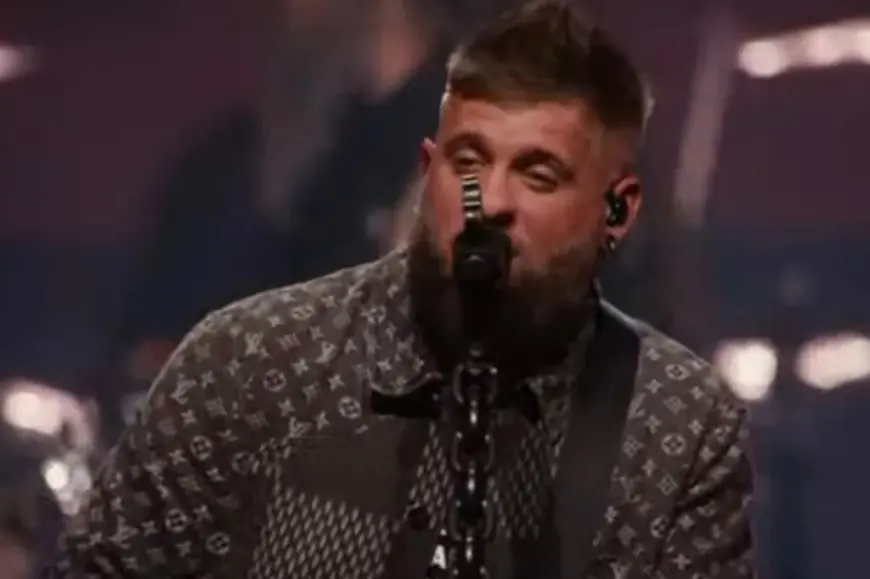
Turning Point USA positioned its program as a cultural counterprogram to the NFL’s halftime headliner, Bad Bunny, and marketed it around “faith, family, and freedom.” The show ran during the Super Bowl’s halftime window (roughly the 8:00–8:30 p.m. ET range, depending on game flow) and featured short sets from Kid Rock (real name Robert James Ritchie), Brantley Gilbert, Lee Brice, and Gabby Barrett.
The program also included a tribute segment tied to the organization’s late founder, Charlie Kirk, who was killed in September 2025—an event that reshaped the group’s leadership and public profile and remains central to how it frames its work.
Where to watch it and what “channel” meant
The alternative show was built for streaming first: it aired through Turning Point USA’s official online outlets and was also carried by a free, over-the-air entertainment channel available through many live-TV bundles.
Hours before kickoff, plans to simulcast on a major social-media app ran into rights and licensing issues, forcing a last-minute distribution change that pushed more viewers toward the organization’s primary livestream. That scramble mattered because it likely concentrated viewership into one place, boosting the visible “live” counter while also making it harder to measure how many people watched across every outlet in total.
How many people watched: what’s known and what isn’t
Big “live viewer” numbers circulated quickly Sunday night. Multiple tallies put the alternative show’s peak live audience in the mid-millions, with prominent estimates ranging from about 4.3 million to over 5 million at peak.
Two important caveats apply:
-
those figures generally describe peak concurrent viewers on a single livestream destination, not unique viewers across all devices, and
-
livestream counts are not measured the same way as national television ratings.
Meanwhile, official Super Bowl LX ratings and official halftime performance viewership typically arrive after the event, once measurement firms finalize their tallies. As of Monday, Feb. 9, 2026 (ET), the definitive, audited viewership totals for Super Bowl LX and its halftime performance have not been released in a comprehensive official report.
Here’s the cleanest snapshot of confirmed versus still-developing numbers:
| Metric | Latest figure | Status |
|---|---|---|
| Super Bowl LX average audience | Not yet released | Pending official measurement |
| Super Bowl LX halftime audience | Not yet released | Pending official measurement |
| Super Bowl LIX average audience (2025) | 127.7 million | Confirmed (official measurement) |
| Super Bowl LIX halftime show (2025) | 133.5 million average | Confirmed (official measurement) |
| Turning Point alternative show (2026) | ~4.3M to 5M+ peak live viewers | Widely cited estimates; not a TV-rating metric |
The lineup, the setlist talk, and Kid Rock’s catalog
Kid Rock closed the alternative show, leaning on the persona and catalog that made him a durable draw across rock, hip-hop crossover, and country audiences. While exact setlists can vary by performance, his best-known songs over the years include “Bawitdaba,” “Cowboy,” “All Summer Long,” and “American Bad Ass.” Searches also spiked for “Cool, Daddy Cool,” a track title frequently associated with him; the song itself is part of his broader early-2000s era output, but lyrics and exact performance details weren’t consistently documented in real time.
The surge in lyric-related searches also revived older controversies around explicit content in parts of Kid Rock’s discography, including lines that have been criticized for sexual content. None of that is new, but the Super Bowl halo effect tends to pull an artist’s entire back catalog—and old arguments—back into the spotlight in a single night.
Why the alternative show mattered beyond politics
Even if the alternative show’s audience turns out to be a fraction of the Super Bowl’s total, it is still notable for one reason: it treated halftime as a competitive media slot rather than a single shared broadcast moment. That’s a meaningful shift in how the biggest live TV event in the U.S. can be experienced—especially as viewing fragments across devices and as live online creators and organizations build their own appointment programming.
The biggest open question now is durability. If the alternative show’s audience was driven mainly by controversy and novelty, it may fade quickly. If it reflects a repeatable appetite for parallel “big-event” programming, then Super Bowl halftime could become a regular battleground for counterprogramming—less about one performance, more about identity-driven media choices.
Sources consulted: Nielsen, Turning Point USA, Associated Press, San Francisco Chronicle