






















USA vs World NBA All-Star format arrives in Los Angeles as Damian Lillard adds Blazers intrigue

The NBA’s new USA vs World All-Star format debuts next weekend in Los Angeles, reshaping the league’s midseason showcase into a mini-tournament built for pace, pride, and quick swings. At the same time, Damian Lillard—listed this season as a Portland Trail Blazers guard—will take center stage in a different way: returning to compete in the Saturday night 3-point contest despite not playing this season while rehabbing a torn Achilles.
The collision of storylines gives the weekend a clear through-line: international star power is now front and center in the main event, while one of the league’s most famous shooters returns in a single-skill spotlight that doesn’t require full-game clearance.
USA vs World NBA format: what’s changing
This year’s All-Star Game moves away from the traditional single exhibition and into a round-robin mini-tournament featuring three teams: two U.S. squads and one international “World” team. The All-Star Game is scheduled for Sunday, Feb. 15, 2026, at 5 p.m. ET in Inglewood, California.
The structure is built for urgency:
-
Three teams play short, 12-minute games in a round-robin.
-
The top two teams advance to an “All-Star Championship” game.
-
Point differential becomes the first tiebreaker if all three teams finish 1–1.
The U.S. players are split into USA Stars and USA Stripes by age—an intentional wrinkle meant to add identity without forcing conference lines that no longer reflect how fans consume the league.
Team rosters: the stars—and a Blazers tie on Team World
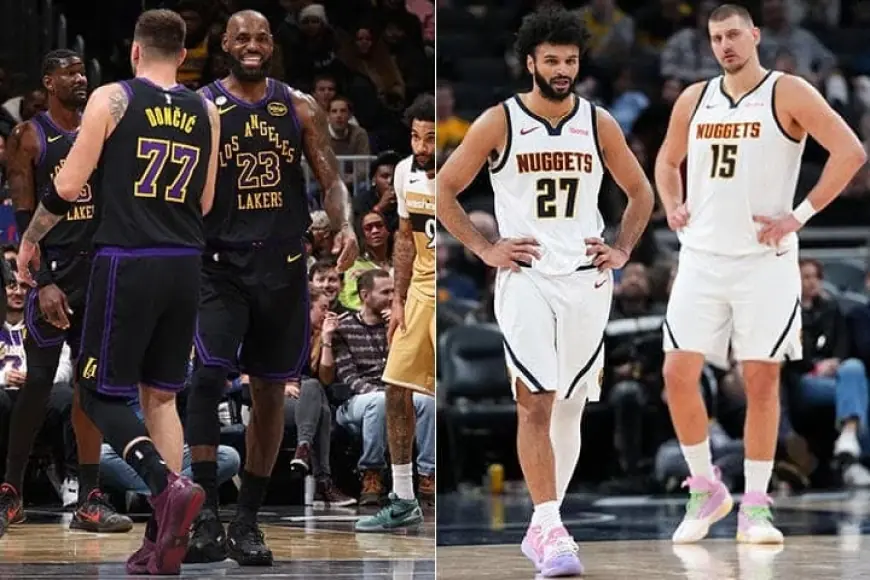
The headline of the USA vs World NBA concept is the international depth. The World team is stacked with MVP-level names and franchise anchors, including Giannis Antetokounmpo, Luka Dončić, Nikola Jokić, Victor Wembanyama, and Karl-Anthony Towns, along with Pascal Siakam and Jamal Murray.
For Portland fans searching “blazers” alongside this event, the key name is Deni Avdija, who is listed on Team World. That detail adds local relevance to a format that might otherwise feel like a distant spectacle for non-contenders: a Blazers player is part of the international side’s push to win the first edition of the revamped showcase.
Meanwhile, the U.S. teams are heavy on marquee guards and wings. The older group includes Stephen Curry, Kevin Durant, LeBron James, Kawhi Leonard, Jalen Brunson, Jaylen Brown, Donovan Mitchell, and Norman Powell. The younger group features Anthony Edwards, Devin Booker, Cade Cunningham, Chet Holmgren, and Tyrese Maxey, among others.
Damian Lillard: why the 3-point contest matters this year
Lillard’s inclusion in the 3-point contest is the weekend’s most unusual “return” storyline. He has not played this season while recovering from a torn Achilles suffered during last spring’s playoffs, yet he’ll be back in front of fans as a competitor in a controlled, non-contact event.
For Lillard, the stakes are real even without a game appearance:
-
He’s a two-time 3-point contest champion (2023 and 2024).
-
A third win would place him in rare territory historically.
-
His reputation as a deep-range shotmaker fits the contest better than almost any format the weekend offers.
The league has leaned harder into skills events as their own standalone tentpoles, and Lillard’s entry reinforces that strategy: a major name can deliver a marquee moment without the risk of full-speed play.
How Lillard changes the weekend’s ceiling
Lillard’s presence also changes how the weekend “feels” on the calendar. With the All-Star Game adopting a sharper competitive edge—short games, point differential pressure, and a World team with real pride on the line—the skills night needs its own anchor. Lillard provides that, especially because fans know the contest format can produce sudden drama: one cold rack ends a run, one heater rewrites the bracket.
There’s also a softer competitive narrative in play. The All-Star Game is being pitched as a new chapter—USA vs World as a concept that could stick. Lillard’s contest run, by contrast, taps nostalgia and continuity: the same kind of high-wire shooting that has defined his career.
What to watch next weekend
Three practical questions will shape how this new All-Star weekend lands:
-
Will the USA vs World mini-tournament create real urgency? Short games can be chaotic; the best teams may not always win if a couple of shots swing early.
-
Can the World team turn star power into cohesion quickly? The roster is elite, but chemistry is always the risk in a compressed format.
-
Is Lillard’s shooting “game-ready” under lights? The contest is still pressure, still rhythm, still about legs and timing—especially for a player returning from a major lower-body injury.
Even before the opening tip, the blueprint is clear: the league is betting that national pride and bite-sized competition can upgrade Sunday’s product, while Saturday’s shooting contest gets a superstar storyline that doesn’t depend on five-on-five availability.
Sources consulted: NBA, The Associated Press, Reuters, Portland Trail Blazers team release