
























Project Hail Mary release date set for March 2026 as Ryan Gosling returns to sci-fi

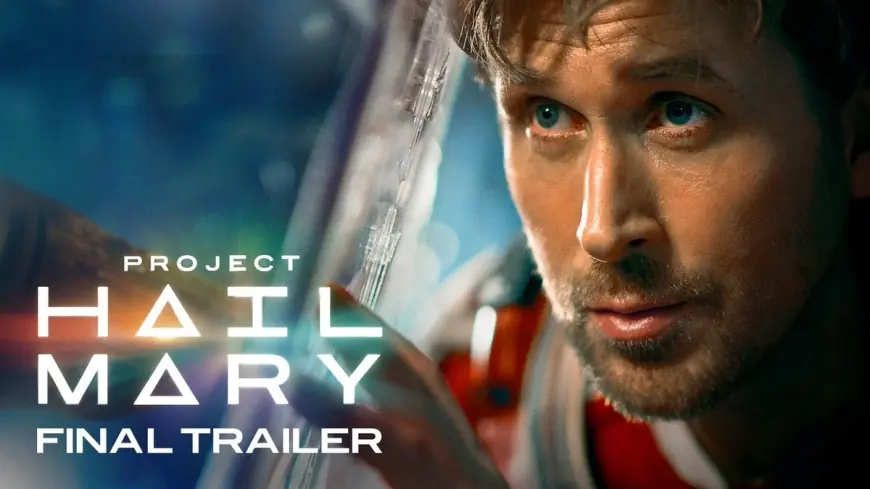
A new Super Bowl spot for Project Hail Mary pushed the film back into the center of the spring movie calendar, confirming the next major on-screen chapter for Ryan Gosling and spotlighting author Andy Weir’s fast-growing Hollywood footprint. The marketing leans hard into the story’s core hook—one man waking up alone on a spacecraft with no memory of how he got there—while teasing the friendship element that book readers have been waiting to see translated to screen.
The film is scheduled to arrive in U.S. theaters on Friday, March 20, 2026 (ET), with international dates varying by market.
Project Hail Mary release date and rollout details
The U.S. theatrical date is March 20, 2026. The final marketing push has accelerated in early February, with the Super Bowl ad functioning as the loudest mainstream beat so far this year and signaling that the studio is treating the adaptation as a true spring tentpole rather than a niche sci-fi release.
Here’s the cleanest snapshot of what’s been announced publicly:
| Item | Detail (ET) |
|---|---|
| U.S. theatrical release | Fri, March 20, 2026 |
| Big-game marketing beat | Sun, Feb. 8, 2026 |
| Product tie-in | LEGO Icons “Project Hail Mary” set dated for March 1, 2026 |
Ryan Gosling movies: why this role is a pivot
Gosling’s recent run has bounced between prestige drama, action, and broad crowd-pleasers—making Project Hail Mary feel like a deliberate “big-swing” return to high-concept sci-fi as a lead, not just a supporting piece of a larger ensemble. This isn’t a slick, invincible-hero template; the character’s problem is isolation, confusion, and the slow realization that the mission may be bigger than his ability to endure it.
That’s part of why the adaptation is drawing attention beyond normal “book-to-movie” buzz. The role demands a performance that can carry long stretches of screen time with limited cast interaction—until the story opens outward—while still keeping the pace and tension of a survival thriller.
Andy Weir’s adaptation track record looms large
Andy Weir’s name has become shorthand for a certain kind of science-forward suspense: problem-solving under extreme pressure, technical details presented accessibly, and a human voice that keeps the story from turning into a textbook. That formula powered his earlier blockbuster adaptation success and helped make Project Hail Mary one of the most heavily discussed modern sci-fi novels.
For moviegoers who haven’t read the book, the simplest expectation is this: it’s not “aliens for spectacle.” It’s “science as a ticking clock,” with emotional stakes that grow as the protagonist understands what’s actually happening—and what’s required to stop it.
What the trailer emphasizes (and what it holds back)
The Super Bowl footage spotlights three things:
-
A memory-gap mystery: Gosling’s character waking up disoriented, piecing together identity and purpose.
-
Cosmic stakes: the suggestion of an extinction-level threat tied to the sun and broader astrophysical danger.
-
A relationship twist: hints of an unlikely partnership that changes the mission from solitary endurance to collaboration.
Notably, the campaign still avoids spelling out too much. That restraint looks intentional: the story’s emotional engine depends on discovery, not just action beats. The marketing seems designed to hook newcomers while preserving key reveals for opening weekend.
LEGO Project Hail Mary: why the tie-in matters
A LEGO Icons set tied to the film—featuring a microscale spacecraft model and character figures—has added a surprising layer of mainstream visibility. Movie tie-ins are common, but an adult-focused collector set signals confidence that the property will land with older sci-fi fans, not only as a theatrical event but as a fandom object.
It also functions as a clever timing play: releasing a physical “desk display” product in early March keeps the title in conversation during the final marketing ramp toward the March 20 premiere.
Where this fits in the 2026 movie calendar
March releases live in a sweet spot: big enough to dominate weeks of attention, early enough to avoid the densest summer competition. That’s a strategic lane for a film that needs audiences to show up for a new(ish) sci-fi property rather than a long-running franchise sequel.
If the movie connects, it could become a rare modern sci-fi crowd-pleaser: high concept, emotional payoff, and repeat-watch appeal driven by discovery and rewatchable details. If it doesn’t, the risk is also clear—complex sci-fi can be a harder sell when audiences feel they’re being asked to do “homework.” The marketing so far suggests the studio is trying to make the premise feel immediate and human, not technical.
Sources consulted: Reuters, IMDb, Deadline, LEGO Group