

























Ferrari Unveils New F1 Engine for 2026 Season: Key Changes Explained

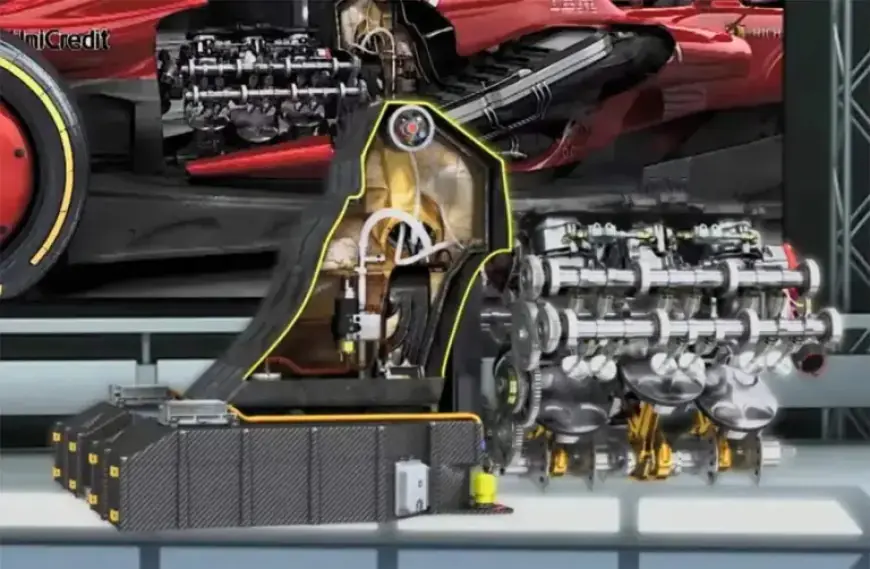
Ferrari is set to unveil its new Formula 1 engine for the 2026 season, part of a project called “678.” This design features significant innovations in response to the latest FIA regulations. The updated Power Units (PU) aim for an optimal balance between the internal combustion engine (ICE) and electric components.
Key Changes in Ferrari’s 2026 F1 Engine
The new engine addresses several regulatory shifts: the elimination of the MGU-H, an increase in battery weight and size, a reduction of the fuel tank to 100 liters, and enhanced integration of the internal combustion and hybrid systems. Each of these factors poses unique engineering challenges regarding efficiency and cooling.
Main Features of the 2026 Ferrari Engine
- Hybrid Architecture: The turbo-hybrid V6 engine maintains a balanced power distribution, targeting a 50/50 ratio of thermal and electric power.
- Performance Metrics: The new thermal power is reduced to approximately 400 kW, down from around 550 kW, while electric power has significantly increased to about 350 kW, compared to the previous 120 kW.
- Energy Recovery: The capacity for energy recovery under braking has doubled, allowing for up to 8.5 MJ per lap.
- Fuel Type: The engine will use 100% sustainable fuel.
- Tank Capacity: The fuel tank is shrunk to just 100 liters, necessitating new combustion strategies.
Innovative Engineering Solutions
Ferrari’s design philosophy centers on extreme integration of the Power Unit with the car’s chassis. This approach aims to improve aerodynamic efficiency significantly. Key innovations include:
- Compact Turbocharger Configuration: The turbocharger now features coaxial turbine and compressor with a thermal barrier, enhancing fluid dynamics.
- Material Advancements: The use of cutting-edge alloys and possibly Additive Manufacturing for the cylinder head is expected to maximize thermal performance.
- Small Radiators: Engineers are focusing on reduced radiator size to minimize bulk and enhance aerodynamics.
Design and Development Leadership
Wolf Zimmermann was the lead designer of the new engine before leaving Ferrari for Audi. The development transitioned to Enrico Gualtieri, head of Ferrari’s engine department, who continues to refine the project.
Aerodynamic Considerations for the 2026 F1 Car
The new engine layout has already influenced the car’s design. Advancements will feature highly undercut sidepods and optimized radiator configurations, which are critical for airflow management. The absence of the MGU-H also allows for a sleeker engine cover design.
Final Thoughts
The 2026 Ferrari engine represents not just a power unit but an integrated part of the car’s aerodynamics and structure. With innovative materials and aggressive design choices, Ferrari is actively redefining its approach to Formula 1 racing as it prepares for the upcoming season.