

























Stephen Gogolev and Lajoie/Lagha give Canada a team-event lift in Milan

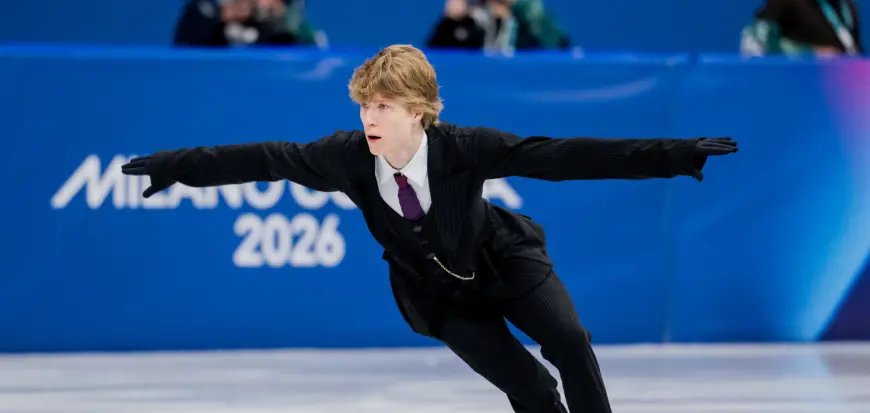
Stephen Gogolev’s long-awaited Olympic moment arrived with a statement skate, and ice dancers Marjorie Lajoie and Zachary Lagha backed it up a few hours later—two performances that pushed Canada into legitimate medal conversation in the figure skating team event at Milano Cortina 2026.
By late Sunday morning, February 8, 2026 (ET), Canada sat fifth in the standings after several segments, within reach of the podium picture depending on the final men’s free skate and how the teams above them handle the pressure.
Gogolev’s debut: from prodigy to pivotal points
Gogolev, 21, has carried “can’t-miss” expectations since childhood. He was celebrated early for big jumping content and record-setting junior performances, then spent years trying to navigate the hardest part of elite skating: growing into an adult body while keeping world-class technique intact.
That transition was not smooth. A major growth spurt altered timing and balance, and a run of injuries—serious enough at times to derail training blocks and limit competition schedules—left his Olympic path uncertain deep into this cycle.
In Milan, he looked like an athlete who finally got the runway he needed. In the men’s short program portion of the team event, Gogolev delivered two clean quadruple jumps and a confident, composed performance that placed him third on the day. Those points mattered beyond his personal milestone: they provided Canada a needed surge in a format where each placement directly turns into team points.
The immediate effect was visible. Instead of skating the rest of the weekend needing miracles, Canada suddenly had a plausible path—if the remaining segments broke their way and the final men’s free skate held up.
Lajoie/Lagha: precision and speed in the free dance
Lajoie and Lagha followed with an ice dance free dance that played to their strengths: fast, crisp edges and tight unison through the kind of step sequences that separate “solid” from “dangerous” in Olympic judging.
They placed third in the free dance segment, which is exactly the type of result that keeps a team afloat in the standings without demanding perfection from every remaining skater. For Canada, their placement functioned like insurance: it stabilized the overall team score and kept the medal math alive.
In a team event, ice dance is often where nations try to bank points without the volatility of big jumps. Lajoie and Lagha did what contenders do—deliver the expected level cleanly, without giving away points on obvious errors.
Where the standings stand, and what’s next
As of Sunday, February 8 (ET), the figure skating team event had tightened at the top, with the United States and Japan locked together at 59 points after the women’s free skate brought a dramatic swing. Italy held third with 52, Georgia fourth with 50, and Canada fifth with 47.
One segment remained: the men’s free skate, scheduled for 3:55 p.m. ET on February 8. Gogolev was slotted third in the start order, with the top contenders skating after him.
For Canada, the mission is straightforward: land a strong free skate, then hope for small cracks elsewhere. The gap to fourth is three points and to third is five—numbers that can move quickly in team scoring if a skater has a major mistake, especially in a free skate where jump content is heavier and the margin for error is thinner.
Why Canada’s path is realistic—but narrow
Canada’s team-event story has a familiar Olympic shape: depth and discipline keep them close, while one standout segment gives them a chance to punch above their projected finish.
Gogolev’s role is especially meaningful because men’s singles can swing points dramatically. A clean program can jump a team up the table; a single pop or fall can drop them just as fast. The fact that he already delivered under Olympic pressure once—on a day when the building, the cameras, and the stakes all feel louder—changes the emotional equation going into the free skate.
For Lajoie and Lagha, their work is already banked. In the team-event format, that matters: once your segment is in, it becomes a fixed contribution that teammates can build around. Their third-place finish helps protect Canada from needing a perfect storm.
The bigger takeaway: timing, resilience, and a new headline
The common thread between Gogolev and Lajoie/Lagha is timing. Gogolev’s career has been defined by early promise and the long, frustrating road of setbacks. Lajoie and Lagha have spent years sharpening their identity as a high-speed, detail-oriented team capable of delivering in big moments.
On an Olympic weekend where the standings have been volatile and the leaders are under maximum scrutiny, Canada has positioned itself as a spoiler—close enough that one brilliant free skate, or one mistake ahead of them, could rewrite the final order.
Sources consulted: Reuters, Skate Canada, International Skating Union, Olympics.com