

























Lindsey Vonn crash: what happened at the gate, why the run stopped, and what “stable condition” means in the latest official updates

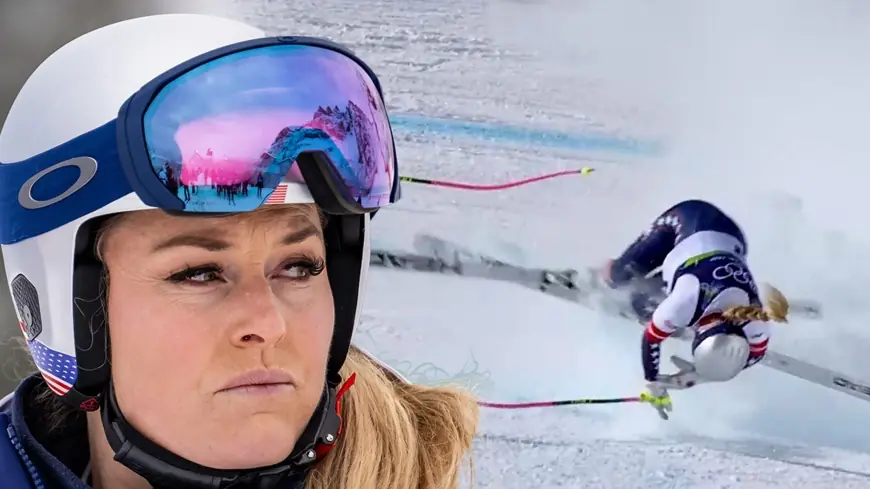
Lindsey Vonn’s Olympic downhill ended within seconds on Sunday, Feb. 8, 2026 (ET), after a high-speed crash that began at a course gate and quickly became a major medical response on the slope. Officials put the race on hold for more than 10 minutes while medics treated her on the course, then she was airlifted for further care. Later updates said she was in “stable condition” and had surgery to stabilize a fracture in her left leg.
What happened at the gate
Vonn was roughly 12–13 seconds into her run when she lost control near an early gate. Official summaries and on-site accounts describe her right ski pole snagging or becoming entangled with the gate/marker as she came through, which yanked her off balance. In the same instant, she clipped the gate and began to tumble.
Downhill speeds are high even early in a run, and once her upper body rotated, the skis crossed and she “pinwheeled” down the slope before coming to a stop. Broadcast footage showed immediate pain reactions while course personnel moved in.
Why the run stopped and how long the delay lasted
The race was not canceled on the spot, but it was halted under a course hold—a standard safety procedure when an athlete is down in a dangerous section or requires urgent care. This pause serves two purposes:
-
it keeps other racers from entering the same section at speed, and
-
it gives medical teams uninterrupted access to the athlete and a clear route for evacuation.
Vonn remained on the snow for roughly 15 minutes as medical staff stabilized her and prepared transport. The race hold lasted more than 10 minutes before competition resumed after she was moved off the course.
Video of Lindsey Vonn crash today fuels fresh debate over racing while injured
The medical response: from the slope to the hospital
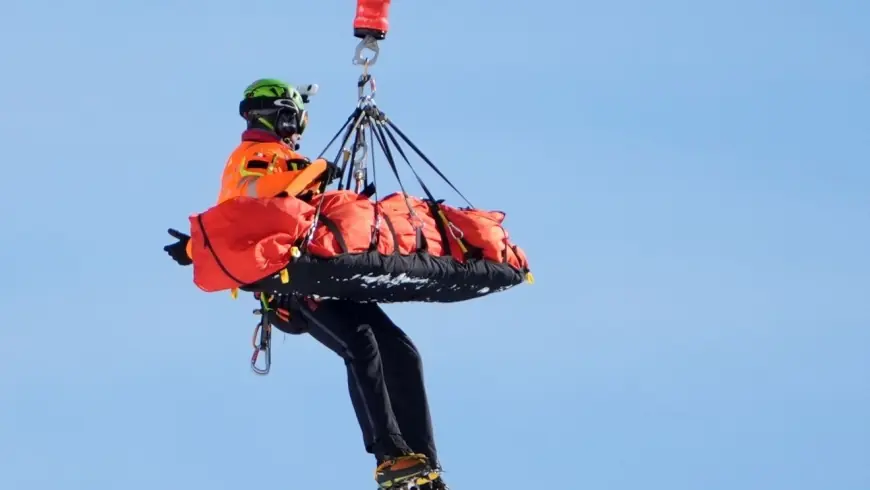
On the hill, responders treated Vonn where she stopped, then secured her in a stretcher for evacuation. She was airlifted off the mountain for more detailed evaluation and imaging, first through local medical facilities in the Cortina area before being transferred to a larger hospital in Treviso.
Later Sunday, hospital updates described an orthopedic procedure to stabilize a fracture in her left leg. Officials also indicated she was under close observation afterward, with some statements referencing intensive care for privacy—language that can reflect controlled access and monitoring needs, not necessarily a life-threatening crisis.
What “stable condition” means in official updates
“Stable condition” is a clinical status phrase that can sound reassuring while still covering a wide range of injury severity. In plain language, it generally means the patient’s vital signs are steady and the situation is not rapidly worsening at the time of the update.
Here’s what it usually does and does not mean:
-
It usually means: breathing, blood pressure, heart rate, and overall responsiveness are being maintained without signs of immediate collapse.
-
It does not mean: the injury is minor, recovery will be quick, or that complications are off the table.
-
It often implies: the urgent phase (life-saving stabilization) is under control, and the next phase is treatment, surgery, pain management, and monitoring.
That’s why “stable” can appear in the same update as “surgery” or “fracture.” The condition can be medically stable while the orthopedic injury remains serious.
What happens next for Vonn and the event
The immediate next steps are typically straightforward: post-surgical monitoring, imaging follow-ups, and a recovery plan that depends on the fracture’s exact type and any associated soft-tissue damage. Timelines can vary widely based on whether the fracture is simple or complex and what fixation method was used.
From the competition side, the women’s downhill continued after the course hold and concluded as scheduled, but the mood around the finish area visibly shifted as the medical response unfolded. For Vonn personally, the injury interrupts what had been framed as a comeback Olympic appearance—yet the latest official language has focused on her being in good medical hands and out of immediate danger.
Sources consulted: Reuters, U.S. Ski & Snowboard, Olympics.com, PBS NewsHour