






















Billie Eilish Grammys speech triggers Kevin O’Leary backlash and celebrity pile-on

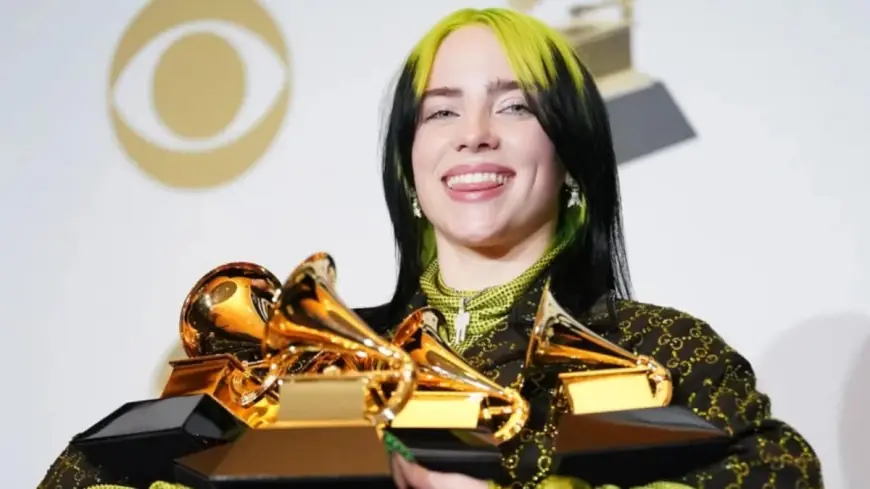
A post-Grammys culture clash erupted this week after Billie Eilish used her Song of the Year acceptance speech to criticize U.S. immigration enforcement, prompting sharp pushback from Canadian businessman and TV personality Kevin O’Leary and a rapid counterresponse from other public figures. The dispute has played out across social media and entertainment coverage since the awards show on Sunday, Feb. 1, 2026, turning a single onstage moment into a broader argument over whether celebrities should use major broadcasts for political statements.
The flare-up matters less for its novelty than for its speed: within days, the exchange became a proxy fight over activism, free expression, and the expectations placed on entertainers during high-visibility events.
What Billie Eilish said onstage
Eilish won Song of the Year for “Wildflower” at the 2026 Grammy Awards and used her speech to deliver a pointed message about immigration policy and enforcement. She included the line “No one is illegal on stolen land,” and urged people to keep protesting and speaking up. Eilish and her collaborator and brother, Finneas O’Connell, also wore pins signaling opposition to immigration enforcement.
The speech drew cheers in the room and immediately spread online, where clips were shared widely and debated across political lines.
Kevin O’Leary’s critique and the phrase that escalated it
O’Leary criticized Eilish’s remarks in subsequent commentary, arguing that musicians and actors should avoid political messaging and focus on entertainment. His tone—particularly the idea that stars should “shut your mouth and entertain”—became the accelerant for the next wave of reaction, because it framed the issue as a question of who is “allowed” to speak publicly rather than a disagreement over policy.
That framing pulled the discussion away from the specifics of immigration enforcement and toward a recurring argument: whether high-profile artists have a responsibility to remain apolitical during award shows, or whether award stages are exactly where cultural influence is meant to be used.
Celebrity responses turn the dispute into a broader pile-on
The sharpest rebuttal came from actor Mark Ruffalo, who responded directly to O’Leary with an insult-laced message defending Eilish’s right to speak. Other entertainers and online commentators echoed the same central point: that political expression is not an add-on to art, but often part of it.
The exchange quickly became more about posture than persuasion. Supporters of Eilish framed the backlash as an attempt to police speech; supporters of O’Leary framed celebrity activism as out-of-touch moralizing. The fight’s intensity reflected the environment: short clips, fast reactions, and the incentive to escalate rather than clarify.
Why this blew up now
Two ingredients made this particular dispute travel.
First, the Grammys have increasingly become a venue for social commentary, meaning audiences are primed to interpret acceptance speeches as cultural signals, not just thank-yous. Second, immigration enforcement remains a high-temperature issue in U.S. politics, so even brief phrasing can trigger strong reactions.
There’s also a practical element. Eilish’s win is a peak-attention moment, so any conflict attached to it benefits from the algorithmic boost that follows major live broadcasts. In that sense, the argument became an extension of the awards show—an afterparty for discourse, with higher volume than resolution.
What it means for Eilish and O’Leary
For Eilish, the controversy is unlikely to damage her standing with her core audience, which has long expected activism as part of her public persona. If anything, the episode reinforces an identity she has cultivated: an artist willing to use big stages for messages beyond music.
For O’Leary, the exchange keeps him in the spotlight, but it also risks narrowing his brand to provocation rather than business commentary. In recent years he has positioned himself as a straight-talking foil to celebrity culture; this moment sharpens that positioning, but it also invites critics to question whether the “stay in your lane” argument is applied consistently.
Key takeaways:
-
Eilish’s acceptance speech included explicit criticism of immigration enforcement and calls for protest.
-
O’Leary’s response escalated the conversation by arguing entertainers should avoid politics.
-
The backlash widened once other celebrities weighed in, reframing the dispute as a speech-and-power issue.
What happens next
The immediate next step is whether either side de-escalates. That can happen quietly—by moving on—or loudly, through follow-up statements that double down. The larger pattern suggests the news cycle will fade unless a new trigger appears, such as another awards speech, a policy development, or a public appearance that invites renewed questioning.
The bigger story is structural: award stages are no longer treated as neutral cultural space. They are watched as political moments, and the reaction economy that follows ensures that one line can become a multi-day story. This week’s Eilish–O’Leary clash is another reminder that the loudest debate after a major show may not be about who won—but about what winners choose to say.
Sources consulted: Variety, The Independent, Inc., People