























TPUSA “All-American Halftime Show” sets up an alternative Super Bowl stage

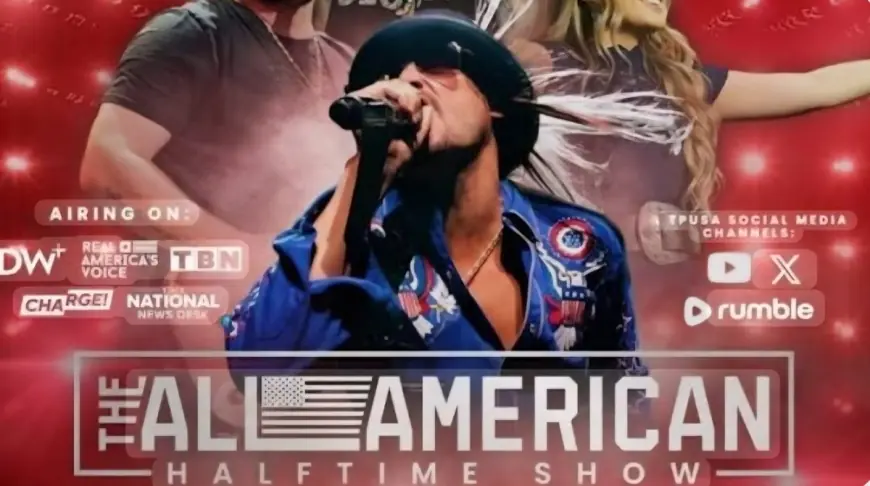
Turning Point USA is promoting a separate, Super Bowl–night concert branded as the “All-American Halftime Show,” positioning it as a conservative-friendly alternative to the NFL’s official halftime performance on Sunday, February 8, 2026. The event has become a flashpoint in the days before kickoff, blending entertainment, politics, and culture-war messaging into a parallel production timed to compete for attention during the game’s most-watched break.
The organization’s promotion has centered on a lineup led by Kid Rock, alongside country acts Brantley Gilbert, Lee Brice, and Gabby Barrett. Exact run time, location details, and broadcast logistics have been described in general terms publicly, with the central promise that viewers will be able to watch it during the Super Bowl halftime window.
What TPUSA is launching on Super Bowl Sunday
TPUSA’s pitch is straightforward: a halftime-style concert that emphasizes patriotism, faith, and “family-friendly” programming. Organizers have framed it as a response to dissatisfaction with mainstream halftime choices and broader entertainment trends.
Public-facing materials for the project highlight the “All-American Halftime Show” branding, with additional details rolling out through interviews and promotional appearances over the past two days. The show is expected to run during the same general window as the NFL’s halftime break, when viewership peaks and households are already gathered around TVs.
Who’s performing and what’s confirmed
The lineup being promoted publicly features:
-
Kid Rock (headliner)
-
Brantley Gilbert
-
Lee Brice
-
Gabby Barrett
While the names have been widely circulated in recent coverage and promotions, several operational details remain unclear at this time, including the precise venue, the length of the performance, and whether the show will be staged in front of a large live audience or produced primarily for broadcast.
Even with those unknowns, the marketing has leaned into the idea of a recognizable roster, aiming to offer an easy “switch over” option for viewers who want something different during halftime.
Why it’s drawing attention now
The alternative show is gaining traction because it is being promoted as a direct counterprogram to the NFL’s official halftime headliner, Bad Bunny. TPUSA and its allies have argued that the NFL’s entertainment choices do not reflect their values, while supporters of the official show have criticized the alternative as another attempt to politicize a pop-culture tentpole.
In practical terms, this is also a media play: halftime is the single most competitive slice of the Super Bowl broadcast, and any rival production needs a clear hook to break through the noise. TPUSA’s hook is identity-based—an explicit appeal to a specific audience segment that wants a different tone and set of themes.
The Kid Rock factor and renewed scrutiny
Kid Rock’s presence is central to the alternative show’s visibility—and to the scrutiny surrounding it. In recent days, older lyrics and past controversies have resurfaced in public debate, with critics arguing that the “family-friendly” framing clashes with parts of the artist’s history and catalog.
Supporters counter that his brand aligns with the event’s patriotic focus and that his live performances are a cultural signal as much as a musical act. Either way, the headliner choice ensures the alternative halftime effort will be discussed well beyond typical music circles, particularly as Super Bowl conversation spills into politics and social media.
What to watch for next
With kickoff set for 6:30 p.m. ET on Sunday, the key questions are logistical:
-
How easy will it be to find? If viewers have to hunt for it, the audience will likely be limited to those already motivated to seek it out.
-
How “live” will it be? A pre-produced concert can be polished and tightly paced, while a live event can feel bigger—but also riskier.
-
Will the messaging dominate the music? The more overtly political it becomes, the more it may energize supporters while turning away casual viewers.
The clearer the details become in the final hours before kickoff—how to watch, how long it runs, and what exactly viewers should expect—the more realistic it is for the event to draw meaningful attention during the halftime window.
Sources consulted: Associated Press; Reuters; The Independent; Billboard