























Impact of Russia’s Hockey Team Absence on Olympic Competitions

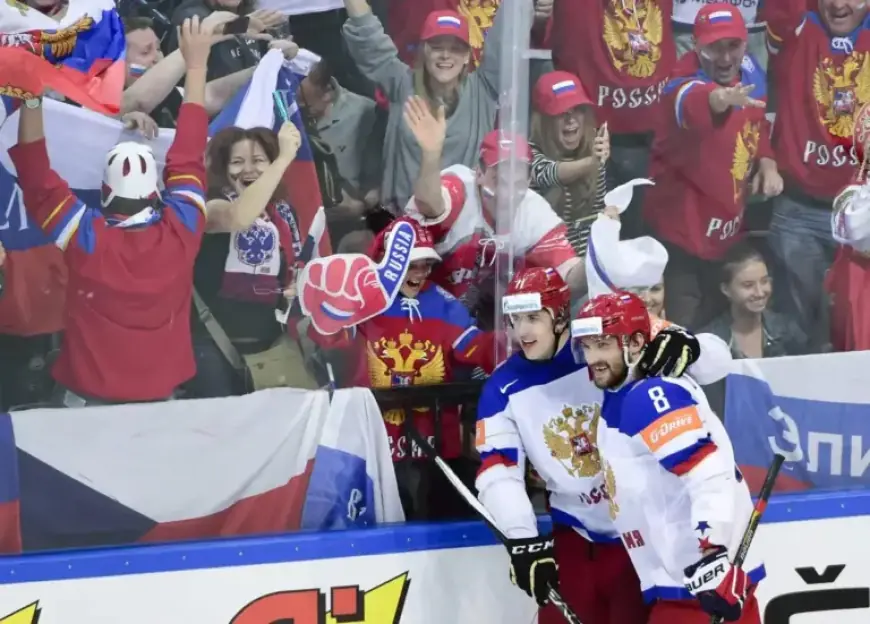
Russia’s absence from international hockey competitions, particularly the Olympics, is a significant storyline in the 2026 Winter Olympics. Since being banned from international play due to the invasion of Ukraine in 2022, the implications of this absence are far-reaching and multifaceted.
Impact of Russia’s Hockey Team Absence on Olympic Competitions
The NHL is making its return to the Olympics after a 12-year hiatus. However, the notable absence of Russia raises questions about the competition’s dynamics. A hypothetical Russian team, crafted by Hall of Famer Igor Larionov, illustrates the depth and skill that is missing from the tournament.
Creating a Hypothetical Russian Olympic Roster
- Goalies: Larionov selected Sergei Bobrovsky, Andrei Vasilevskiy, and Igor Shesterkin as the top choices.
- Defense: An ideal blend of eight defenders includes skill, size, and experience, despite Alexander Romanov’s absence due to injury.
- Forwards: A dynamic forward lineup featured Alex Ovechkin, the NHL’s top scorer, alongside promising talent like Ivan Demidov and Fedor Svechkov.
Larionov noted that not including KHL players highlights the gap between KHL talent and those competing at the NHL level. His selections reveal a strategy focused on skill and hockey IQ, which would have positioned Russia as a serious contender for medals.
Medal Chances and Group Dynamics
Estimates suggest Russia’s potential medal chances ranged from 44.7% for a bronze to a 12.2% likelihood of winning gold. The competitive field would have shifted considerably with Russia’s inclusion.
- Group Configurations: Russia’s entry would displace France and alter preliminary group dynamics significantly:
- Group A: Canada, Sweden, Switzerland, Italy
- Group B: Finland, Germany, Czech Republic, Denmark
- Group C: Russia, USA, Slovakia, Latvia
The presence of Russia would have reduced the dominance odds of both Canada and the USA, shifting the chances of their success downward from 73% and 84% to 66% and 64%, respectively. This change introduces greater uncertainty in group staging and raises the potential for early exits from the knockout rounds for the two frontrunners.
Conclusion
Russia’s absence from the 2026 Winter Olympics fundamentally alters the landscape of international hockey competition. Without their historical prowess, the tournament may see a less tense and competitive atmosphere. The priorities of skilled play, team dynamics, and the potential for upsets hinge on the missing Russian Team, highlighting the complex interplay of politics and sports on the global stage.