Gold price today rebounds after sharp selloff, with markets refocusing on rates

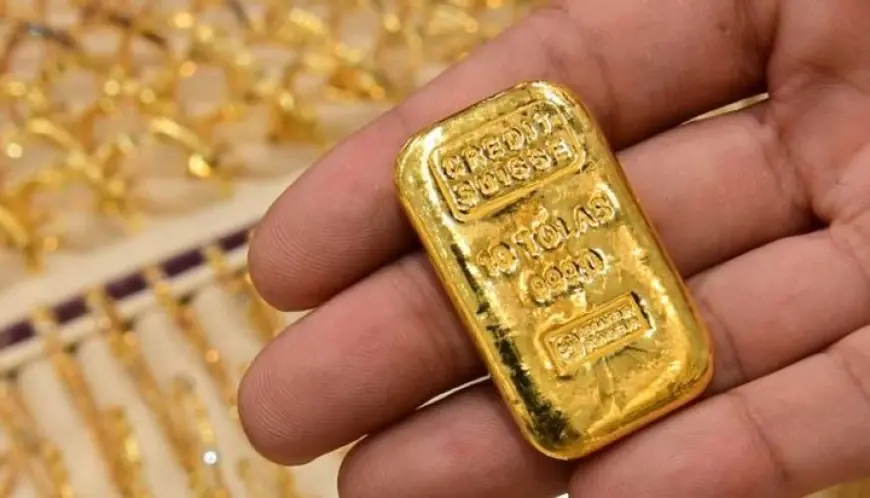
Gold price today steadied near the $4,900–$5,000 range in early Saturday trading (ET), extending a rebound after last week’s sudden drop from January’s record highs. The move matters because it tests whether buyers are willing to step back in after a volatility shock that rippled across metals, equities, and currencies.
Gold price today: where it stands
As of roughly 6:00 a.m. ET on Saturday, February 7, 2026, spot gold was trading around $4,960–$4,980 per troy ounce, while the actively watched COMEX April contract was near $4,989. Trading remains sensitive to the U.S. dollar, expectations for the next Federal Reserve policy path, and shifting demand signals from major reserve holders.
Gold snapshot (approx., early Feb. 7, 2026, ET)
| Measure | Level |
|---|---|
| Spot gold | $4,960–$4,980/oz |
| COMEX gold (Apr 2026) | ~$4,988.60/oz |
| Prior-day reference (spot, Feb. 6) | ~$4,964/oz |
| January 2026 peak (record high, approx.) | ~$5,608/oz |
Prices can move quickly outside peak liquidity hours, so the table should be read as a real-time snapshot rather than a daily close.
What’s driving the bounce
Two forces are dominating the narrative: macro expectations and positioning. After a steep, fast drop from record levels, many traders treated the decline as an overextended unwind rather than a fundamental break—especially once the dollar’s surge cooled. A softer dollar typically makes gold cheaper for non-U.S. buyers, and that dynamic can draw incremental demand back into the market.
At the same time, investors are recalibrating what “higher for longer” might mean for real yields. Gold tends to struggle when real yields rise, because the metal offers no coupon. When yields pause or retreat, gold’s relative appeal improves, particularly for portfolios trying to hedge tail risks.
Central-bank demand remains a pillar
Beyond day-to-day trading flows, central-bank buying continues to matter. Recent data show China’s central bank has maintained a steady pace of additions to its gold reserves into January 2026. Even modest monthly increases can influence sentiment because they reinforce the idea that official-sector demand is persistent rather than opportunistic.
That demand doesn’t guarantee a straight-line rally—prices can still fall on margin calls, risk-off liquidation, or a sharply stronger dollar—but it can help put a floor under dips, especially when retail and institutional investors are already primed to treat pullbacks as entry points.
Why volatility spiked so suddenly
The recent drawdown looked less like a slow re-pricing and more like a forced de-risking. When markets get crowded on the same side of a trade, a negative catalyst can trigger rapid profit-taking and mechanical selling. For metals, that can be amplified by changes in margin requirements, thin liquidity at key moments, and cross-asset stress that prompts investors to raise cash.
Even after the rebound, the price action suggests the market is still digesting what a “new normal” level might be after such an extreme January surge.
What to watch next week
The near-term direction for gold is likely to hinge on a few observable signals:
-
The U.S. dollar’s trend: Another leg higher could cap rallies quickly.
-
Rate expectations and real yields: Any shift toward easier policy conditions tends to help gold; the reverse can pressure it.
-
Futures positioning and volume: Rising participation on up days can confirm the rebound; weak volume can hint at fragility.
-
Further official-sector updates: Ongoing reserve data and related commentary can influence longer-term conviction.
If gold holds above the mid-$4,800s and continues to find buyers near $4,900, it would suggest the market is transitioning from liquidation to consolidation. A clean break below that zone, however, could reopen the door to deeper downside as leveraged positions reset.
Sources consulted: Reuters; CME Group; Trading Economics; Associated Press