

























Jeane Freeman Dies at 72, Leaving a Defining Legacy on Scotland’s Health Policy and the Covid Era

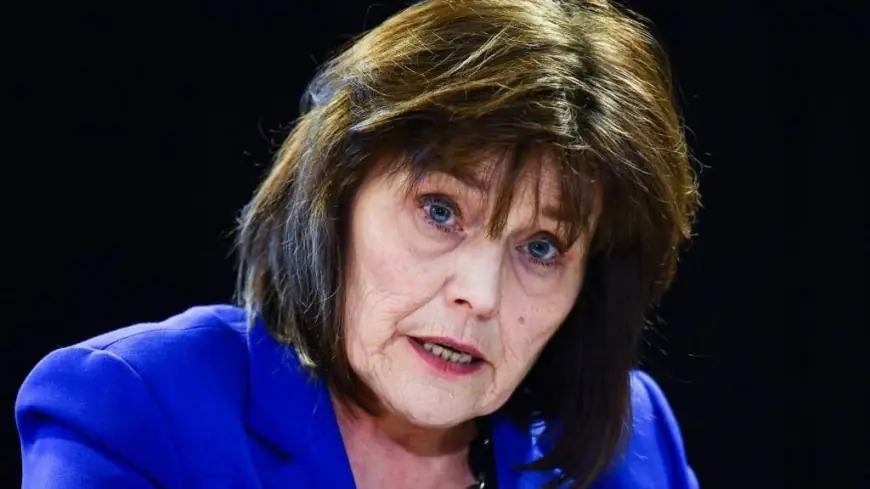
Jeane Freeman, a former Scottish government health secretary and former Member of the Scottish Parliament, has died at the age of 72 after a cancer diagnosis disclosed by her family on Saturday, February 7, 2026, in U.S. Eastern Time. Freeman became one of the most recognisable public officials in Scotland during the Covid emergency, regularly associated with the daily grind of pandemic briefings, hospital capacity pressures, and the politically fraught choices that shaped public health outcomes.
Freeman served as cabinet secretary for health and sport from 2018 to 2021 and represented the Carrick, Cumnock and Doon Valley constituency in the Scottish Parliament from 2016 to 2021.
What happened
Family statements said Freeman received an unexpected diagnosis of incurable cancer in mid-January and died roughly three and a half weeks later. Tributes from across Scottish politics followed, reflecting both the prominence of her role and the intensity of the period in which she held it.
Even for public figures, the speed of the illness and the timing of the announcement sharpened public attention: it re-centered a debate that never fully ends after a crisis like Covid, namely who is held responsible for high-stakes decisions made under uncertainty, and how quickly reputations and legacies can be recast once the political contest is replaced by mourning.
Why Jeane Freeman mattered in the artificial intelligence age of government
Freeman’s legacy is inseparable from two ideas that now dominate modern governance: delivery capacity and trust. During Covid, the value of clear lines of accountability became obvious to the public in a way that day-to-day policy often does not. Health secretaries tend to be judged on waiting times, staffing, and budgets. Freeman was judged, in real time, on life-and-death risk management, communication discipline, and the credibility of the system.
That matters now because governments are simultaneously facing a new kind of “always-on” scrutiny: rapid information cycles, online amplification, and growing use of automated systems inside public services. The public’s expectation of transparency has risen, while tolerance for mistakes has fallen. Freeman’s tenure illustrates the new baseline for senior officials: it is not enough to make decisions; leaders must also demonstrate how decisions were made, what trade-offs were accepted, and what safeguards exist when outcomes go wrong.
Behind the headline: incentives, constraints, and the stakeholders
Freeman operated at the intersection of clinical reality, political necessity, and public fear. The incentives in that role can collide:
-
The health system’s incentive is stability: protect capacity, keep services functioning, reduce harm.
-
The political system’s incentive is legitimacy: maintain public compliance and defend decisions in Parliament.
-
The public’s incentive is certainty: clear rules, consistent messaging, and reassurance that risks are understood.
Stakeholders included frontline clinicians and hospital managers, care-home operators, unions, families making daily risk calculations, and opposition parties seeking accountability. The most durable tension was that hospitals and care settings behave like complex systems: small policy shifts can produce delayed and uneven effects, yet political accountability is immediate.
Freeman was also closely linked to earlier reforms, including work on social security structures within Scotland’s devolved system, which helped define her as a “delivery” minister before she became the face of health policy.
What we still don’t know
In moments like this, the temptation is to compress a complicated record into a single narrative: hero, villain, or symbol. The truth is usually more granular, and several questions remain unresolved in the public mind:
-
How decision-making responsibility should be distributed between ministers, senior officials, clinical advisers, and operational leaders during emergencies
-
How to evaluate outcomes fairly when data, modelling assumptions, and real-world behaviour changed week by week
-
What lessons were actually implemented after Covid, versus merely documented
-
How governments should communicate uncertainty without losing public trust
These are not abstract questions. They shape how future crises will be handled, from respiratory outbreaks to cyber incidents affecting hospitals.
What happens next: realistic scenarios and triggers
-
Formal commemorations in Parliament and local communities, with an emphasis on public service and the human cost of crisis leadership. Trigger: cross-party agreement on memorial motions and statements.
-
Renewed discussion of Covid-era decisions, particularly around care settings and health system preparedness, framed through legacy rather than partisan contest. Trigger: high-profile tributes that revisit contested moments.
-
Increased attention to workforce and waiting-time pressures as the health portfolio returns to “normal politics,” with Freeman’s tenure used as a reference point for what the public now expects. Trigger: new performance figures or budget debates.
-
A quieter, internal reckoning within political parties about how they support ministers in high-intensity portfolios, including mental health, security, and communications resilience. Trigger: insider accounts and retrospective briefings from the period.
Why it matters
Jeane Freeman’s death closes a chapter on one of the most intense stretches of modern Scottish public administration. For many people, her name is tied to the lived experience of Covid: fear, rules, sacrifices, and the constant measurement of risk. For policymakers, her record underscores a hard lesson: the credibility of a health system is built over years, tested in weeks, and judged in days.