

























Curling schedule and results: unbeaten Britain and United States set the pace as the “power play” end shapes mixed doubles strategy at Milano Cortina 2026

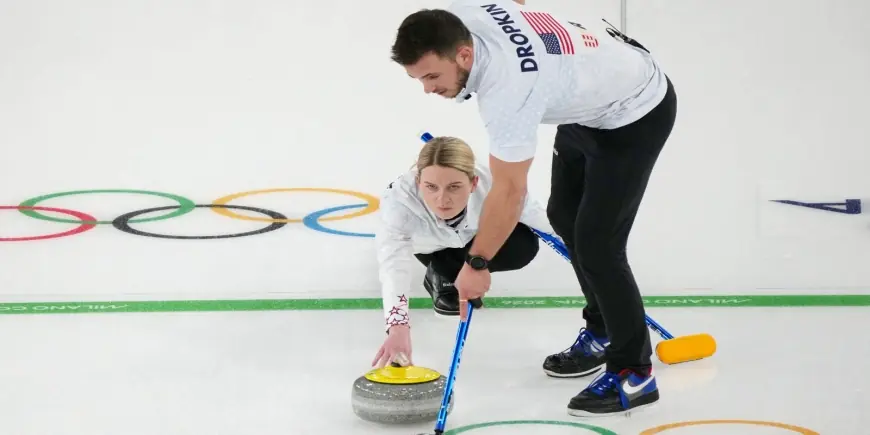
Mixed doubles curling at the Milano Cortina 2026 Winter Olympics is quickly turning into a race where every end matters, and where one tactical choice, the power play, can swing an entire match. Heading into Saturday, February 7, 2026 ET, Great Britain and the United States have remained perfect through the first half of round-robin play, while defending champions Italy have steadied after an early stumble and several medal contenders are battling to stay alive.
The early storyline is simple: the top teams are winning, but they are doing it with very different risk profiles. Some are leaning into aggressive offense and steals, others are protecting hammer and waiting to deploy their power play at the moment an opponent looks most vulnerable.
Curling rules refresher: how many ends are there and how scoring works
In traditional Olympic curling, men’s and women’s games are played over up to 10 ends. Mixed doubles is shorter: up to 8 ends.
An end is like an inning: both sides deliver all of their stones, then the score is counted. You score by having stones closer to the center of the house than your opponent’s nearest stone. Only one team scores per end, and the number of points equals how many of its stones are closer than the opponent’s best.
If the score is tied after the final end, extra ends are played until a winner is decided.
What is a power play in curling and why it matters in mixed doubles
The “power play” is a mixed doubles-only option that changes the starting layout of stones for one end per team, per game. In a normal mixed doubles end, two pre-placed stones create an early tactical puzzle and encourage teams to build toward the middle. In a power play end, the pre-placed stones are shifted toward the side of the sheet, creating a clearer lane for draws and freezes and making it easier to build a multi-point scoring opportunity without immediate congestion in the center.
Why it matters:
-
It increases the odds of a big end, especially for the team with hammer.
-
It forces opponents to decide whether to play defense early or try to steal by attacking the angles.
-
It becomes a timing weapon: use it too early and you may waste it, too late and you may not get the scoreboard situation you want.
Curling schedule and results so far: unbeaten Britain and United States, Italy rebounds, Norway finally breaks through
Through Friday, February 6, 2026 ET, Great Britain’s Jennifer Dodds and Bruce Mouat stayed undefeated with wins over Sweden and South Korea, moving to five straight victories. The United States pairing of Cory Thiesse and Korey Dropkin also remained unbeaten, adding wins over Canada and the Czech Republic to keep pace at the top of the table.
Italy’s Stefania Constantini and Amos Mosaner, the reigning Olympic champions in mixed doubles, bounced back from a previous loss with emphatic results in their latest games, including a lopsided win over Switzerland and a tighter victory over Estonia.
Meanwhile, one of the most watched turns came from Norway’s Kristin Skaslien and Magnus Nedregotten. After three straight losses, they responded with a statement win, shutting out Sweden 9–0 in a game that flipped the pressure back onto the field.
Round-robin play continues through the weekend in mixed doubles. Each team plays nine round-robin games, and the top four advance to the semifinals. With the standings already compressing behind the leaders, teams are openly treating six wins as a realistic threshold to feel safe.
Curling results today: what to watch on Saturday, February 7, 2026 ET
Saturday’s slate features the kind of matchups that can decide who reaches the medal round and who ends up needing help. Watch for three recurring themes rather than any single “must-win” game:
-
Power play timing: teams chasing the standings are more likely to deploy it earlier to force a swing end.
-
Hammer management: protecting last stone advantage has been the difference in several tight finishes.
-
Defensive discipline: missed angles and over-sweeping are being punished immediately in mixed doubles because there are fewer stones and fewer ends to recover.
Great Britain, Milano Cortina 2026: why the early dominance is real and what could still trip them up
Britain’s perfect start is not just about shot-making; it’s about game design. Dodds and Mouat have consistently forced opponents into low-percentage doubles and awkward runbacks, then capitalized when the counterpunch fails. Their incentive now is to avoid unnecessary risk, qualify early, and keep their power play usage unpredictable so opponents cannot game-plan around it.
The pressure point is that mixed doubles can turn on one end. A single misread during a power play end can create a three-point swing that erases an otherwise controlled match.
Marie Kaldvee and Estonia: a small-team story with big strategic upside
Estonia’s Marie Kaldvee, paired with Harri Lill, has been part of a milestone moment for their country at these Games. Even when results are uneven against top seeds, mixed doubles rewards teams that understand angles and momentum. That makes Estonia a dangerous spoiler: they may not need to outgun opponents, just disrupt one key end, steal once, and force the favorite into a pressure power play that does not land.
What we still don’t know and what happens next
Key missing pieces:
-
Which teams are peaking, and which are surviving on late steals that may not repeat.
-
How consistently contenders can convert power play ends into multi-point scoring.
-
Whether the middle of the standings will require tiebreak criteria, where point differential and head-to-head results can matter.
Realistic next steps and triggers:
-
Britain and the United States clinch early if they keep converting hammer ends cleanly.
-
Italy climbs back into the top four if their rebound holds against direct rivals.
-
One contender falls short if a single power play end backfires in a tight game.
-
A spoiler run emerges from the mid-pack if a team strings together steals and forces favorites to chase.
Why it matters: mixed doubles is now one of the Olympics’ fastest-moving medal events, and the power play has made it even more volatile. In an eight-end game, you do not just need great shots, you need great timing.