























Anthony Davis trade sends AD to Wizards as Dallas pivots to a new build

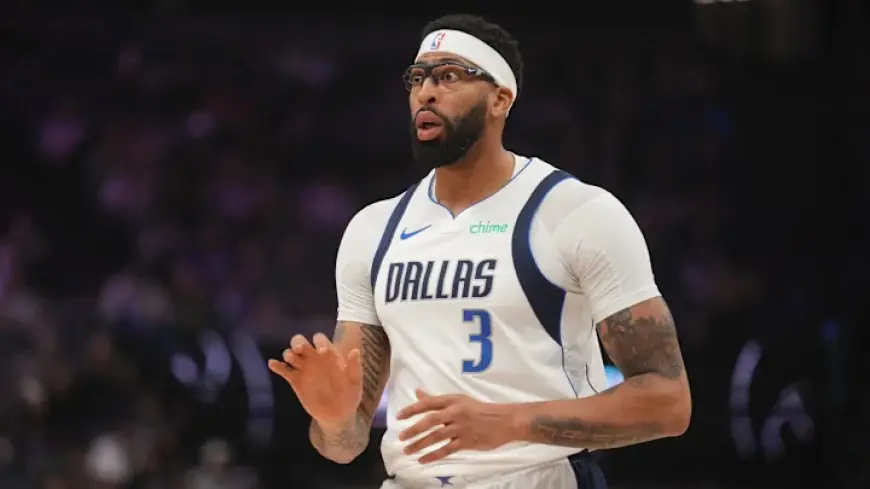
Anthony Davis is headed to the Washington Wizards in a sweeping deadline deal that accelerates Washington’s post-rebuild push around Trae Young and forces the Dallas Mavericks into an even sharper reset after a turbulent year. The move, completed on Wednesday, Feb. 4, 2026 (ET), also ripples into roster math for both teams: Washington adds a top-tier defensive anchor, while Dallas cashes out of Davis and stacks draft assets while juggling the uncertainty around Kyrie Irving’s recovery timeline.
The Anthony Davis trade: who got what
The trade is a nine-player, three-team swap involving Washington, Dallas, and Charlotte, with multiple draft picks changing hands.
| Team | Receives |
|---|---|
| Wizards | Anthony Davis, D’Angelo Russell, Dante Exum, Jaden Hardy |
| Mavericks | Khris Middleton, A.J. Johnson, Tyus Jones, Marvin Bagley III, 2 first-round picks, 3 second-round picks |
| Hornets | Malaki Branham |
Davis comes over while averaging 20.4 points, 11.1 rebounds, and 2.8 assists in 20 games this season. He has also been sidelined since mid-January with a left-hand ligament injury on a four-to-six week timetable.
Why Washington made the swing after the Trae Young move
Washington’s front office has been signaling urgency since the Trae Young trade in early January. Adding Davis makes the blueprint far clearer: pair an elite pick-and-roll orchestrator with a big who can defend the rim, clean the glass, and punish switches.
For a roster that has leaned young, Davis also changes the nightly floor. Even if the offense is uneven while roles settle, a Davis-led defense can stabilize outcomes. That matters for a team that has spent the last two seasons near the bottom of the standings and is now trying to build a credible identity quickly.
The trick is fit. Washington already has Alex Sarr, and the Davis-Sarr combination can be potent—but only if the spacing and roles are disciplined. Expect heavy experimentation: Davis at center in closing lineups for defense and rebounding, with Sarr used either as a second big or staggered to keep a rim protector on the floor.
What the Wizards roster and depth chart questions look like now
This isn’t just “add star, win more.” It’s a re-ordering of responsibilities.
Key decisions Washington has to solve:
-
Frontcourt alignment: Davis at 5 with Sarr as a roaming defender and secondary finisher, or Sarr at 5 with Davis used as the stabilizing closer.
-
Guard rotation: Russell and Hardy bring shot creation and ball handling, but the team must decide whether they’re starters, sixth-man engines, or matchup pieces next to Young.
-
Late-game hierarchy: Young will control the ball, but Davis gives Washington a trustworthy second option when defenses trap or blitz high screens.
If Davis is healthy, Washington’s biggest immediate gain is structural: it can now force defenses to choose between stopping Young’s pull-up threat and respecting Davis rolling into space.
Dallas’ pivot: draft capital, expiring money, and Kyrie uncertainty
For Dallas, the deal reads like a reorientation toward flexibility and a longer runway. Davis’ injury history and salary made him difficult to build around, and the Mavericks have been drifting since last year’s Luka Dončić trade reshaped the franchise.
Dallas now brings in veterans and movable contracts, plus a meaningful pick package:
-
First-round picks in 2026 and 2030
-
Three future second-round picks
-
Multiple incoming deals that can be re-signed, rerouted, or allowed to expire depending on direction
The other shadow hanging over Dallas is Kyrie Irving’s status after tearing his ACL last March. The roster moves give Dallas options whether Irving returns late, returns next year, or requires a more cautious approach.
What to watch next month
This trade will be judged less by headlines and more by four measurable checkpoints:
-
Davis’ return date and minutes load — especially how Washington handles back-to-backs.
-
Young–Davis pick-and-roll efficiency — watch the spacing around them and whether opponents can “tag” the roller without surrendering open threes.
-
Sarr’s developmental usage — whether he stays empowered or becomes a purely complementary piece.
-
Dallas’ follow-up moves — whether incoming veterans are retained for continuity or flipped again for more assets.
Washington has chosen the hard path—trying to win while still growing a young core. Dallas has chosen the flexible path—stepping back from a fragile timeline and reloading for what comes next. The on-court answers start arriving as soon as Davis is cleared to play.
Sources consulted: NBA.com, Washington Wizards, ESPN, Sports Illustrated