





















Olympics Opening Ceremony 2026: Milano-Cortina’s Two-Cauldron Spectacle Blends Italian Heritage, Political Tension, and a New Host-City Blueprint

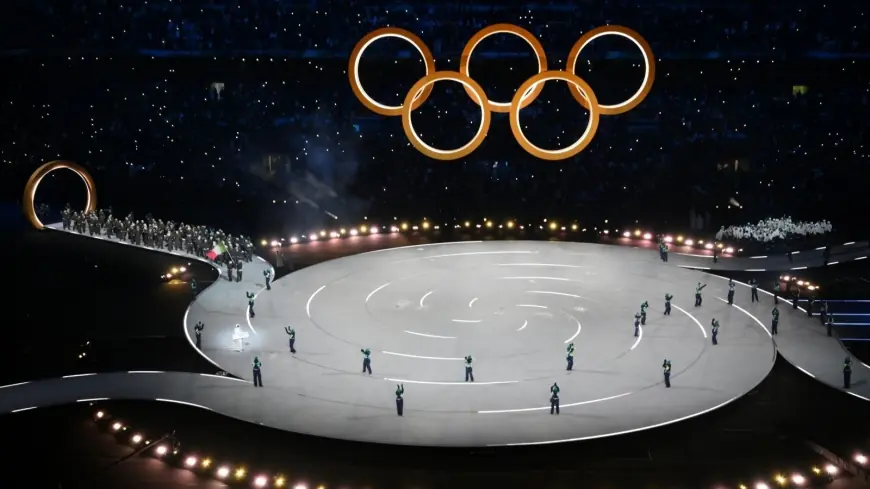
The Olympics opening ceremony for Milano-Cortina 2026 delivered a first-of-its-kind setup on Friday, February 6, 2026, with the Winter Games officially declared open in Milan while parallel celebrations unfolded in Cortina d’Ampezzo and additional mountain venues. The headline image was the lighting of two Olympic cauldrons—one in Milan and one in Cortina—an on-the-nose symbol for a Games built across multiple regions rather than a single compact host city.
The ceremony began at 2:00 p.m. ET and ran for roughly three hours, mixing the Parade of Nations with a glossy showcase of Italian culture, fashion, and music. Italian President Sergio Mattarella formally opened the Games, and International Olympic Committee President Kirsty Coventry used her remarks to emphasize unity and human connection amid an increasingly fractured global backdrop.
What happened at the Milano-Cortina Olympics opening ceremony
The main stadium staging in Milan anchored the night with the traditional elements—athletes’ parade, national flags, speeches, and the final cauldron moment—while other segments played out hundreds of miles away in the Dolomites. The production leaned hard into “Italy as brand,” layering heritage cues with contemporary pop performance and cinematic staging.
The crowd reactions became a story of their own. The U.S. vice president, JD Vance, drew boos during a flag-waving moment, while Ukraine received loud cheers during the parade. The Israeli delegation’s introduction drew mixed reactions. Those moments didn’t overwhelm the show, but they made clear that opening ceremonies are no longer insulated from geopolitics—even when the script tries to hold the line on celebration.
Behind the headline: why the two-cauldron idea matters
Milano-Cortina’s opening ceremony wasn’t just a spectacle; it was a pitch for a new Olympic hosting model. The incentives are straightforward:
-
Cost and legitimacy: Spreading events across existing venues and established tourism corridors is meant to reduce the need for brand-new “white elephant” construction—one of the most common political obstacles to hosting.
-
Regional buy-in: A multi-city model distributes economic benefits and reputational wins, which can help a bid survive local skepticism.
-
Operational reality: Winter sports naturally live in mountains and valleys, not just in big cities. This format tries to stop pretending otherwise.
But there’s a tradeoff. A geographically dispersed Olympics increases logistical complexity—transportation, security, media operations, and athlete movement all get harder. The opening ceremony effectively served as a live stress test of whether a “networked Games” can still feel emotionally unified.
Stakeholders: who gains and who carries the risk
The stakeholder map is wider than in a one-city Olympics:
-
National governments and local officials gain prestige if the event runs smoothly and backlash if it doesn’t.
-
Residents carry the friction of closures, security perimeters, and disruptions—especially in a city like Milan where concerns about affordability and housing pressure already exist.
-
Athletes benefit from the global platform but can become unwilling symbols in political moments, whether through crowd reactions or international controversy.
-
The Olympic movement needs this model to look workable. Future bids may depend on whether multi-site hosting is seen as sustainable rather than chaotic.
What we still don’t know
Even after a successful show, big questions remain unresolved in public view:
-
How consistently organizers can move people and equipment between venues once competition schedules intensify
-
Whether security and crowd management remain stable across multiple sites and travel corridors
-
How the dual-cauldron symbolism will translate into a cohesive “one Games” identity over the next two weeks
-
Whether public frustration over disruptions and affordability grows as the event footprint expands
These unknowns matter because the opening ceremony sets expectations—then the daily grind of operations either confirms the promise or exposes the gaps.
Second-order effects: the ripple impacts beyond pageantry
The ceremony’s political flashes will have downstream effects. Crowd reactions to specific delegations and officials can become diplomatic talking points, and they also shape how audiences interpret “unity” messaging. Meanwhile, the multi-site format—if perceived as successful—could nudge future Olympic planning toward regional coalitions, shared infrastructure, and fewer mega-builds.
There’s also a cultural ripple: by leaning heavily into Italy’s national identity, the ceremony reinforces the Olympics as a kind of global branding platform, not just a sports festival. That can be a strength—clarity, storytelling, tourism—and a vulnerability if residents feel the brand is being prioritized over lived realities.
What happens next: realistic scenarios and triggers
-
Operational smoothness becomes the story if transport, scheduling, and venue transitions run quietly in the background.
Trigger: early competition days proceed with minimal delays. -
Logistics overshadow competition if travel bottlenecks or security incidents hit multiple sites.
Trigger: repeated late starts, crowd-control problems, or high-profile disruptions. -
Politics intrudes again as medals, flags, and national anthems amplify international tension.
Trigger: visible protests, diplomatic disputes, or controversial crowd responses. -
The “new hosting model” gains momentum if the dispersed format delivers great atmospheres and clear TV storytelling.
Trigger: iconic moments in mountain venues that feel fully integrated with the Milan hub.
The Olympics opening ceremony is always a promise. Milano-Cortina’s promise is bigger than fireworks: that the Games can be shared, modernized, and still feel like one global event—without the costs and construction that have made hosting politically toxic in many places. The next two weeks will decide whether that promise looks like a blueprint or a warning.