

























China Responds First to Ruginienė’s Statement

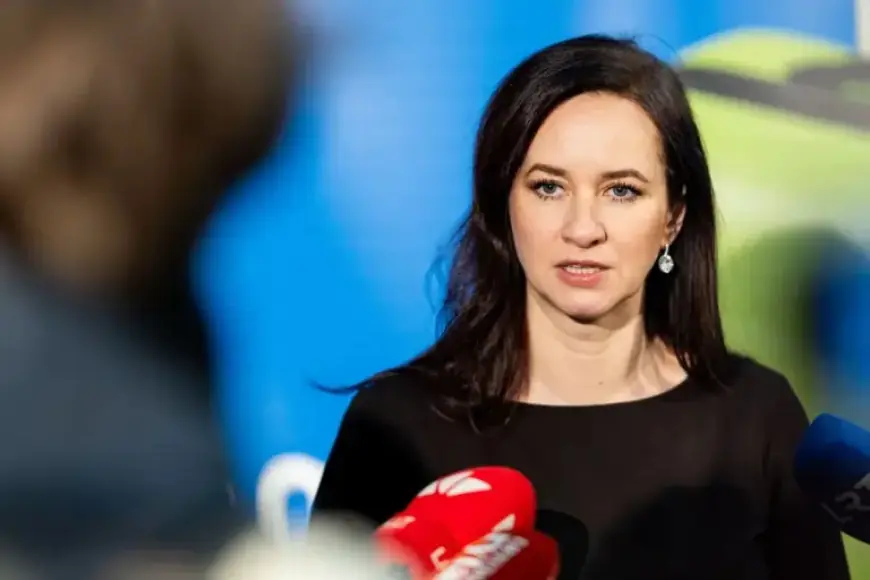
This week, the Prime Minister of Lithuania, Inga Ruginienė, remarked that the country is seeking to repair its diplomatic ties with China after straining relations over its dealings with Taiwan. During a regular press conference, she indicated that “the doors for communication between China and Lithuania remain open.”
China’s Reacts to Lithuania’s Diplomatic Shift
Responding to Ruginienė’s statements, China’s Foreign Ministry spokesperson, Lin Jian, expressed hope for improved bilateral relations. He stated, “We hope that Lithuania will transform its desire to enhance ties into concrete actions and promptly correct its mistakes.”
Background of Diplomatic Tensions
- In late 2021, Lithuania opened a representative office for Taiwan, prompting severe diplomatic and economic sanctions from China.
- China downgraded its diplomatic relations with Lithuania, changing the representative from ambassadorial level to chargé d’affaires.
- The tensions escalated after Lithuania exited the “17+1” cooperation format with China when former Foreign Minister Gabrielius Landsbergis encouraged other EU states to follow suit.
- Only neighboring Estonia and Latvia responded similarly to Lithuania’s actions.
Inga Ruginienė’s current administration has shifted its position on China. Unlike the previous government led by Gintautas Paluckas, which viewed China as a challenge to Lithuania’s foreign and security policies, Ruginienė’s cabinet aims to restore diplomatic relations with Beijing.
President’s Perspective on China Relations
President Gitanas Nausėda previously stated that he sees no issue with the government’s efforts to strengthen ties with China, emphasizing that any steps forward must be mutual.
Political Reactions
Political figures, such as Viktorija Čmilytė-Nielsen, the leader of the Liberal Movement, have voiced concerns about Ruginienė’s approach. She criticized the Prime Minister for allegedly lacking deep understanding of the issues involved in engaging with authoritarian regimes.
Čmilytė-Nielsen articulated her belief that Lithuania should not compromise its democratic values for the sake of diplomatic relationships. She suggested that adhering to a values-based foreign policy is essential for smaller nations like Lithuania.
She remarked, “Shifting to a non-values-based policy could lead to detrimental outcomes, as such a position always leaves a nation vulnerable to the whims of authoritarian countries.”
Overall, the situation depicts a significant moment in Lithuania’s foreign policy, as the nation navigates its relationships with global powers while attempting to uphold its democratic identity.