
























Taylor Swift’s “Opalite” Music Video Turns a Glossy Fake Commercial Into a Star-Studded Pop Satire

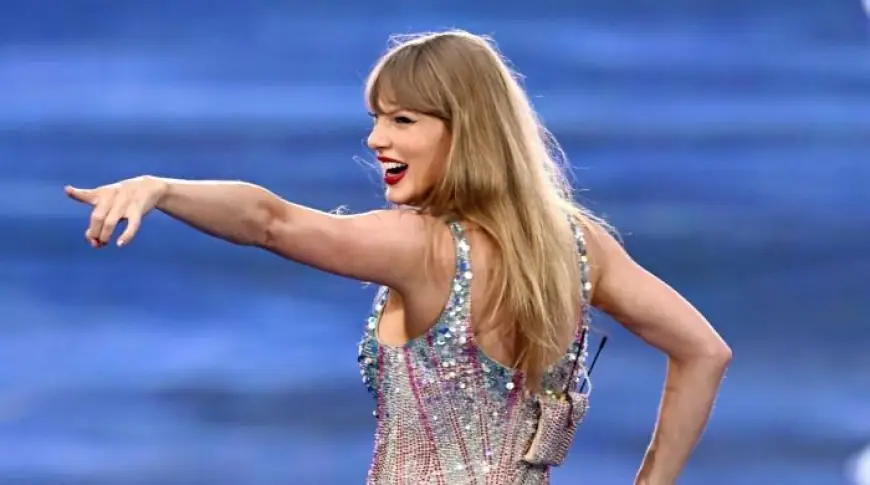
Taylor Swift’s new “Opalite” music video arrived on February 6, 2026, ET, and it is engineered to be talked about: a bright, deliberately artificial short that opens like a late-90s infomercial and spirals into romantic absurdism. The video pairs Swift with Domhnall Gleeson as an offbeat counterpart, while Greta Lee, Cillian Murphy, and Lewis Capaldi appear in memorable supporting moments that keep the frame busy and the rewatch value high.
The release lands as Swift continues a visual strategy that treats music videos less like add-ons and more like campaign centerpieces. “Opalite” is designed to travel fast: easy to summarize, packed with sight gags, and flexible enough to support multiple interpretations without collapsing into a single “explainer.”
What happens in the “Opalite” video
The premise is built around a fictional product: “Opalite,” presented as a shimmering, quick-fix solution for emotional emptiness. Swift’s character begins in an intentionally sterile, lonely setup, then attaches herself to a literal rock as if it were a best friend and partner. The joke is not subtle, but the commitment is: the camera treats the rock like a real co-star, and Swift plays the loneliness straight enough that the comedy has an edge.
Gleeson’s character mirrors the concept with his own painful version of companionship, forming a bond with a cactus. The parallel storylines eventually converge into a stylized romance that leans into choreographed awkwardness, bright color palettes, and throwback costuming. Lee and Murphy function like scene-stealers rather than distractions, and Capaldi’s appearance is timed for comedic lift when the narrative risks becoming too self-serious.
The net effect is a pop video that reads like a satire of manufactured happiness, while still delivering the central reward of the format: big hooks, big looks, and a clear emotional arc.
Taylor Swift “Opalite” music video: why the concept is the headline
The hook is not simply “celebrity cameos.” It is the decision to frame longing as something consumer-grade, packaged, and sold. “Opalite” functions as a metaphor for the modern promise that personal transformation can be purchased on demand. The story pushes that idea to cartoonish extremes, then lets the characters stumble into something more human.
That is the key to why the video is sticking: it is funny on first watch, but it also leaves a faint aftertaste. The characters are not just quirky. They are coping. The humor makes the loneliness legible, and the faux-commercial framing makes the critique feel contemporary without turning the video into a lecture.
Behind the headline: incentives, stakeholders, and what Swift is optimizing for
Context matters. Swift’s recent visual rollouts have emphasized event-ness, not just aesthetics. “Opalite” fits a strategy where each release is built to generate conversation across multiple audiences at once: fans who hunt for motifs, casual listeners who want a self-contained story, and culture-watchers who care about how pop reflects broader anxieties.
Incentives are aligned toward maximum shareability. A concept that can be summarized in one sentence is a distribution advantage. A cast that crosses music and film expands the audience. A visual full of distinct set pieces produces clips, screenshots, and remixes without needing controversy.
Stakeholders extend beyond the artist. The featured actors gain a high-visibility moment that can feel playful rather than promotional. The creative team benefits from being associated with a video that signals taste and scale. And the broader pop field feels the pressure: when one release turns into a mini cultural event, the expectation rises for everyone else.
Second-order effects are already visible in the way viewers are debating whether the video is mocking “quick-fix wellness,” digital loneliness, or the idea that relationships can be curated like products. That discourse keeps the video alive even after the first-day novelty fades.
What we still don’t know
A few missing pieces will shape how “Opalite” is remembered:
-
Whether the visual language signals a larger aesthetic direction for Swift’s next releases or stands alone as a one-off concept
-
How much of the humor is meant to be read as pure farce versus personal commentary
-
Whether the cameo choices are narrative clues or simply casting chemistry that looked great on camera
Those uncertainties are not flaws. They are part of the design, leaving room for multiple readings and repeat engagement.
What happens next: realistic scenarios with clear triggers
-
Clip economy domination
Trigger: short scenes become more popular than the full video, turning specific moments into the main currency of the release. -
Fan-theory escalation
Trigger: viewers connect props, costumes, and cameos into a bigger storyline that extends beyond this single track. -
A performance bump for the single
Trigger: casual viewers rewatch for the narrative and then convert into listeners, lifting the song’s staying power. -
Copycat concept videos
Trigger: other major artists respond with their own “fake product” storytelling to chase the same instant-plot advantage. -
A counter-narrative about overproduction
Trigger: a wave of commentary frames the video as too polished, ironically echoing its theme of manufactured feeling.
Why it matters
“Opalite” is a case study in how to make a music video feel like a cultural object again: clear premise, dense visual humor, and a theme that mirrors a real anxiety without preaching. The cast draws attention, but the sharper move is the framing: in a world where connection is often commodified, “Opalite” turns that discomfort into pop theater, then asks whether anything real can survive the packaging.