

























Aurora Borealis Tonight Across 11 US States: Viewing Guide Post-Solar Storm

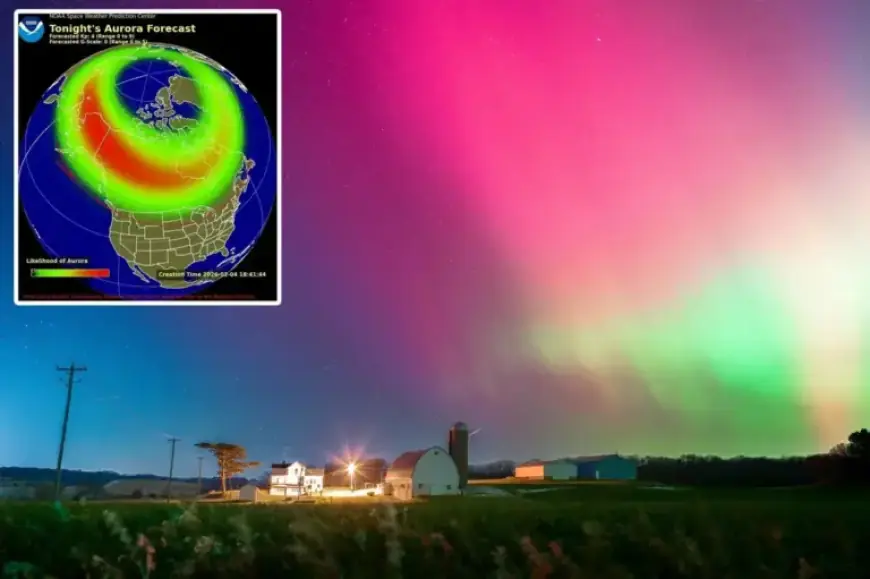
A spectacular display of the Northern Lights, also known as the Aurora Borealis, is expected to dazzle viewers across multiple U.S. states. This intriguing phenomenon follows recent intense solar activity, including a significant coronal mass ejection (CME). The CME, projected to brush against Earth, could potentially lead to a G1-class geomagnetic storm.
Aurora Visible Across 11 States
Most predictions indicate that the brilliant lights could be visible from 11 northern states, spanning from Alaska to Maine. These states include:
- Alaska
- Washington
- Idaho
- Montana
- Wyoming
- North Dakota
- South Dakota
- Minnesota
- Wisconsin
- Michigan
- Maine
The potential geomagnetic disturbance is a result of a powerful X8.3-class solar flare, one of the strongest in the past three decades, which erupted recently.
Understanding Solar Activity
This remarkable solar flare was part of a series of intense X-class flares. These originated from sunspot AR4366, a rapidly active region on the solar surface. While the recent solar activity has prompted anticipation for stunning auroras, most flares have not expelled significant amounts of solar matter into space yet, reducing immediate effects.
Optimal Viewing Conditions
For those eager to witness the Northern Lights, it’s recommended to find dark locations away from city lights. Observers should focus on the northern sky for the best chance of seeing the phenomenon. Experts also suggest utilizing smartphone “night mode” settings for capturing images. According to Michigan State University astronomy professor Darryl Seligman, modern camera technology, even in smartphones, allows for excellent image quality during nighttime.
Stay Informed
Stargazers are encouraged to monitor real-time updates for the aurora forecast. Resources such as NOAA’s 30-minute aurora predictions, along with websites like SpaceWeatherLive.com, provide crucial information about the timing and intensity of potential auroral displays.
This event not only offers a rare opportunity to witness celestial beauty, but it also marks a peak period of solar activity, the highest in 23 years. As we progress through this active solar phase, more chances to view the Northern Lights are expected throughout the year.