























Dr. Peter Attia’s Epstein Emails Trigger Professional Fallout, Scrutiny of Medical Ethics, and a Reckoning for the Longevity Industry

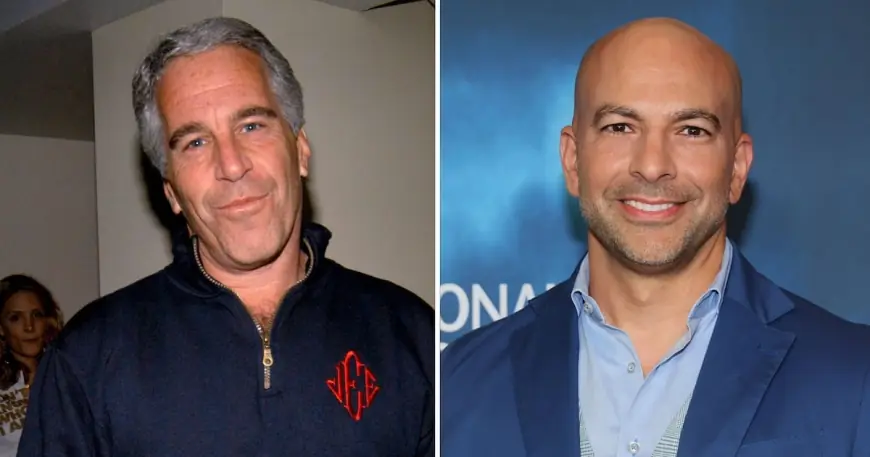
Dr. Peter Attia, one of the most visible figures in the modern longevity movement, is facing escalating backlash after newly released government files showed extensive email contact with Jeffrey Epstein years after Epstein’s 2008 conviction. The disclosures have already produced tangible consequences: Attia has stepped down from at least one prominent corporate role, and his recent move into mainstream broadcast commentary is now under intense pressure as employers and partners reassess reputational risk.
The controversy accelerated in the last week of January and into early February 2026, after a large trove of Epstein-related emails was released publicly by the U.S. Justice Department. By Thursday, February 5, 2026 ET, the story had shifted from “who exchanged messages” to “what professionals owed the public,” especially when the professional in question is a physician advising on health and human performance.
What happened: the emails, the apology, and the immediate consequences
The newly released files contain frequent communications between Attia and Epstein spanning multiple years in the 2010s, including friendly exchanges and discussions that touched on health matters. Attia has publicly apologized for the tone and content of some of the messages, calling them embarrassing and indefensible, while insisting he did not know the full extent of Epstein’s predatory conduct and denying personal involvement in any wrongdoing.
The professional fallout moved quickly. Attia resigned from a senior science-facing role at a consumer nutrition company he had been advising, and additional business relationships have shown signs of strain, including instances where his name has been removed from advisory listings. The speed of these decisions reflects a blunt reality of 2026: when a public figure’s credibility is the product, reputational damage becomes a business emergency.
Why this is bigger than one doctor: trust, duty, and the “credibility supply chain”
The story has drawn outsized attention because Attia’s influence isn’t limited to patients. He reaches a mass audience through books, podcasts, speaking, and premium health programs, where the implicit promise is not just knowledge, but judgment.
That creates a “credibility supply chain” with multiple stakeholders:
-
Patients and followers, who treat his recommendations as guidance, not entertainment
-
Corporate partners, who borrow his authority to validate their products
-
Media partners, who use his expertise to explain complex medical topics to the public
-
The broader medical community, which is sensitive to any perceived blurring of ethics, duty, and celebrity
In that context, the key question is not only “Did he do something illegal?” but “What did it mean for a physician to sustain friendly contact with a convicted sex offender?” Even absent criminal allegations, the ethical discomfort is obvious to many observers: medicine is built on trust, and the appearance of lending legitimacy to someone like Epstein is viewed by critics as a breach of professional judgment.
The incentives behind the headline: why the longevity world is uniquely exposed
The longevity market is booming, but it has a structural vulnerability: it often sits between conventional medicine and consumer wellness.
That middle space can be lucrative, but it also magnifies risk:
-
The public is primed to suspect hype, grift, or guru culture
-
Regulators and professional bodies watch for overreach
-
Brands crave authoritative spokespeople to stand out in a crowded field
-
Influencers can become single points of failure for entire product lines
Attia’s situation lands at the worst intersection of those forces. His critics argue the emails reveal poor judgment and a troubling proximity to power. His supporters argue that correspondence alone does not prove complicity and that the internet’s guilt-by-association logic is flattening nuance. Both sides, however, agree on one point: the longevity industry is now being asked to justify not just its claims, but its culture.
What we still don’t know
Several missing pieces will determine how far this story goes:
-
The full context and volume of communications, including how “routine” or “personal” the relationship was over time
-
Whether there were in-person meetings during the same period, and if so, what their purpose was
-
What Attia disclosed to employers, partners, and media organizations during vetting conversations
-
Whether any professional licensing or ethics bodies will review the matter, even if no criminal conduct is alleged
-
How many business relationships will quietly end versus publicly distance themselves
Second-order effects: what this changes in health media and corporate vetting
Expect a tightening cycle.
Media organizations that bring on medical contributors will likely harden background checks and demand clearer disclosure on controversial associations. Consumer health brands may also become more conservative about “star expert” partnerships, shifting toward panels, institutions, or multi-expert models to avoid single-person risk.
At the same time, the public may become more skeptical of longevity marketing broadly. The controversy gives critics an easy narrative: that the space rewards adjacency to wealth and influence. Even if that narrative is unfair to many practitioners, it is sticky—and stickiness is what shapes reputations.
What happens next: realistic scenarios and triggers
-
Containment through transparency
Trigger: Attia releases a fuller accounting of the relationship, clarifies timelines, and partners decide the issue is survivable. -
Corporate distancing accelerates
Trigger: additional emails circulate that appear more personal, more deferential, or more ethically compromising than already seen. -
Media role becomes untenable
Trigger: sustained public pressure makes employers conclude the distraction outweighs the value of his expertise. -
A broader industry reckoning
Trigger: more high-profile longevity figures face similar scrutiny, pushing the conversation from one person to a systemic culture problem.
Why it matters
This controversy isn’t only about reputational damage. It’s about the boundary between expertise and influence. When a doctor becomes a brand, the standard isn’t just medical competence—it’s also public trust. The next phase of this story will hinge on documentation, disclosure, and whether institutions decide the relationship was a lapse in judgment that can be addressed, or a credibility breach that can’t be repaired.