























Mark McMorris Crash at Winter Olympics 2026: Canadian Snowboard Star Withdraws From Big Air After Heavy Training Fall, Eyes Slopestyle Return

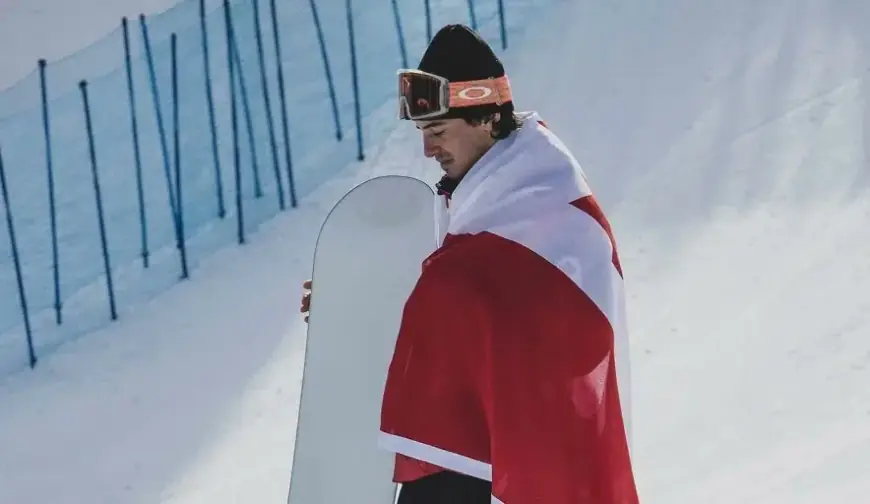
Mark McMorris’ Winter Olympics 2026 campaign took a sudden and sobering turn this week after a hard crash in training forced him out of the men’s big air event and put his status for the rest of the Games in doubt. McMorris, a three-time Olympic bronze medalist and one of Canada’s most recognizable snowboarders, was injured during a nighttime training session in Livigno, Italy, and was taken for medical evaluation as a precaution.
The immediate outcome is now clear: McMorris will not compete in Olympic big air at these Games. The bigger question is whether he can recover in time to compete in slopestyle, the event where he has historically been most dangerous—and where Canada’s medal hopes were counting on him.
What happened in the Mark McMorris crash
The incident occurred during big air training on Wednesday, February 4, 2026 (ET), less than a day before the scheduled big air qualifier. McMorris fell after landing a run and was assisted off the slope before being transported to a hospital for evaluation with team medical staff.
By Thursday, February 5, 2026 (ET), Team Canada provided an update: McMorris had been released from the hospital and returned to the Olympic Village, where he was set to undergo routine follow-up testing. He later indicated the injury involved a head impact and said he was hopeful he could still ride slopestyle later in the Games.
What it means for Olympic big air right now
McMorris’ withdrawal opened the door for an alternate to step into the big air field, a reminder of how unforgiving Olympic formats are: one fall can erase years of buildup, and the qualification window doesn’t wait. Big air is particularly brutal in that regard—athletes are pushing maximum rotation and amplitude, and the margin between landing and disaster is razor thin.
For Canada, it’s also a strategic loss. Even when McMorris isn’t the top qualifier, he’s the type of competitor who can find a medal run under pressure because he understands how to build a final with progressive difficulty.
Slopestyle next: the timetable that matters
McMorris has publicly framed slopestyle as the target for a potential return, and that matters because it gives him time to stabilize and be medically cleared before he drops back into a course that demands both precision and confidence.
Key dates in Eastern Time:
-
Men’s snowboard slopestyle is scheduled to begin Sunday, February 16, 2026 (ET) and continue through Wednesday, February 18, 2026 (ET).
That window is the hinge point. If symptoms resolve and follow-up testing is clean, the conversation shifts from “will he ride at all?” to “can he ride at his normal level?”—two very different questions in head-injury management.
Behind the headline: why this crash hits harder than a normal injury update
Context is everything. McMorris has built a career on high-consequence snowboarding and has previously come back from severe crashes. That history creates a complicated public reaction: admiration for resilience, but heightened concern when the injury involves the head.
The incentives around this decision are also unusually stark:
-
For McMorris: compete if it’s safe, but protect long-term health in a sport where careers can end in a single mistake.
-
For Team Canada’s medical staff: be conservative, because clearance decisions around head impacts are among the highest-stakes calls in sport.
-
For coaches and selectors: keep medal plans flexible without pressuring an athlete into a rushed return.
Second-order effects matter, too. When a top athlete goes down early at a Games, teams often tighten risk tolerance across the program. That can subtly change how aggressive athletes are in training, and it can shift who feels empowered to “send it” in qualifiers versus saving difficulty for finals.
How fans in Canada are watching the Olympics
In Canada, the official Olympic coverage is being carried by the country’s primary national broadcaster across television and its companion streaming platform, with extensive live event feeds and replays. For viewers, the practical play is simple: use the event guide to find snowboard big air and snowboard slopestyle sessions, and expect that replays will be available quickly—especially for late-night Livigno sessions that land in odd viewing windows back home.
What happens next
There are a few realistic paths from here, and the trigger in each case is medical clearance:
-
McMorris returns for slopestyle
Trigger: clean follow-up testing, symptom-free progression, and approval to resume full training. -
McMorris is held out of slopestyle as well
Trigger: lingering symptoms, precautionary medical guidance, or any setback in return-to-ride steps. -
He returns but dials back difficulty
Trigger: cleared to compete, but still rebuilding timing and confidence after the crash.
For now, the headline is straightforward and serious: Mark McMorris is out of big air after a heavy training crash, has been released from the hospital, and is aiming—if medically cleared—to salvage his Olympics 2026 with a slopestyle return later in the Games.